

From CBS Records to Pentagram, The Public Theater, and her painted maps, Paula Scher transformed typography from a carrier of information into a force of identity, rhythm, and public culture.
Paula Scher’s work does not ask to be read politely. It pushes, shouts, overlaps, interrupts, and moves with the energy of the street. In her hands, typography becomes architecture, music, advertising, protest, and theater at once.
That is why Scher remains one of the essential figures in contemporary graphic design. Her importance is not limited to famous logos or celebrated posters. Her career shows how visual identity can absorb the noise of a city and return it as something legible, memorable, and alive.
Born in Washington, D.C., in 1948, Scher studied at Tyler School of Art before building a career that ranged from record covers to independent studio practice, institutional branding, environmental graphics, and painting. Since joining Pentagram as a partner in 1991, she has shaped the visual language of major cultural and commercial institutions while continuing to challenge the idea that design should be quiet, neutral, or invisible.
Who Is Paula Scher?
Paula Scher is an American graphic designer, painter, educator, and partner at Pentagram. She is widely recognized for her bold use of typography, especially in identity systems for cultural institutions. Her work has entered the collections of major museums, including MoMA, Cooper Hewitt, the Library of Congress, the Victoria and Albert Museum, and Center Pompidou.
But the standard description—“influential graphic designer”—does not fully explain her importance.
Scher’s real contribution lies in her ability to make type behave emotionally. Her letterforms do not simply label a subject; they perform it.
Where modernist design often prized restraint, order, and clarity, Scher brought back tension, scale, humor, historical reference, and urban friction. She understood that people do not encounter design in clean theoretical conditions. They encounter it on streets, in subways, on album covers, in theatre posters, across buildings, in civic spaces, and now across screens.

Early Career: Album Covers and the Education of Pop Culture
Before Paula Scher became synonymous with Pentagram and The Public Theater, she worked in the record industry. In the 1970s, she was an art director at CBS Records and Atlantic Records, designing album covers in a period when music packaging carried enormous cultural weight. This mattered. Album covers trained Scher in the compression of identity: one image, one title, one mood, one object that had to sell sound before it was heard. The record sleeve was not merely packaging. It was a visual promise.
That early experience is visible throughout her later work. Scher’s identities often feel rhythmic because they come from a designer who understood music as a visual problem. Scale, repetition, contrast, and timing became part of her typographic language.
Pentagram and the Rise of a Public Design Voice
In 1991, Scher joined Pentagram as a partner, becoming one of the most recognizable figures within the firm’s New York office. Her work at Pentagram has included brand identities, publications, packaging, environmental graphics, and campaigns for cultural and commercial clients.
Pentagram gave Scher the platform to expand the possibilities of identity design. She did not treat branding as a fixed logo system applied mechanically across surfaces. Instead, she approached identity as a living language.
This is especially important now, when brands often confuse consistency with repetition. Scher’s work suggests another model: a strong identity need not be rigid. It needs a recognizable attitude, a visual grammar, and enough flexibility to respond to context.
The Public Theater: Typography as Civic Energy
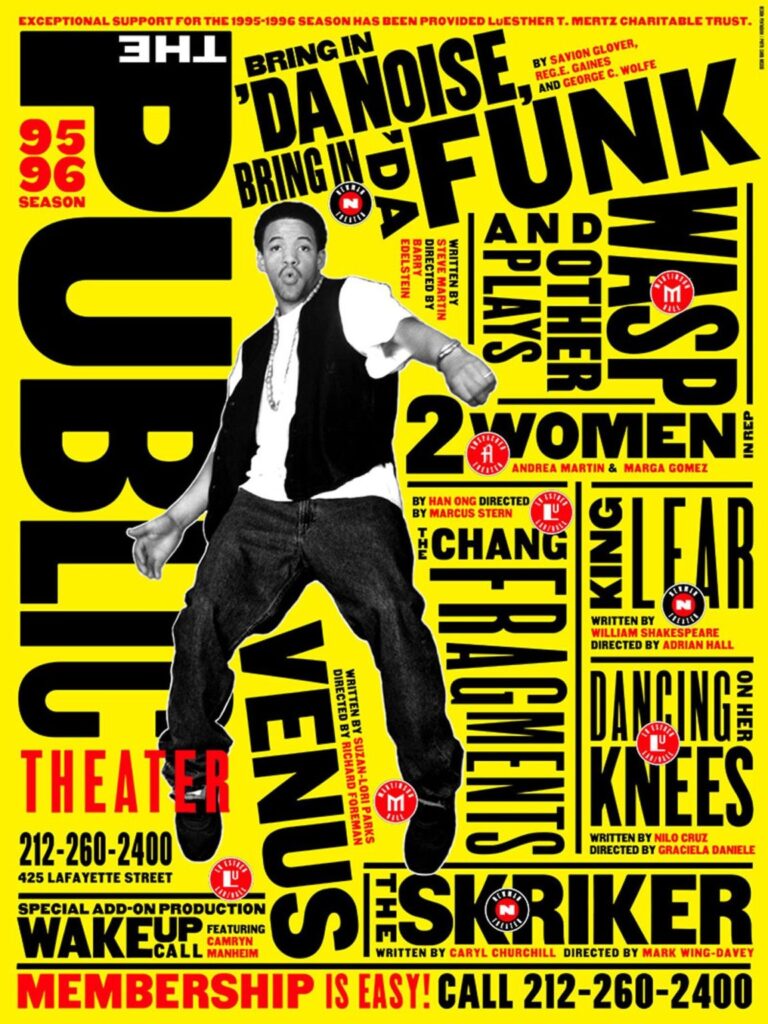
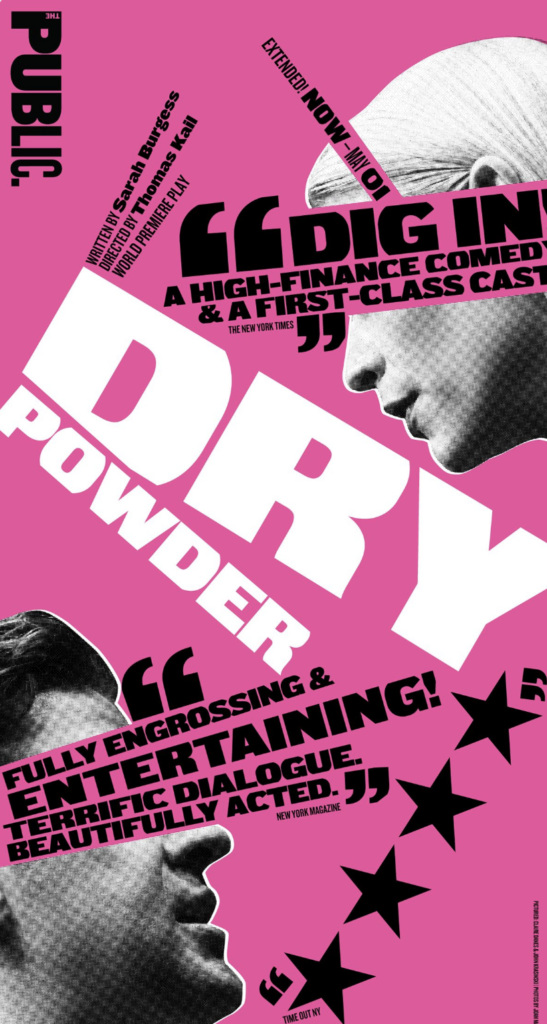
Scher’s identity for The Public Theater in New York remains one of the defining graphic design projects of the late twentieth century. Pentagram began working on The Public Theater’s graphic identity in 1994, creating a visual language that reflected the institution’s mission of accessible, innovative performance.
The system drew from street typography, wood type, posters, urban signage, and the visual noise of New York. Its compositions were active, compressed, and almost graffiti-like. The typography did not behave like a neutral institutional voice; it behaved like theatre itself.
The 1995 posters for Bring in ’Da Noise, Bring in ’Da Funk became especially influential. Pentagram described the composition as a kind of “typographical bebop,” with bold wood type surrounding the figure of the tap artist and echoing the performance’s sound, rhythm, and urgency.
MoMA’s collection includes Scher’s The Public Theater, 95–96 Season poster, a large lithograph from 1995, as well as The Diva is Dismissed from 1994. Their presence in the museum collection confirms what designers already know: these were not just promotional works, but landmarks in the history of visual communication.
Why The Public Theater Identity Still Feels Contemporary
The Public Theater identity still feels current because it anticipated a central problem of contemporary branding: how can an institution be recognisable without becoming predictable?
Scher’s answer was to build a system that could move. The identity had rules, but it also had velocity. It could hold different productions, tones, seasons, and political moments without losing its force.
This is why the project remains a lesson for designers today. In an age of templates and algorithmic sameness, The Public Theater’s identity reminds us that a brand can be coherent without becoming sterile. It can speak in many registers and still sound like itself.
Typography as Image, Voice, and Atmosphere
Scher is often described as a typographic designer, but that phrase can sound too narrow. Her typography is not decorative lettering added to a composition. It is the composition.
Letters in Scher’s work stretch, stack, collide, tilt, and dominate space. They create rhythm before they create meaning. They tell the viewer how to feel about a subject before the sentence has been fully read.
This is one reason her work continues to resonate with designers, artists, and art directors. Scher refuses the false separation between language and image. She treats words as visual material and visual material as a form of speech.
Paula Scher’s Maps: Painting Information Until It Becomes Subjective
Scher’s painted maps extend her typographic thinking into fine art. These large, dense works use hand-rendered words, place names, borders, and geographic references to turn maps into subjective systems. Her book MAPS was published in 2011, and her work has been exhibited internationally.
The maps are not neutral representations of territory. They are emotional geographies. They show how information is never entirely innocent: maps carry politics, memory, power, humor, stereotype, and distortion.
In that sense, the maps deepen Scher’s long-standing interest in visual authority. A map looks factual, but Scher makes it visibly constructed. She exposes the instability behind systems that pretend to be objective.
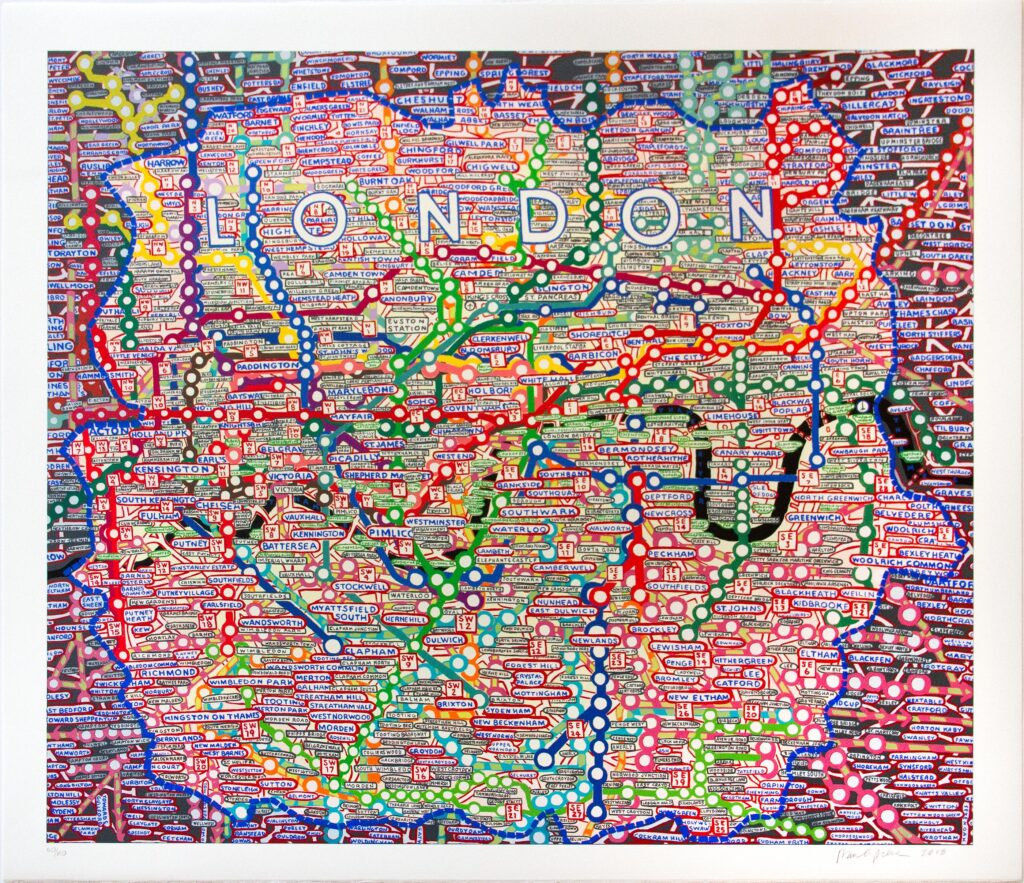
London, 2018
Silkscreen Print in 21 Colours, Edition of 150
Awards, Recognition, and Institutional Legacy
Scher’s career has been widely recognized. She received the AIGA Medal in 2001 and the National Design Award for Communication Design from Cooper Hewitt in 2013. Cooper Hewitt described her as a designer whose images entered the American vernacular and noted her role in reimagining typography as a communicative medium.
Her publications include Make It Bigger, MAPS, and 25 Years at the Public: A Love Story. She has also taught for more than two decades at the School of Visual Arts, along with positions at Cooper Union, Yale, and Tyler School of Art.
This combination of practice, teaching, authorship, and institutional presence is part of her influence. Scher did not simply produce memorable work. She helped define how graphic design is discussed, taught, collected, and understood as culture.
What Designers Can Learn from Paula Scher
The most obvious lesson from Paula Scher is to use typography boldly. But that is also the shallowest reading of her work.
The deeper lesson is that boldness has to come from an idea. Scher’s best-known projects are not loud for the sake of being loud. They are loud because the subject demands it. Theatre needs performance. Music needs rhythm. Cities need density. Maps need contradiction.
For contemporary designers, her work offers several enduring principles:
Use history, but do not become nostalgic. Build systems that can change without losing identity. Let typography carry emotion, not just information. Design for real public environments, not only clean presentation decks. Understand that a visual identity is a cultural voice.
Why Paula Scher Still Matters
Paula Scher matters because she expanded the emotional range of graphic design. She made identity systems feel alive, civic, theatrical, and human. She showed that typography could be more than a tool of clarity; it could be a tool of atmosphere, argument, rhythm, and memory.
Her work also feels newly relevant at a time when visual culture is increasingly automated. As more design begins to look generated, frictionless, and interchangeable, Scher’s work reminds us of the value of character. Her typography has pressure in it. It carries the hand, the street, the archive, the city, and the moment.
That is why her legacy is not simply historical. Paula Scher remains a designer for the present tense: a figure who proves that graphic design is most powerful when it does not merely organize culture, but enters it.


