

You almost stumble upon Palazzo Talìa, tucked into the streets behind the Trevi Fountain. Outside, Rome moves fast; inside, everything feels quieter—as if the city lowers its voice. I walked in thinking I’d “take a quick look” and found myself truly slowing down. Not because of a loud wow effect. It’s that simple, rare feeling of being in the right place: generous proportions without coldness, refined details without rigidity.
A historic palazzo with a living story
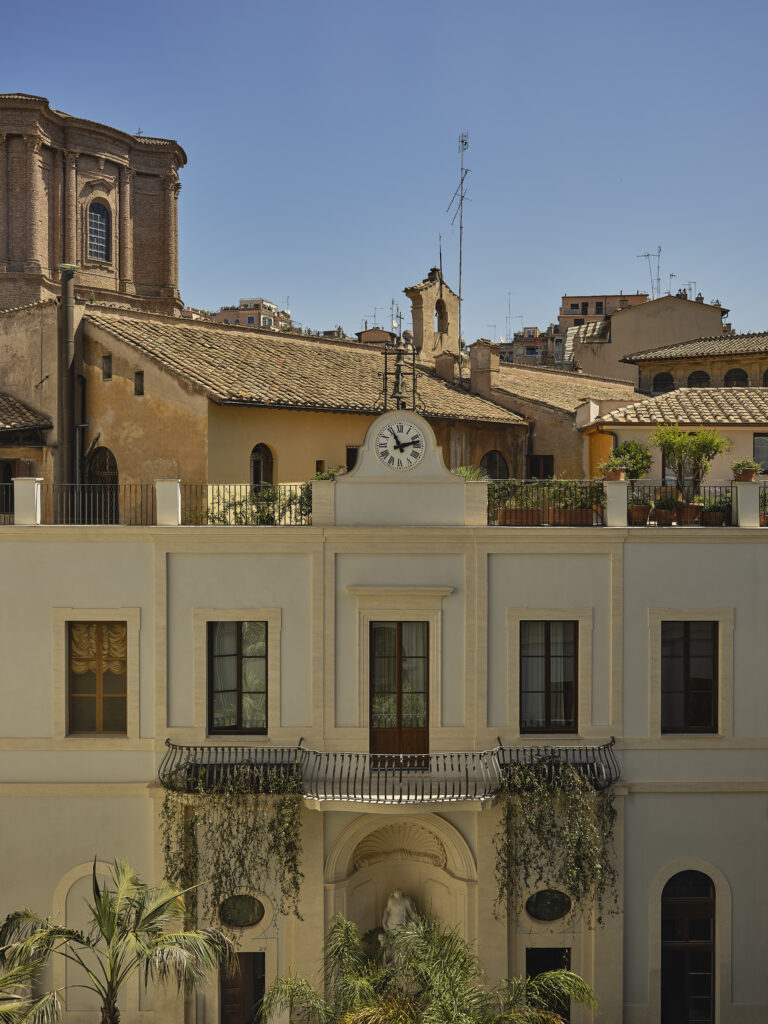
Here, history isn’t a plaque on a wall—it’s the reason the spaces work so well. For centuries, this building was a place of study and passage. In the 1600s, it was purchased by Cardinal Tonti (hence the name “Nazareno”). Aftre that Saint Joseph Calasanzio established a school for children in need: the Collegio Nazareno. Between the 1700s and 1800s, it became a prestigious institution. It slowly expanded with new classrooms, staircases, galleries, frescoes, a theatre, and an internal garden. In the 20th century, it opened its doors to female students (1970), then closed in 1999, followed by a long silence.
Today, after a careful, conservation-led restoration, it has returned to life as a boutique hotel in Rome.
Creative direction: cinematic, but designed for real life
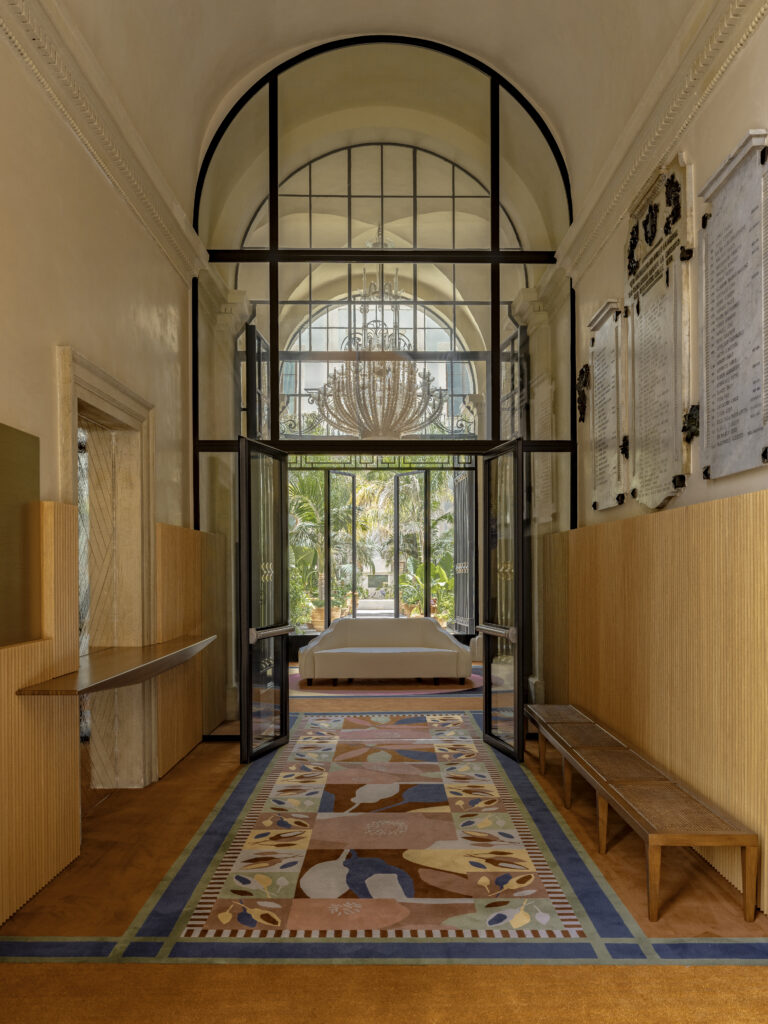
Once past the entrance, the magic is immediate. The shared spaces don’t imitate the past—they place it in good company. The creative direction is by studiolucaguadagnino, and you can feel it in the cinematic yet practical way the “scenes” are arranged: it becomes natural to sit down, wait for someone, look up, and then move from room to room as if following a quiet plot.
The staircase, the piano nobile, and a recognizable “thread”
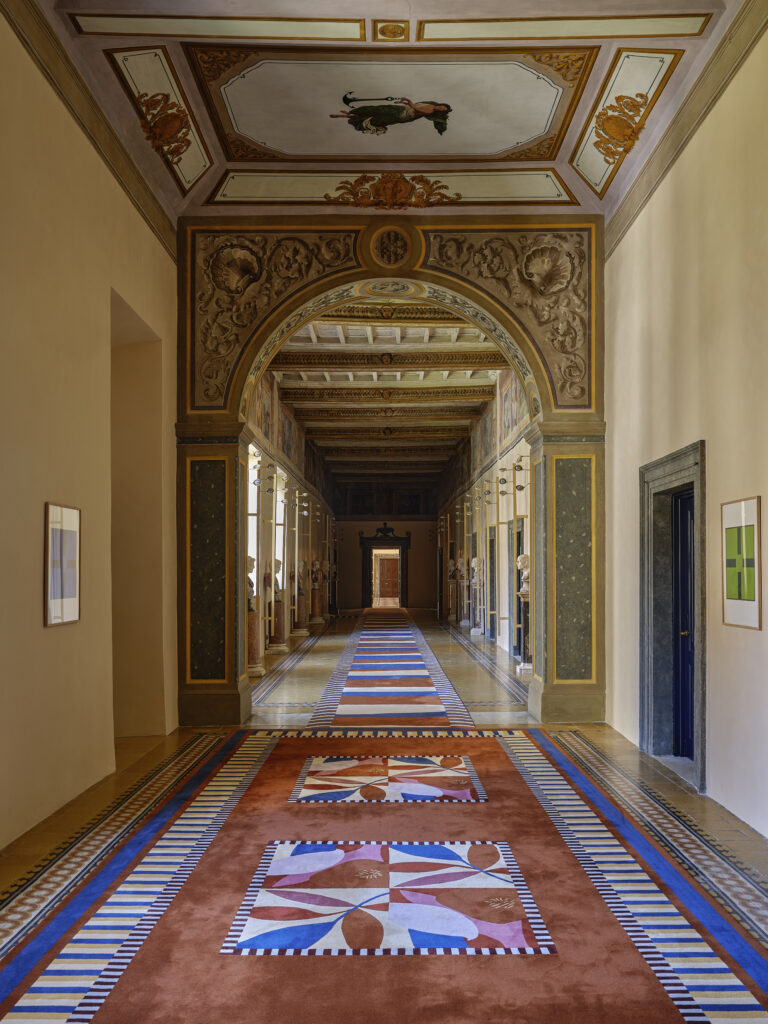
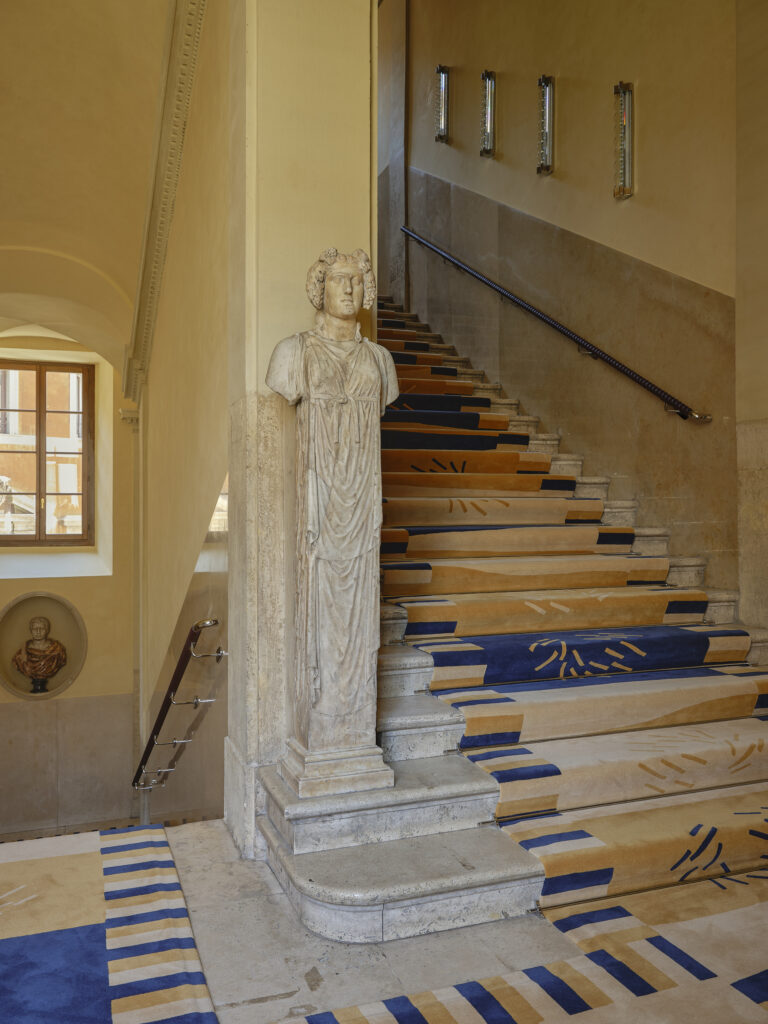
One of the most memorable moments is the route through the staircase and the piano nobile. A carpet-like moquette designed by Nigel Peake guides your steps, becoming a visual fil rouge from one floor to the next. It isn’t a mere detail: it’s an idea of movement—almost an invitation not to rush through these corridors. Around it, antique busts and sculptural lighting create a rhythm of solids and pauses, like music shifting tempo without turning loud.
The former Aula Magna: a space to share
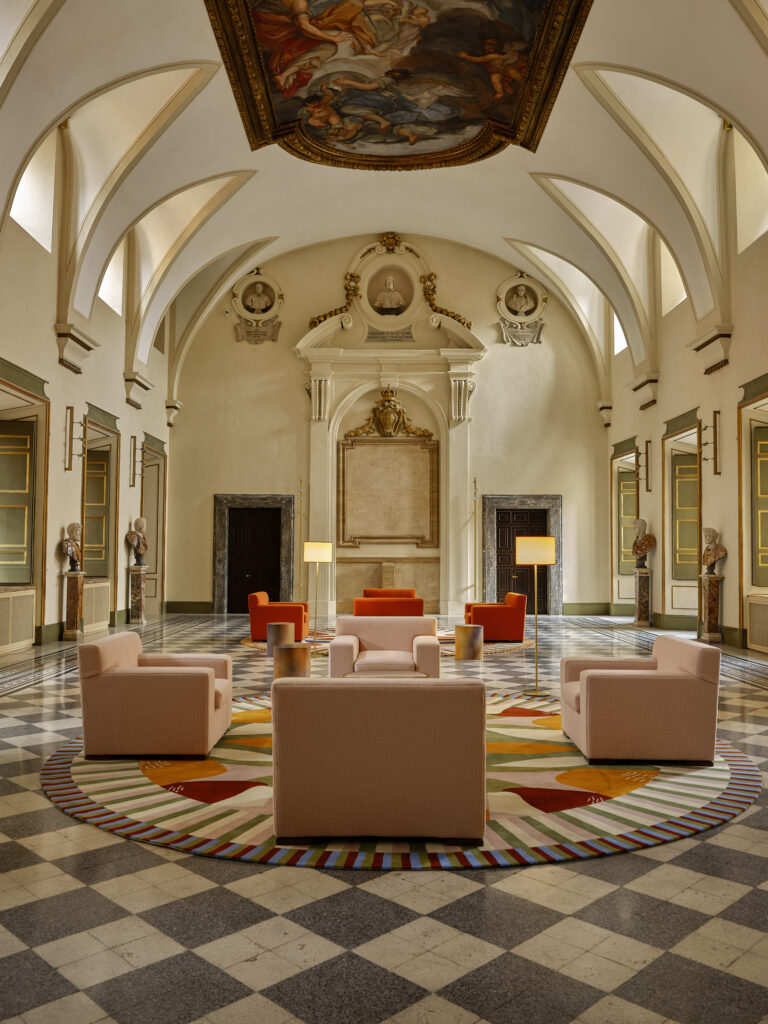
Then you reach the former Aula Magna, and stopping feels non-negotiable. Born as a communal space when this was still a school, it remains a grand volume meant to be experienced together. Beneath the 18th-century frescoes by Gaspare Serenari, the contemporary setup doesn’t “challenge” the architecture—it supports it. Seating and rugs are introduced with a rare sense of measure—delicately integrated into the context, bold enough to give character, discreet enough to let you keep looking up at the ceiling.
Meanwhile, color works in the background, returning in several places—blush pinks, reds, and deep wine tones—like something familiar. It’s the project’s most playful layer, the one that makes the palazzo feel less solemn and more spontaneous, effortlessly relaxed.
The rooms: intimate, curated, surprisingly personal
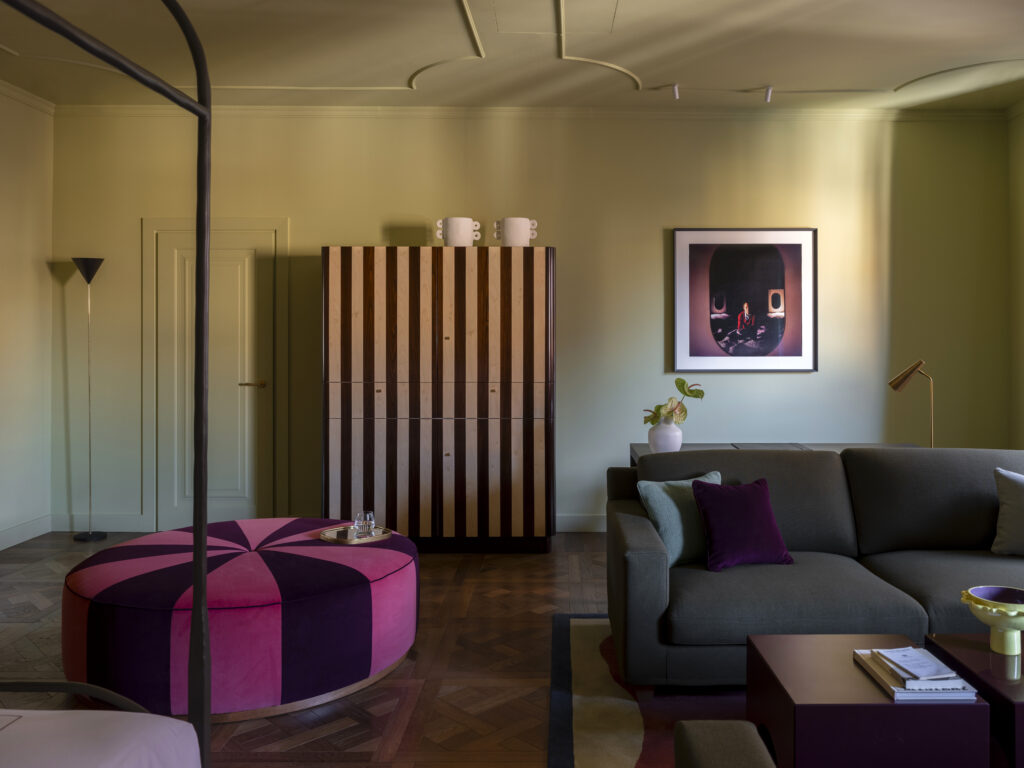
In the guest rooms, everything shifts. The mood becomes more intimate, more domestic. This is where Mia Home Design Gallery and Laura Feroldi Studio come in: each room is different, with bespoke pieces and a blend of Italian craftsmanship and more eclectic touches.
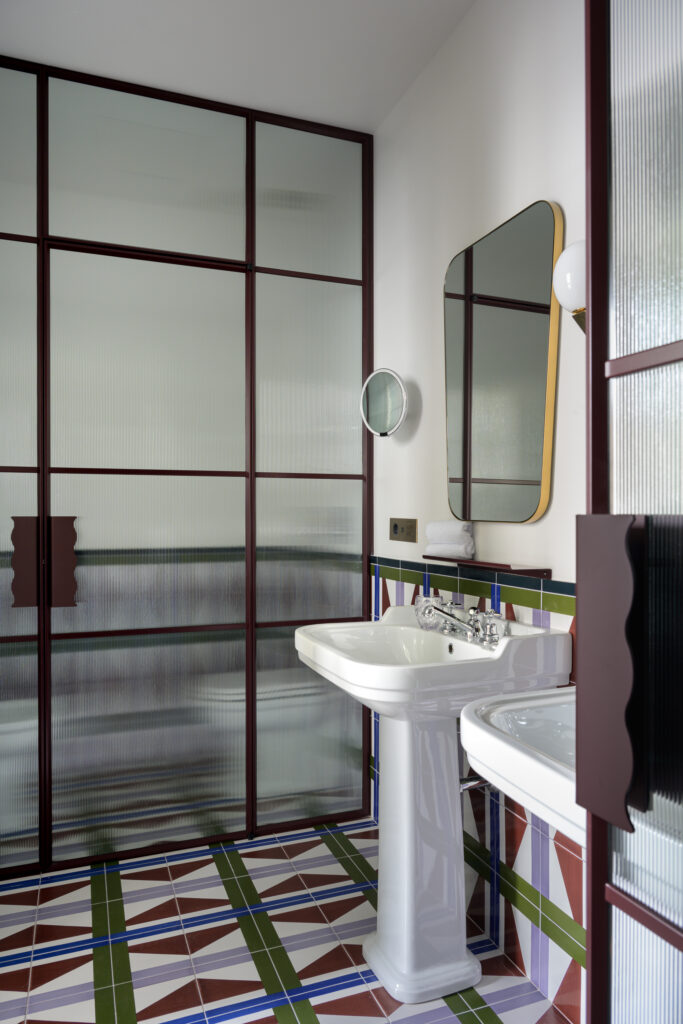
Think wrought-iron beds, bathrooms built around contrasting surfaces and colors, and that rare hotel feeling: I’m not just sleeping somewhere beautiful—I’m inhabiting, even for one night, an idea of home.
Why Palazzo Talìa stays with you
If I had to sum up Palazzo Talìa in one sentence, it would be this: it doesn’t try to impress you at all costs. It takes your hand, walks you through its history, and then leaves you there—with a lingering desire to stay a little longer.