

Sofia Águas is a rising Portuguese designer and ceramic artist whose creations are attracting international recognition for their inventive blend of sculptural artistry and practical use. Working from Lisbon, Portugal, her work has developed into an in-depth investigation of shape, texture, and material, pushing beyond conventional craft limits and establishing her as a distinctive presence in contemporary design.
We had the chance to meet with her for an exclusive interview!
–
Hello Sofia! Thank you for joining us today. We’re excited to explore your artistic practice and discover what inspires your creative process.
We understand that your background in product design continues to shape your artistic journey as a ceramist. Could you share more about how and whyyou decided to shift your interest into ceramics?
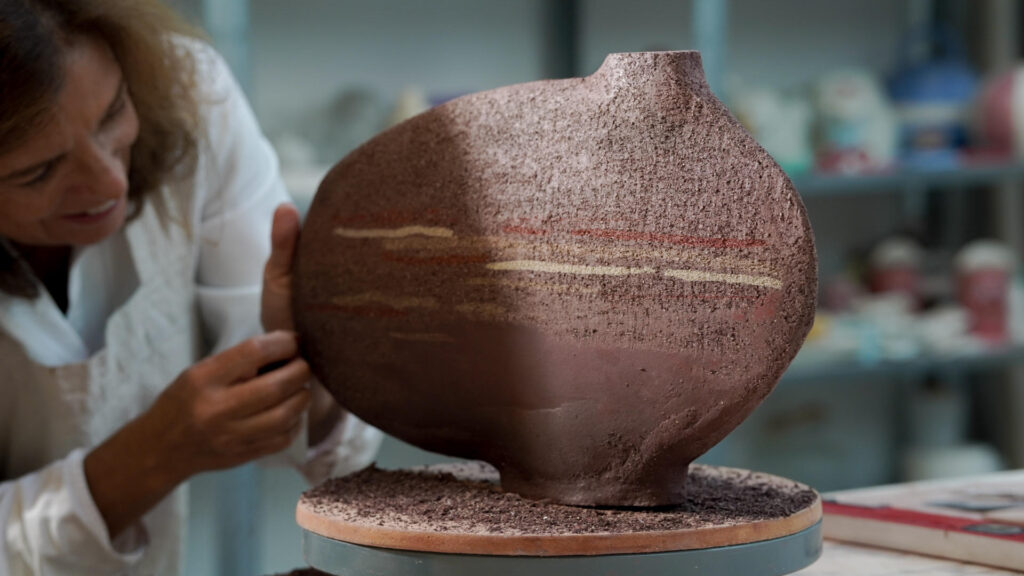
My background in product design never really disappeared; it simply found a different material language. I didn’t see my move into ceramics as a rupture, but more as a necessary shift. Over time, I felt increasingly distant from industrial processes and from design that prioritized scale over presence. I was searching for something slower, more tactile, and more materially honest.
Clay offered that immediacy. It responds directly to touch, to pressure, to time. It allows a kind of thinking that happens through the hands rather than only through drawings or digital tools. What began as curiosity gradually became a deeper commitment, a way of working where making and thinking are inseparable.
Clay offered that immediacy. It responds directly to touch, to pressure, to time. It allows a kind of thinking that happens through the hands rather than only through drawings or digital tools. What began as curiosity gradually became a deeper commitment, a way of working where making and thinking are inseparable.
Ceramics gave me the possibility to reconnect design with material, and to explore form not only as function, but as presence and emotional experience.
Tell us more about how your personal and creative journeys merge in your artistic practice.
My personal and creative journeys are deeply intertwined because my practice grew out of a very specific moment in my life.
Ceramics entered my life while I was living in Chile, where I spent part of my time doing volunteer work in two very challenging neighbourhoods.
Ceramics entered my life while I was living in Chile, where I spent part of my time doing volunteer work in two very challenging neighbourhoods.
Being far from home and immersed in a different social and cultural context made me reconsider what felt meaningful and essential. During that time I first encountered clay, almost by chance, and that encounter stayed with me long after I returned to Portugal. After Chile, I lived in several cities (Madrid, Belfast, and Cardiff), and in each of them, ceramics continued to accompany me.
Working in different environments shaped my way of making, influencing my relationship with materials, space, and rhythm.
Each place left a subtle mark on my practice.
In Cardiff, I had the opportunity to work in a shared studio within an extraordinary space alongside established ceramists. That experience was pivotal. It was there that I understood the importance of showing my work, situating it within a wider context, and learning how to position my work and seek the right opportunities for it. Because of this, my work does not feel separate from my personal journey. It feels like a continuous path shaped by places, encounters, and lived experience, translated into objects that others can live with.
In your work, you want to cut out the superfluous. How would you describe what is essential for you?
For me, what is essential begins with honesty towards the material and the process.
I work with clay in a way that accepts time, testing, and failure as part of the practice.
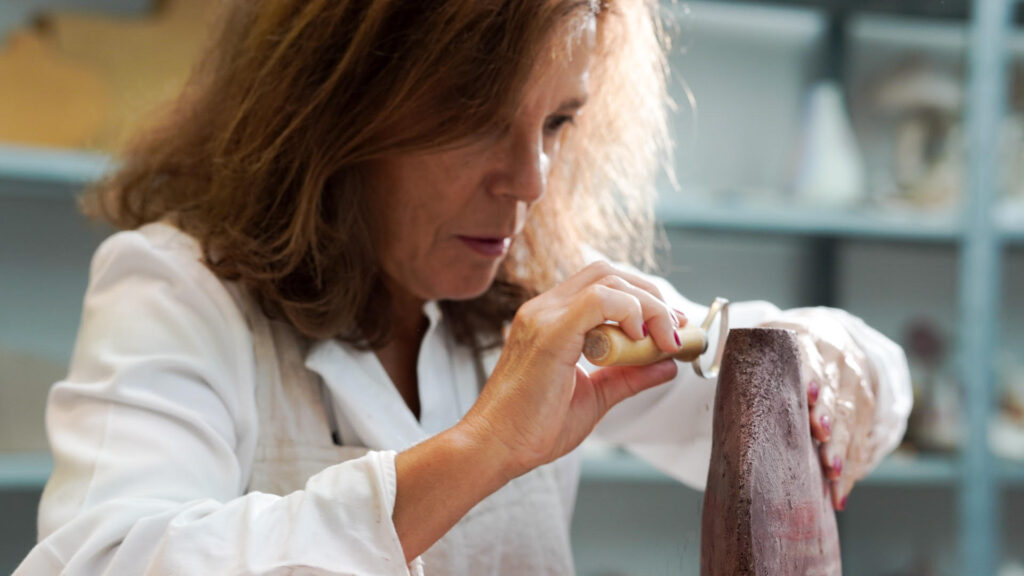
The techniques I use today were not predefined; they were slowly developed through many experiments, adjustments, and mistakes. This long process of trial and error is fundamental because it allows the material to guide the work rather than forcing it into predetermined solutions.
This search for essentiality also means removing excess. Both material and formal excess gradually disappear during the making process, until the object reaches a point where nothing feels unnecessary.
I am interested in reduced forms, in clarity, and in a kind of quiet balance where structure, texture, and proportion carry the object. In the end, essentiality for me is about simplicity that comes from refinement, not from simplification, but from a long process of making, testing, and reducing until the object feels honest, formally balanced, and materially resolved.
Is there a particular piece that you feel best represents your artistic identity or
journey?
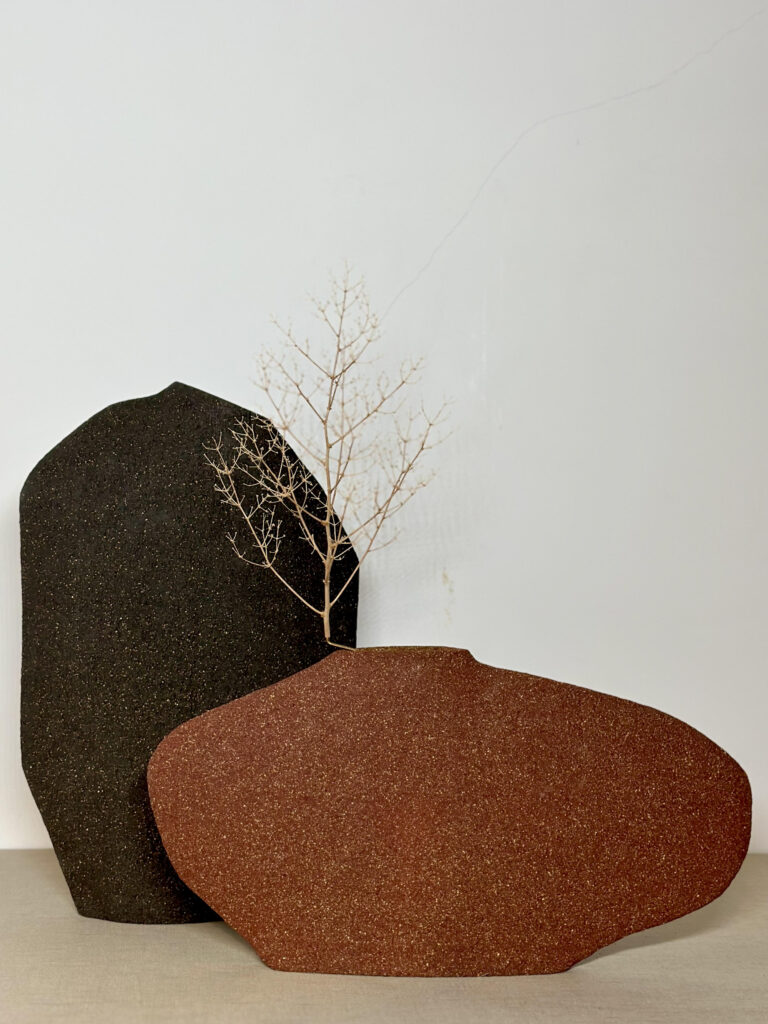
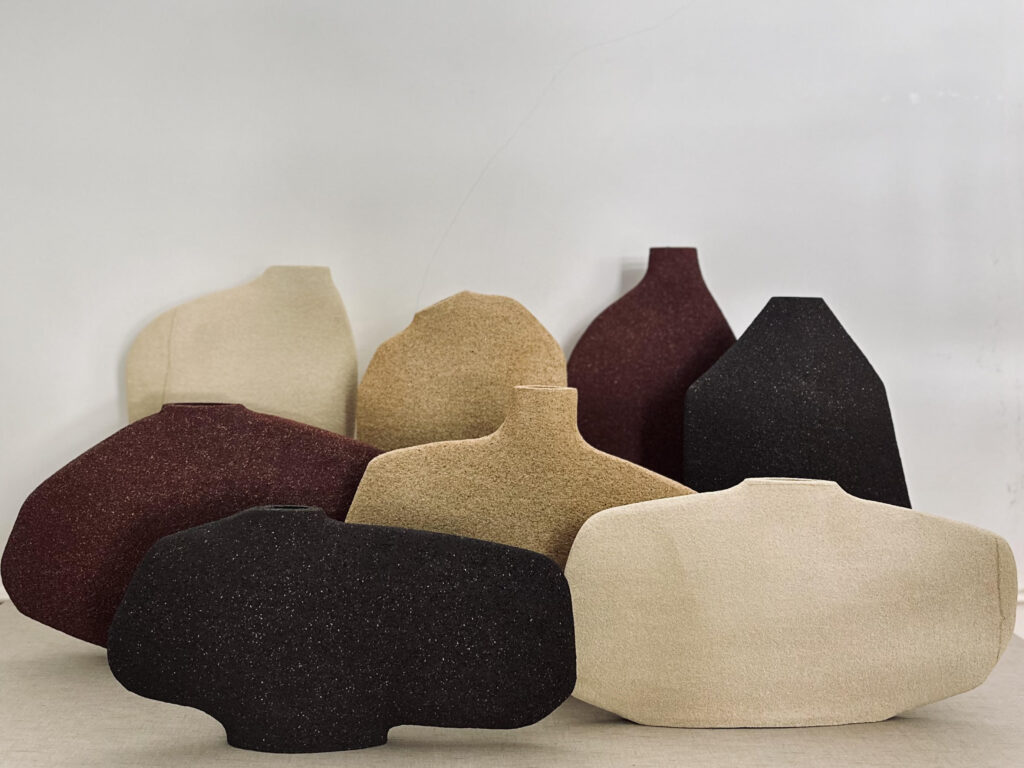
The pieces that most clearly represent my practice at the moment are the vases from the Raw Resonance collection. They brought together many of the ideas and experiments that had been developing in my work for several years: the search for reduced forms, the
exploration of texture, and the balance between function and sculptural presence.
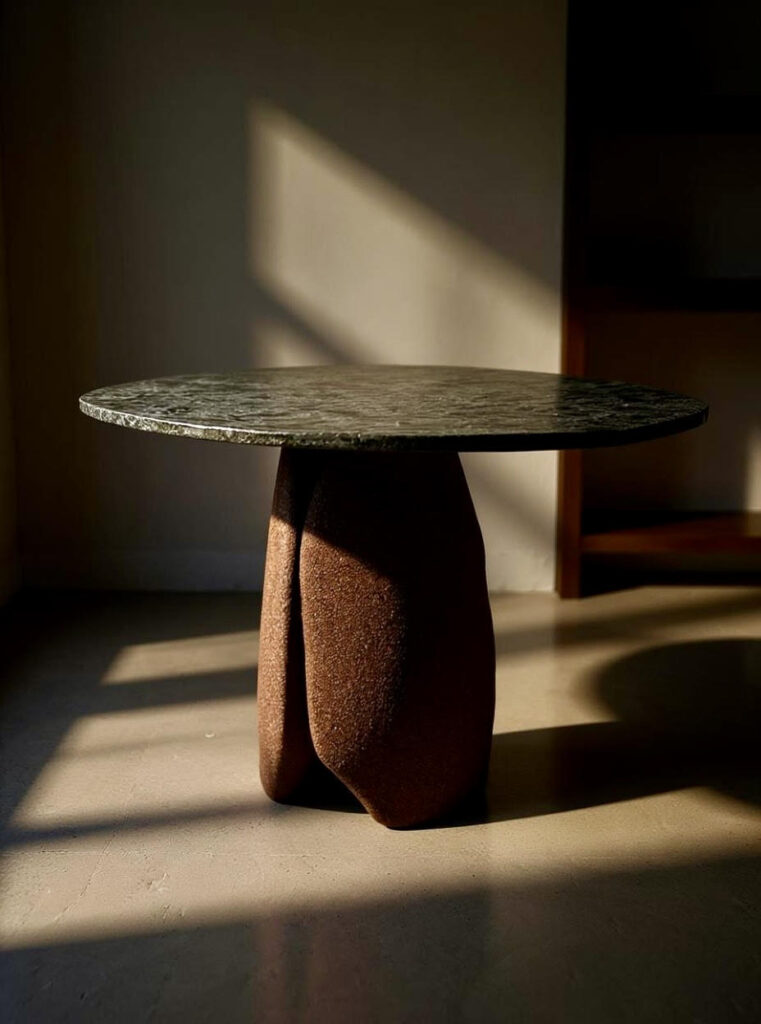
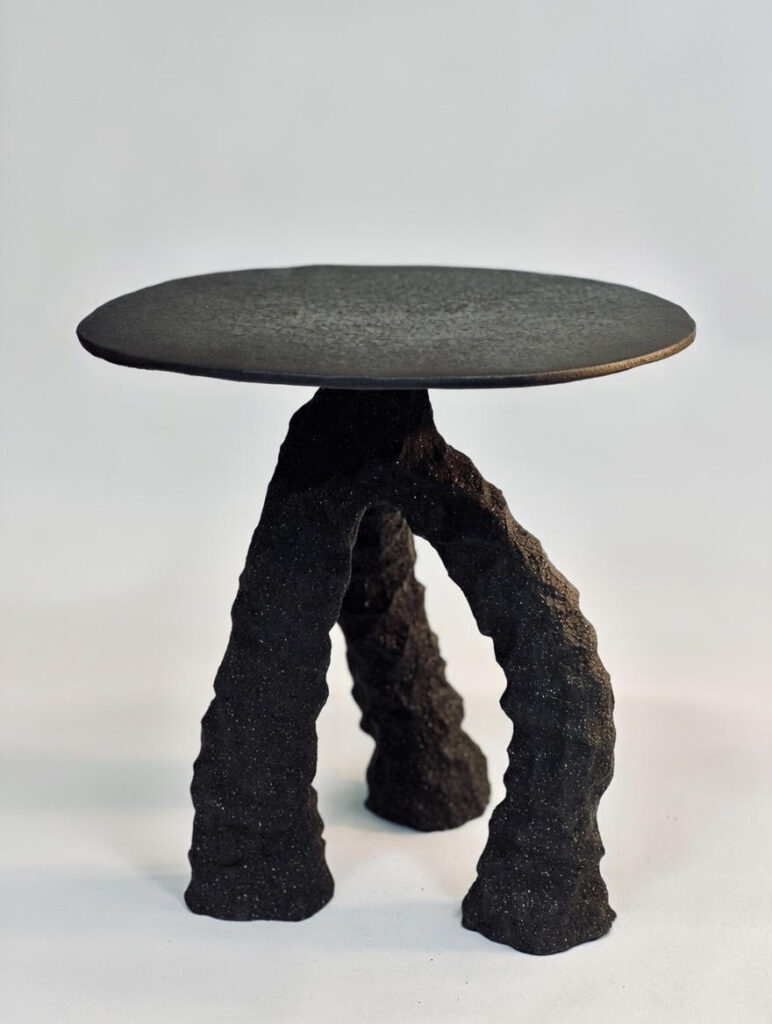
At the same time, my practice is constantly evolving. My imagination rarely stays still, and I am always testing new forms and scales. Recently, my work has been expanding beyond vessels into small tables and wall objects, which allow me to explore the relationship
between ceramics and space in a more architectural way. So, while the Raw Resonance vases feel like an important milestone, they are also part of an ongoing journey that continues to open new directions.
exploration of texture, and the balance between function and sculptural presence.
At the same time, my practice is constantly evolving. My imagination rarely stays still, and I am always testing new forms and scales. Recently, my work has been expanding beyond vessels into small tables and wall objects, which allow me to explore the relationship
between ceramics and space in a more architectural way. So, while the Raw Resonance vases feel like an important milestone, they are also part of an ongoing journey that continues to open new directions.
Which reaction do you like your viewers to have in front of your work?
More than a specific reaction, I hope for an emotional response.
That emotion does not need to be positive. Someone may love the work, feel intrigued by it, or even dislike it.
What matters to me is that it creates a reaction strong enough to stop them. I want people to come closer, to question, to touch, to feel the object.
In the exhibitions I participated in recently (2025), Ceramic Art London, Révélations in Paris, Decorex in London, and Homeing in Lisbon, etc., that is exactly what happened. People approached the pieces with curiosity. Many were surprised when they lifted the
vases and realized how light they were despite their scale, or how flat the forms appeared, almost lacking tridimensionality. Some even asked if the material was cork because of the surface treatment, not expecting it to be ceramic.
For me, that moment of surprise, when perception shifts, is everything. If I had to summarize it in one word: emotion.
To follow Sofia Aguas, visit her Instagram page >


