


What happens when a material designed to stay unseen—like upholstery foam—steps into the spotlight? In the work of Portuguese designer Margarida Lopes Pereira, reclaimed foam becomes the main character: soft, sculptural, and unexpectedly poetic. Her objects challenge how we value materials and offer a more sensual, human take on sustainable design.
Rather than hiding waste, Lopes Pereira turns it into a surface you want to touch—inviting a slower, more mindful relationship with everyday things.
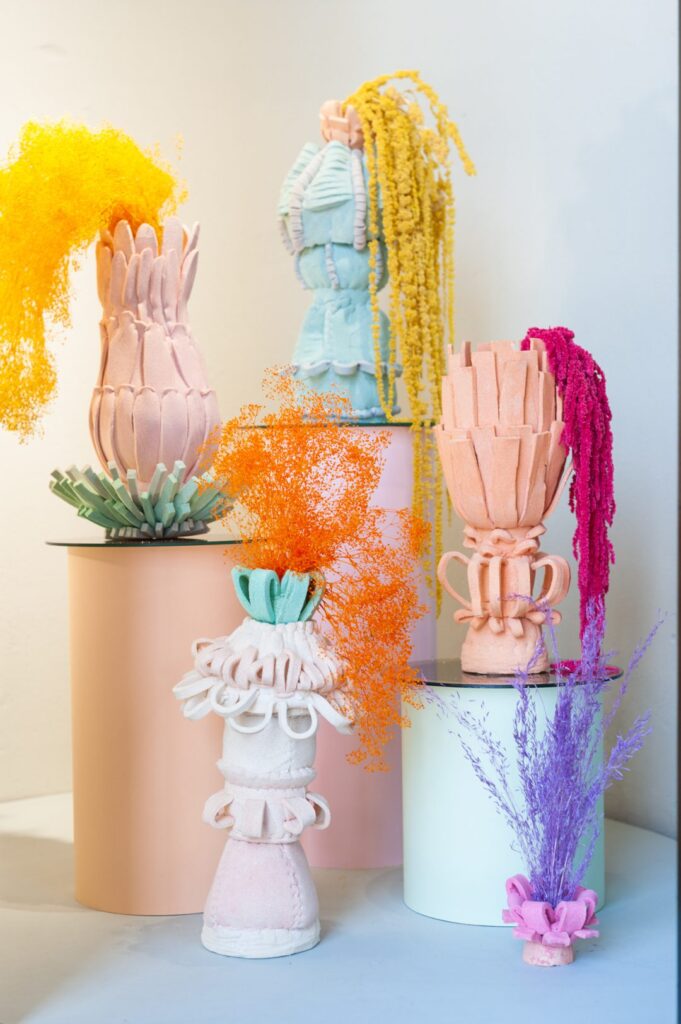
What Is Upcycling Foam?
Upcycling foam is the creative reuse of leftover or discarded foam—often from sofas, cushions, and industrial production—transforming it into objects with greater value than the original material.
For Lopes Pereira, upcycling isn’t simply recycling. It’s a shift in status: foam moves from “filler” to form, from industrial residue to handmade design. The technique often involves cutting, layering, and assembling pieces, then finishing them through visible hand-stitching that becomes part of the aesthetic rather than something to conceal.
The result is a design that communicates sustainability without feeling austere—because it’s playful, tactile, and emotionally readable.
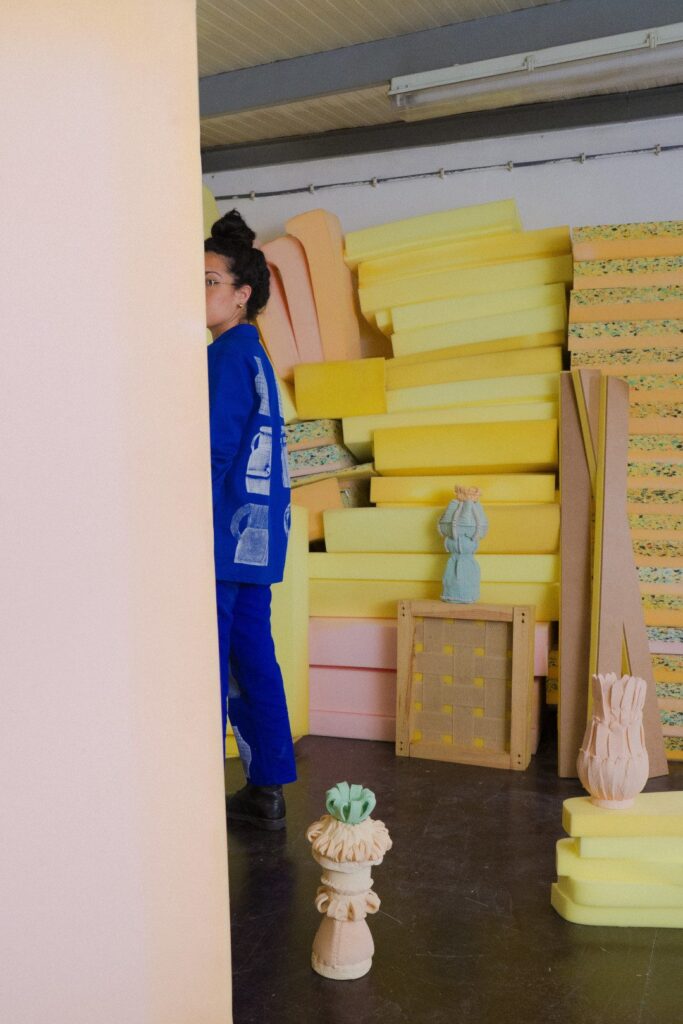
Who Is Margarida Lopes Pereira?
Based in Lisbon and born in 1991, Margarida Lopes Pereira works at the intersection of design and art, with a strong focus on the domestic world: familiar objects, home rituals, and materials that usually sit behind the scenes.
Her practice aims to disrupt visual expectations—not through spectacle, but through quiet material intelligence. By choosing foam, she asks a direct question: what do we throw away, and why? And more importantly: what could it become?
From Discarded Foam to Collectible Object
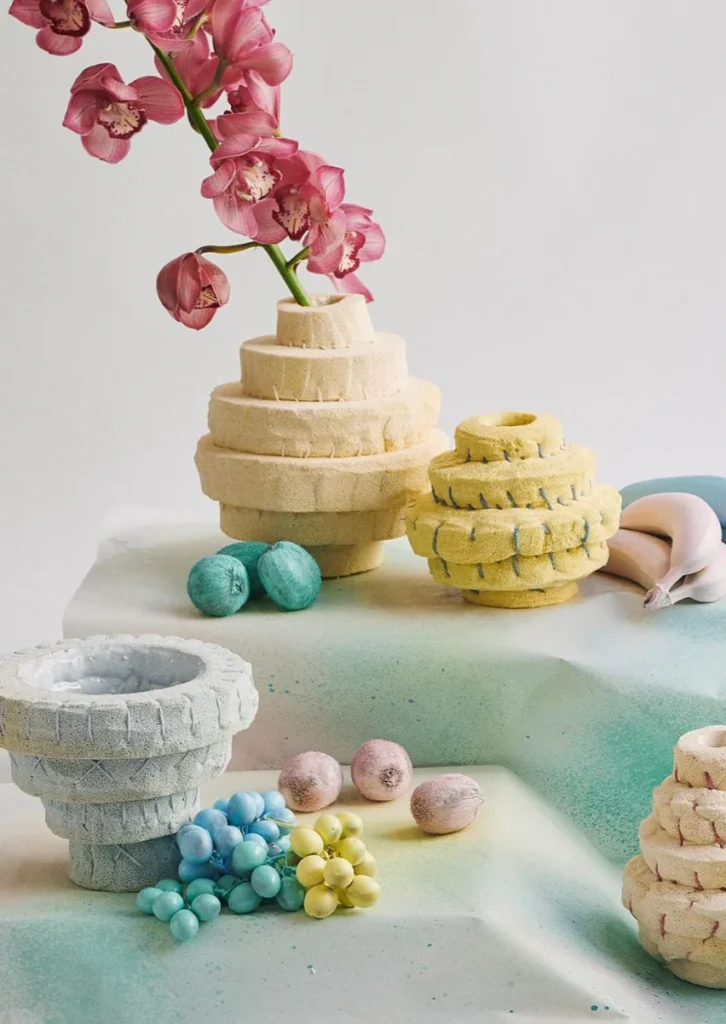
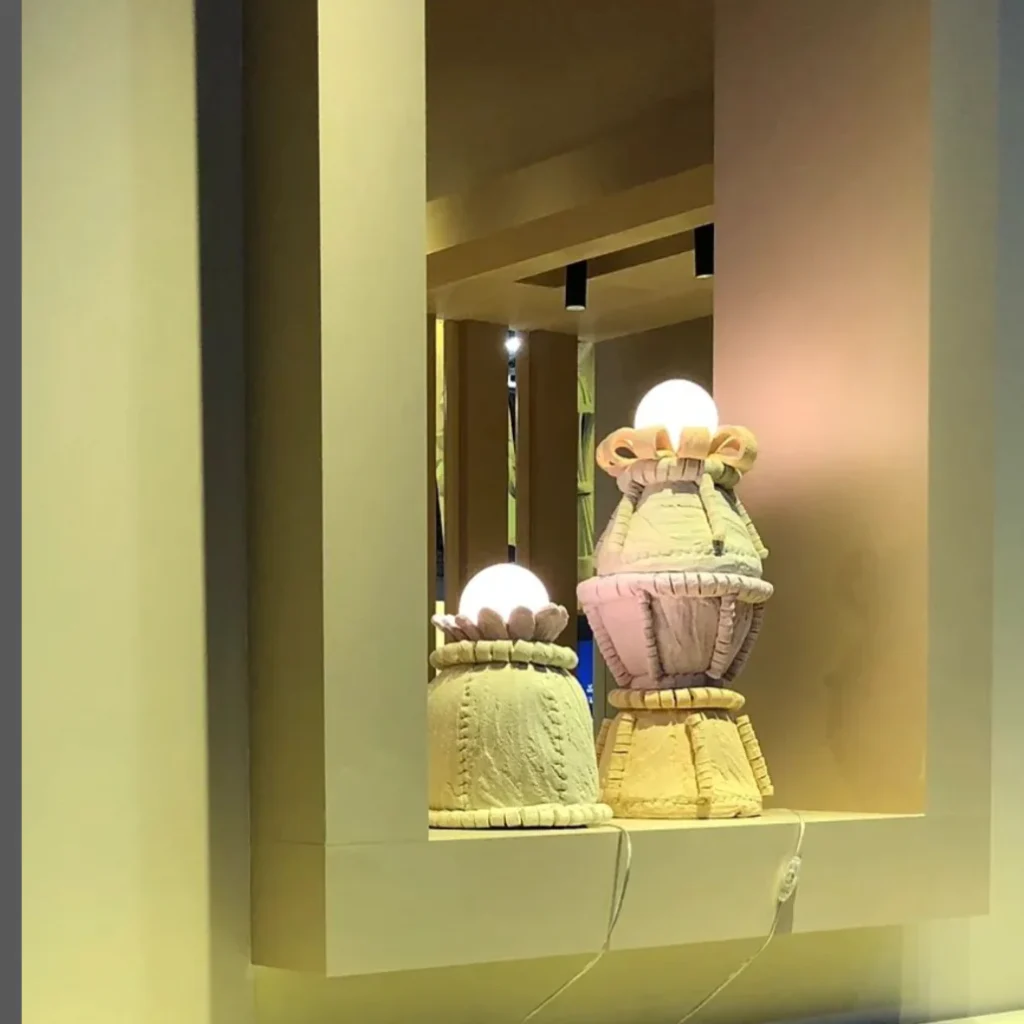
A key part of her language is surface. Foam naturally absorbs light and pigment in a soft, diffused way. It holds color differently than ceramic, glass, or plastic—more like skin than shell. Lopes Pereira uses this to create pieces that blur boundaries: they look functional, yet behave like sculpture.
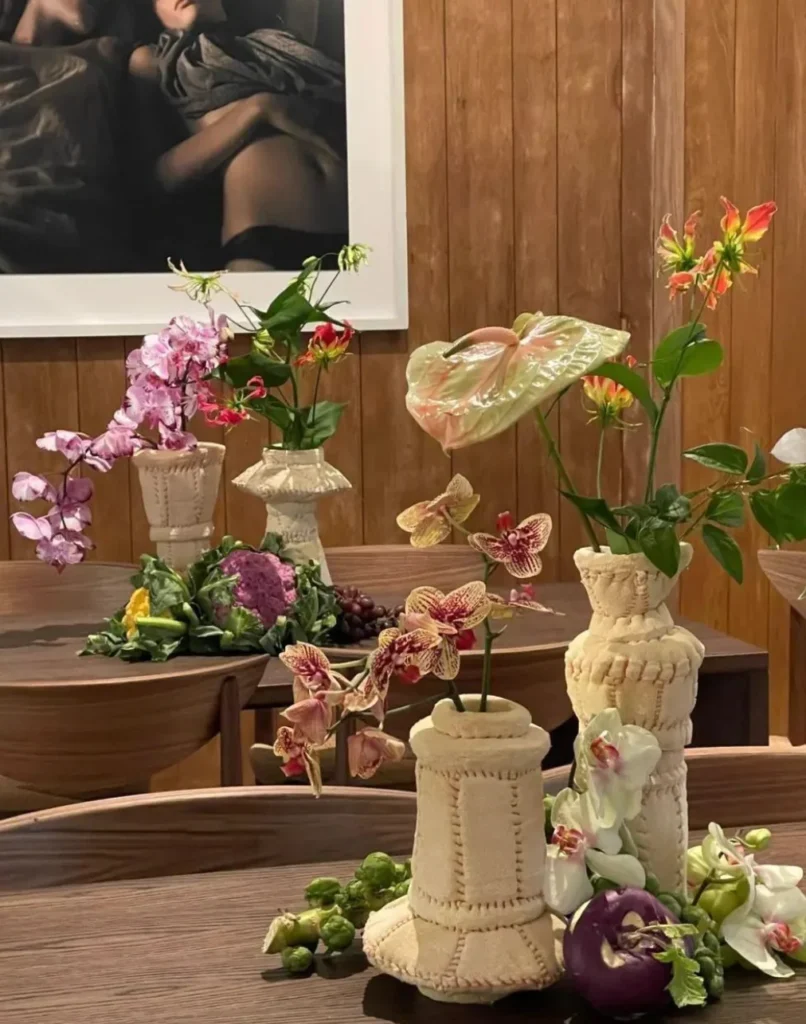
In many works, the hand-stitching becomes a graphic element—drawing lines across curves, adding rhythm, and emphasizing the object’s construction. This honesty of making is central: you can see how the piece came together, and that visibility makes it feel intimate.
Works to Watch: Botanista and Beyond
One of the most recognizable directions in her work is a series of foam vessels and sculptural containers that seem poised to “bloom” on a table. These pieces often balance organic volume with structured detailing, making them equally at home in a design collection or a curated living space.
The emotional effect is interesting: foam is normally associated with comfort and invisibility, but here it becomes expressive—almost ceremonial—like an object you keep not because you need it, but because it changes the atmosphere around it.
Where to Discover Her Work
If you’re exploring contemporary Portuguese design and material-led sustainability, Lopes Pereira is a name worth bookmarking. Her work circulates through curated design platforms and studio contexts, where process and concept are part of the story—not just the final object.
She also leads workshops focused on foam upcycling, reinforcing the idea that technique and accessibility can coexist to achieve collectible-level outcomes.
Why Her Approach Matters Right Now
Sustainable design can sometimes feel like a moral lecture. Lopes Pereira offers an alternative: sustainability as desire.
By transforming a low-status leftover into something tactile and elevated, she reminds us that the future of objects may start with what we usually ignore—soft scraps, backstage materials, the hidden infrastructure of comfort. And in doing so, she proves that responsible design can still be sensorial, playful, and deeply contemporary.


