


NOMAD St. Moritz returns to the Swiss Alps from 12–15 February 2026. Its signature blend of collectible design, contemporary art, and curated special projects, will be inside the newly transformed Villa Beaulieu. Set in the Engadin Valley, the winter edition has become a magnet for collectors and design insiders. Precisely, it refuses the typical “fair hall” format. Here, the venue is part of the exhibition, and the pace is intentionally unhurried.

Why St. Moritz remains NOMAD’s flagship winter destination
NOMAD positions itself as a roaming showcase where art, architecture, and design meet in intimate, character-driven settings. It is more of a salon than a trade show. St. Moritz is its winter cornerstone, celebrated for the dramatic dialogue between built space and landscape. Here, frozen lakes, sharp light, and that unmistakable Alpine clarity make materials (stone, wood, metal, glass) feel almost louder. In 2026, the event marks its ninth Swiss edition, reinforcing the idea that St. Moritz it’s part of NOMAD’s identity.
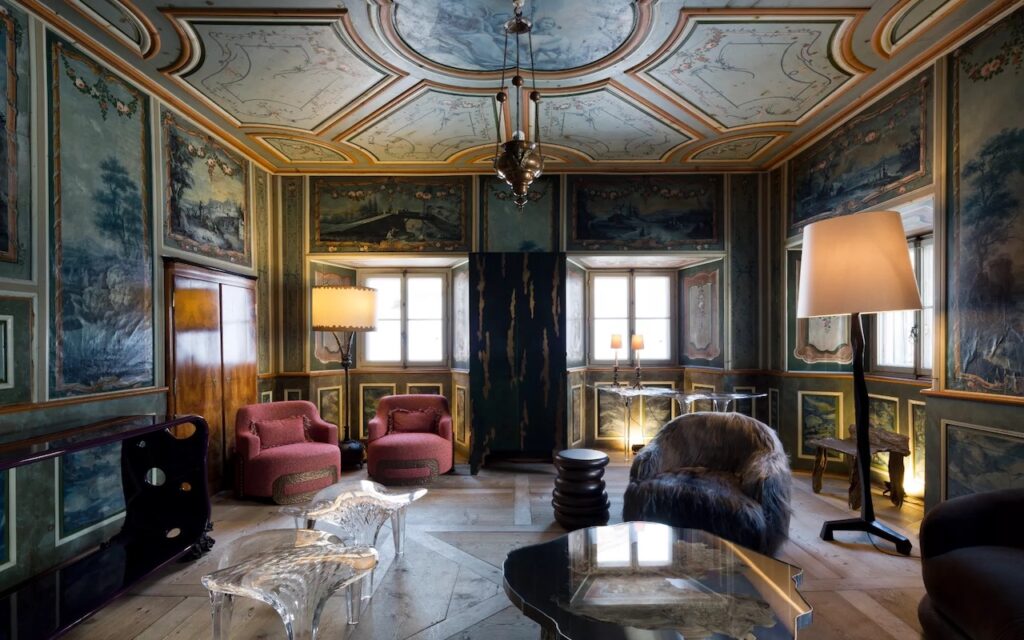
Villa Beaulieu: a venue designed to be discovered room by room
For 2026, NOMAD inhabits Villa Beaulieu (Via Arona 34, St. Moritz). This is a site previously known as Klinik Gut, now fully renovated and reframed as a sharper platform for exhibitions. The organizers describe it as more spacious yet still remarkably intimate. The highlights are panoramic views that constantly pull the outside world into the interior experience.
What’s especially compelling is how NOMAD treats the villa like a lived-in stage set rather than a neutral container. The plan (as described in early previews) is to dress the space with objects sourced from historic Swiss hotels and private villas, creating a layered atmosphere where “heritage” is not an aesthetic shorthand but a conversation partner for contemporary work. The effect is deliberate: you’re meant to feel like you’re moving through a home—one with very, very good taste—rather than sprinting past booths.
What to expect: collectible design, contemporary art, and special projects
NOMAD’s format is built around two pillars: galleries and special projects. Galleries bring a coherent programme and a curatorial viewpoint; special projects expand the field into collaborations, experiments, and crossovers—often where design, art, and jewellery start to blur in the best way. NOMAD explicitly encourages proposals that include a focus on sustainability, signalling that craft, rarity, and responsibility are no longer separate conversations in the collectible design world.
Even if you arrive with a mental checklist—“lighting, seating, ceramics, one outrageous sculptural thing”—the real pleasure is the unexpected: a material you’ve never seen used that way, a historical reference that suddenly feels current, or a piece that reads differently when you catch it from the corridor, framed by a window of snow-bright mountains.

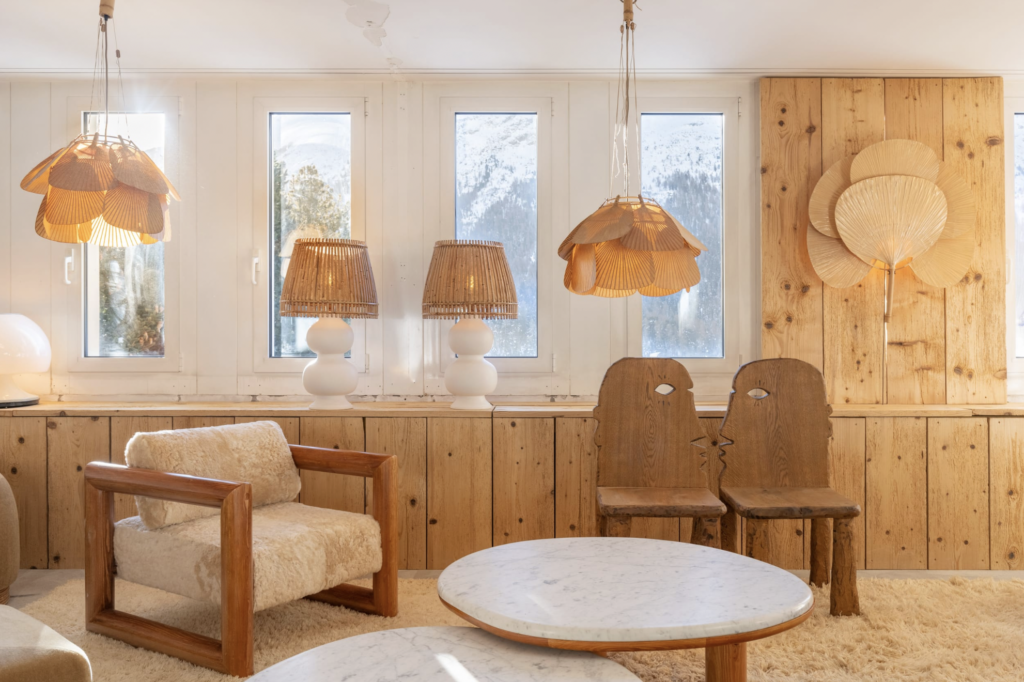
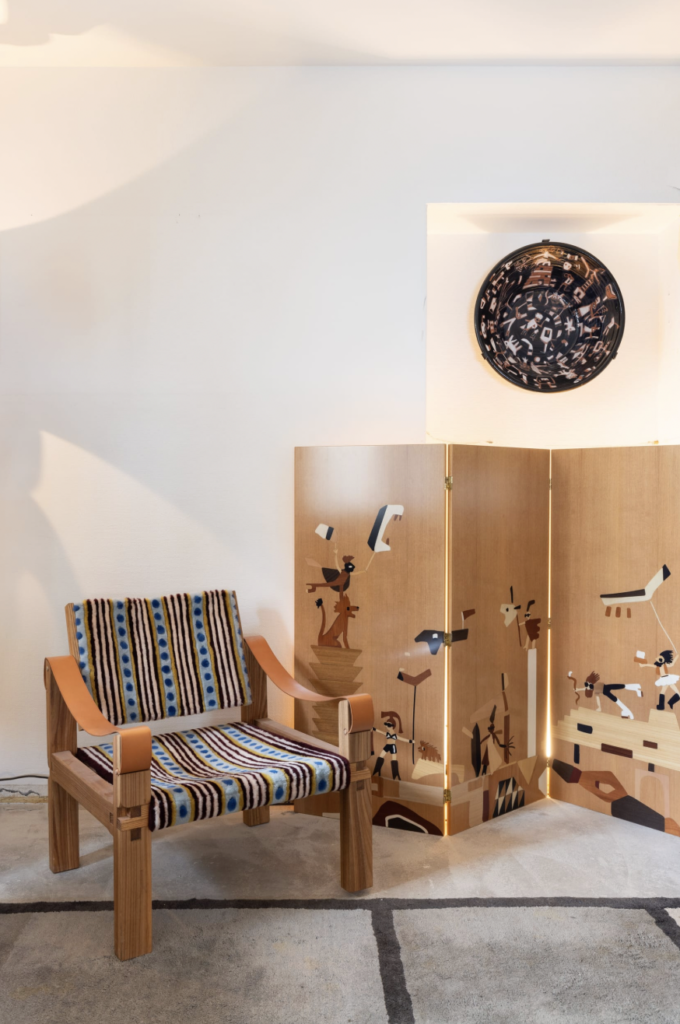
How to experience NOMAD St. Moritz like a local (and like a collector)
Start with a simple strategy: go slow. NOMAD is designed for repeated passes—one for first impressions, one for deeper looking, and one for conversations. If you’re collecting (or collecting-in-spirit), ask about provenance, editioning, fabrication, and how a piece lives in a domestic space. The setting makes these questions feel natural rather than transactional.
And consider building a longer cultural weekend around it. St. Moritz’s 2026 design season overlaps with other programming in town—most notably Der Pavilion, a new cultural platform scheduled to open on 29 January 2026, with exhibitions and experiences running into February, intentionally coinciding with NOMAD’s dates.
Why NOMAD matters in the 2026 design fair landscape
In a year where the global design calendar continues to evolve—some mega-fairs expanding while smaller formats gain cultural weight—NOMAD stands out for treating curation and architecture as inseparable. It’s not just a place to “shop” design; it’s a place to understand it: how it’s staged, how it’s contextualized, and how it resonates when the environment is as thoughtfully composed as the objects themselves.
Visit NOMAD’s official website >


