

About Reme Amoròs
Spanish artist Remè Amoròs stands out for figurative paintings that confront beauty, belief, and power with a fearless, narrative voice. Working primarily on wooden panels, she blends oil, acrylic, watercolor, and mixed media to build textured scenes where people—and their stories—take center stage. Her practice, which she describes as a second phase begun in 2015, runs in parallel with her work as a drawing teacher, anchoring her studio research in everyday life while pushing against convention.
2025 has marked a visible rise in Amoròs’s profile. To start with, she was a finalist for the Exhibition at the Ateneo de Madrid within the TarTget International Painting Prize. Then she received the Hue & Eye Promotion Prize associated with the competition. This acknowledgment spotlights artists poised for broader international attention. The TarTget Painting Prize’s own platform lists Hue & Eye among its partners and supporting galleries, underscoring the collaboration that led to this recognition.
Please continue reading to discover the exclusive interview Hue&Eye had with her!
–
Hello Reme! Where did you grow up, and where do you live and work now?
I grew up in a town very close to the city of Murcia, in the southeast of Spain. I currently live in that city and also work there as a teacher.
When and how did you realize you wanted to become an artist?
There was never a specific “when” or “how”; there wasn’t a precise moment in my life because it emerged naturally. I began to create and, above all, to capture what surrounded me. But I set those first beginnings completely apart from the phase I’m in now—they only helped me learn different techniques. What I did at the start has nothing to do with what I do today.
Can you tell us about your technique and what drives you to create art?
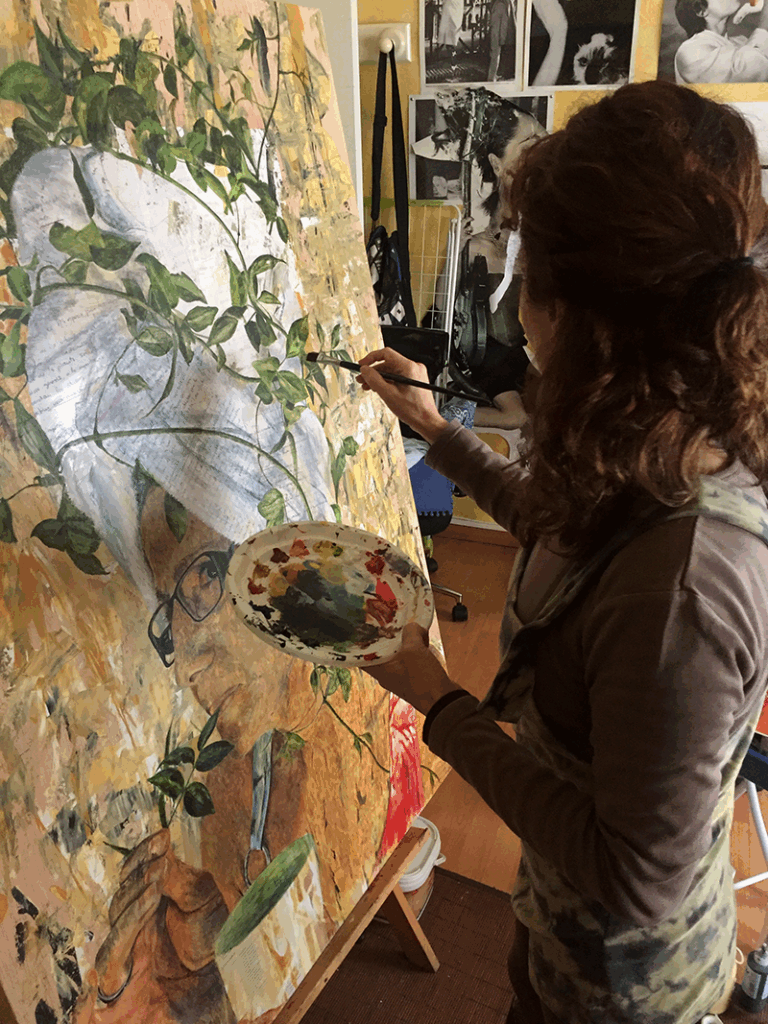
I mainly work in oil on wood because it feels more secure on a rigid surface. I really like creating textures, and can’t imagine a composition in which at least a bit of paint doesn’t stand proud of the support I’m working on. Also, I use acrylic and mixed media, but that’s not my usual approach.
As for what drives me to create art, I think my answer isn’t much different from what most artists would say: to show my own universe—or, better said, my particular vision of specific themes—and, above all, to feel useful. Creating is generating life within matter, which stimulates, motivates, and gives meaning to what I do.
What sets your work apart?
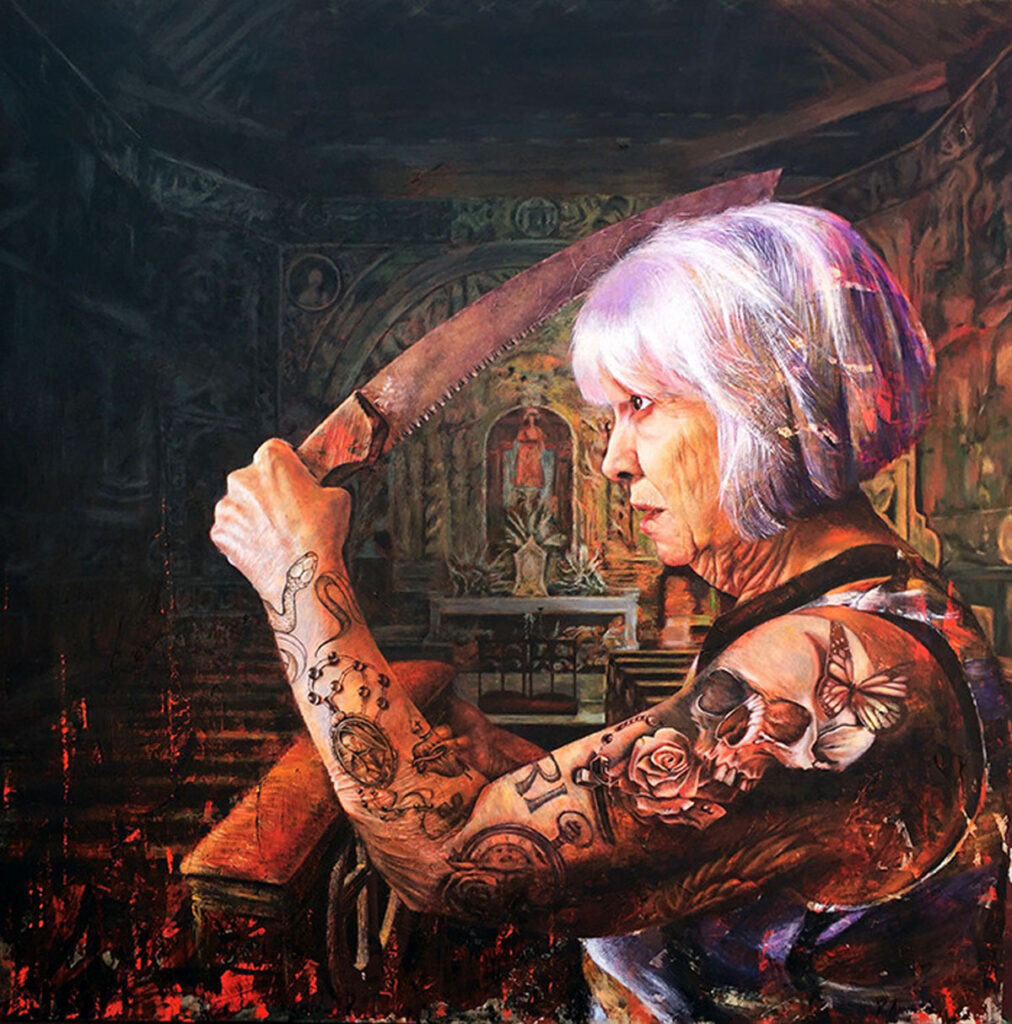
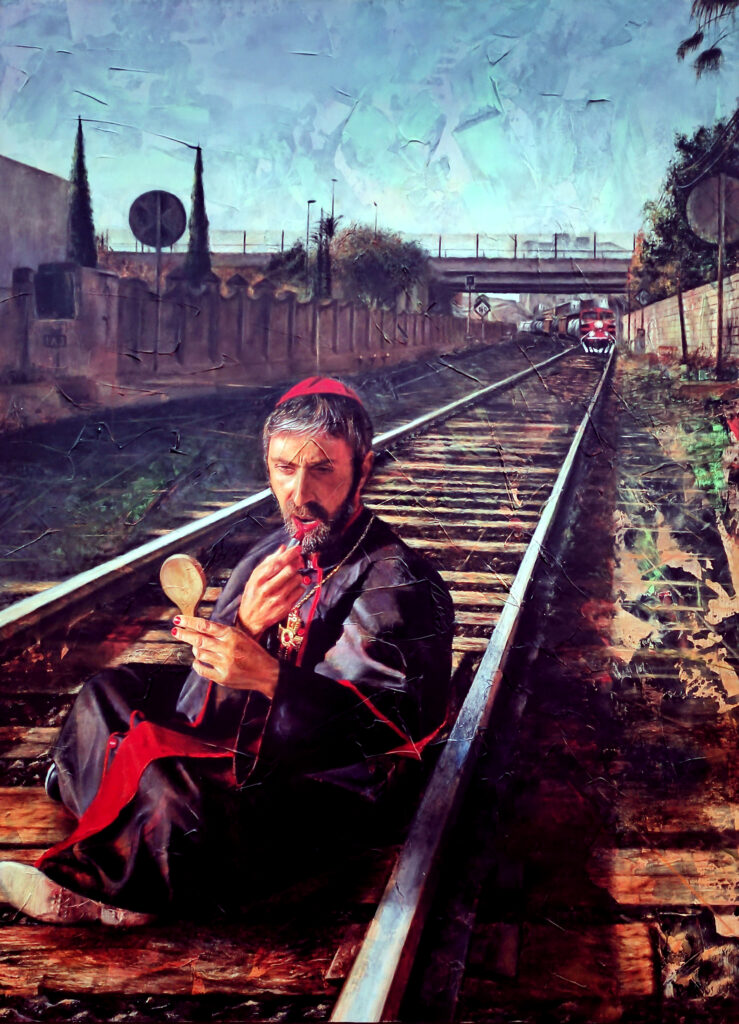
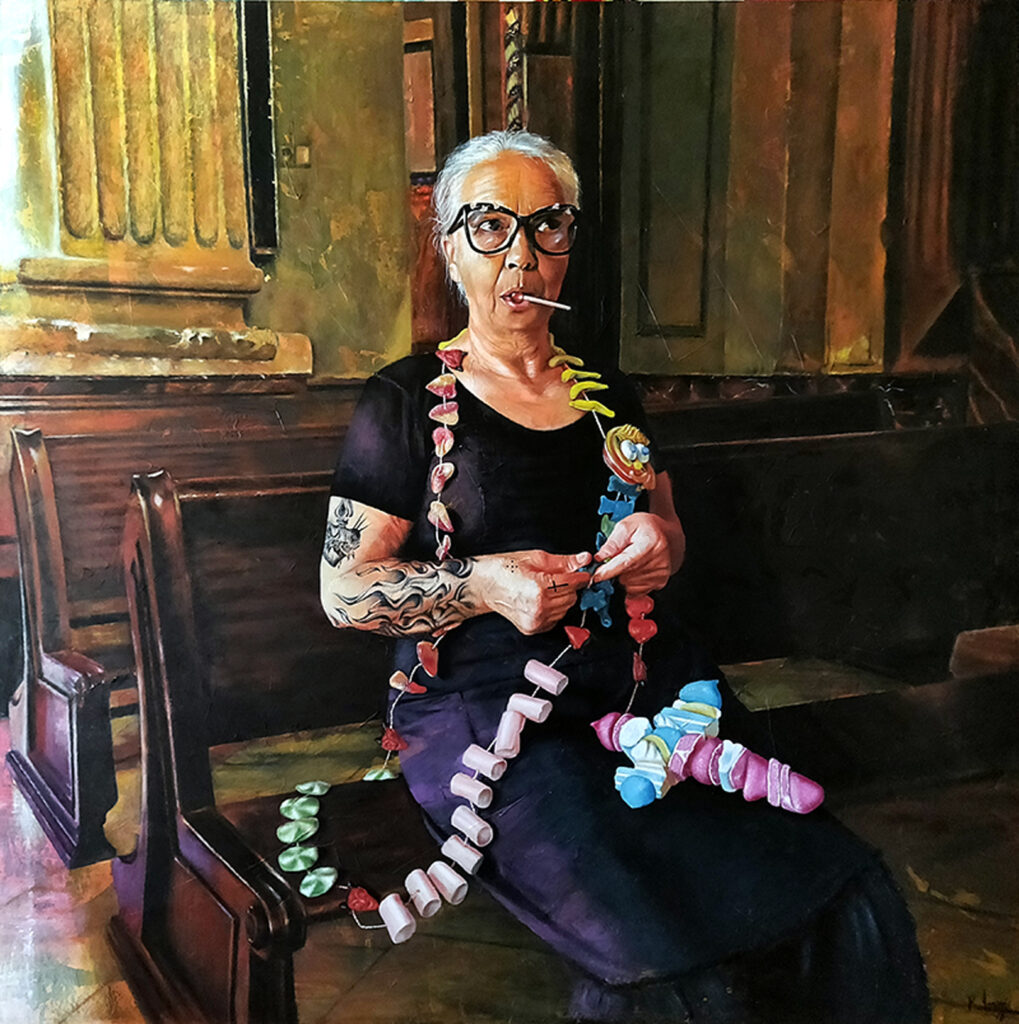
I’m aware that those who look at my work find it irreverent and provocative. I know I’m not the only one who ventures into those realms, but I do it in my own way—as everyone does in theirs, of course. I believe each artist tells everything from their own perspective.
Speaking strictly from the figurative standpoint, which is where I move, what I do know is what I don’t feel like—or have any interest in—depicting in images, and what I will never do. I’m referring to sweet, delicate beauty; to nostalgia; to everyday scenes tied to absolute normality or wrapped in an aura of mystery. I’m not interested in landscapes, whether slightly or highly idyllic; nor in idealized figures; nor in the objects around us unless they are part of a character’s life and help shape a portrait. In short, I’m not interested in representing reality exactly as it appears before my eyes. I’m also not interested in distorting or deforming that reality to create another that idealizes the first, connects with it, or recalls it… because others have done—and do—this wonderfully.
To depict that, I’d rather do nothing and devote myself to enjoying the art others create—not only the Fine Arts, but art in all its disciplines.
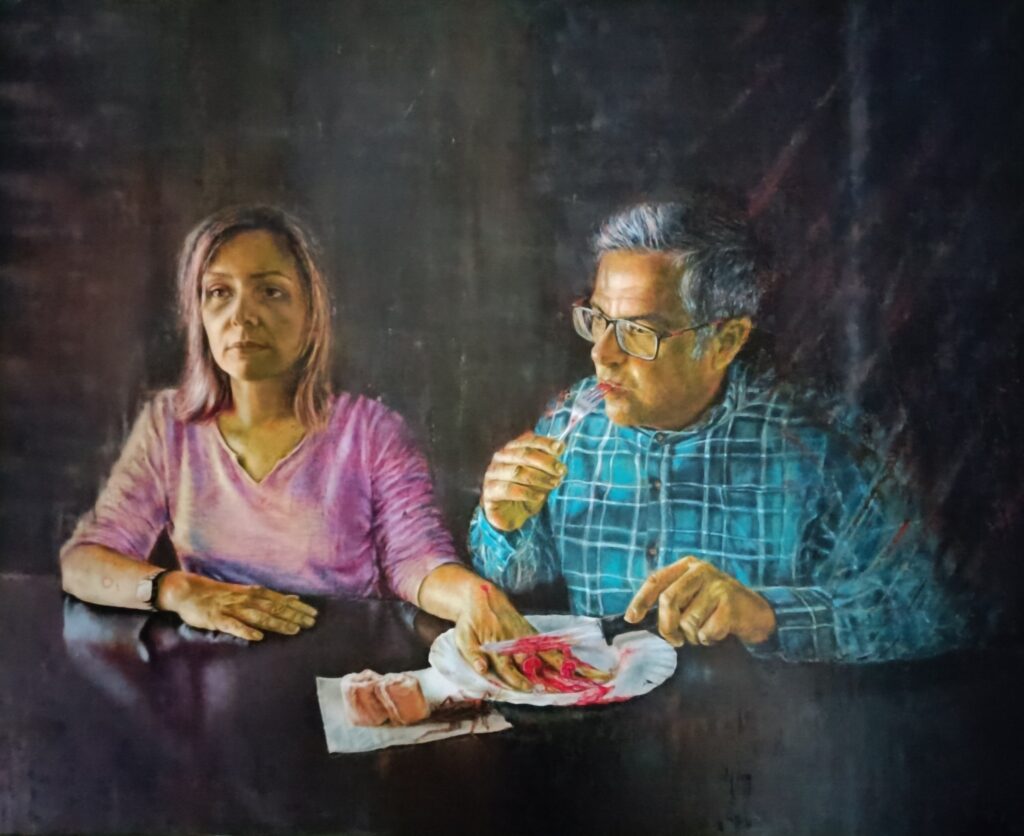
My work is that of a spectator: it captures specific, precise instants in which the character lays themselves bare, viscerally, before themselves—consciously or unconsciously.
Which of your works represents you most?
There isn’t a single piece that represents me; the entirety of my work does, and I stamp it with my personal mark.
There are several works related to the theme of women, but that isn’t the central focus of my painting, nor is it what interests me most.
I’m interested in human beings in general—like most artists—because it’s one of the most recurring and universal themes in the history of art, from its beginnings to the present. Humanity has always enjoyed the spectacle of itself, and it still does.
What or who inspires your work?
There isn’t anyone in particular who inspires my work. My favorite artistic movement is Surrealism.
I’m fascinated by surrealists like the Hungarian István Sándorfi, especially the Polish Zdzisław Beksiński, and the artist Remedios Varo, among many others.
But my work has nothing to do with any of them. My scenes are considerably less dreamlike and therefore more readily staged.
Is there anything outside of art that keeps you motivated?
Everything I choose keeps me motivated—I prefer it so that it stimulates me and helps me be happier, to dissipate the dark clouds.
How would you like people to engage with your art?
People should engage with my art in the same way they should engage with art in general.
They must respect freedom of expression and understand that, in many cases, art serves to prompt reflection and even to criticize major institutions.
It isn’t always like this; that isn’t always its purpose. It’s enough for it to awaken emotions, however simple they may be.
But ART CAN INCITE AND HELP US THINK.
As for changing the world, I doubt it. That seems like a naïve idea to me.
Spread the word! Do you have anything exciting on the horizon?
Yes, something is interesting on the way.
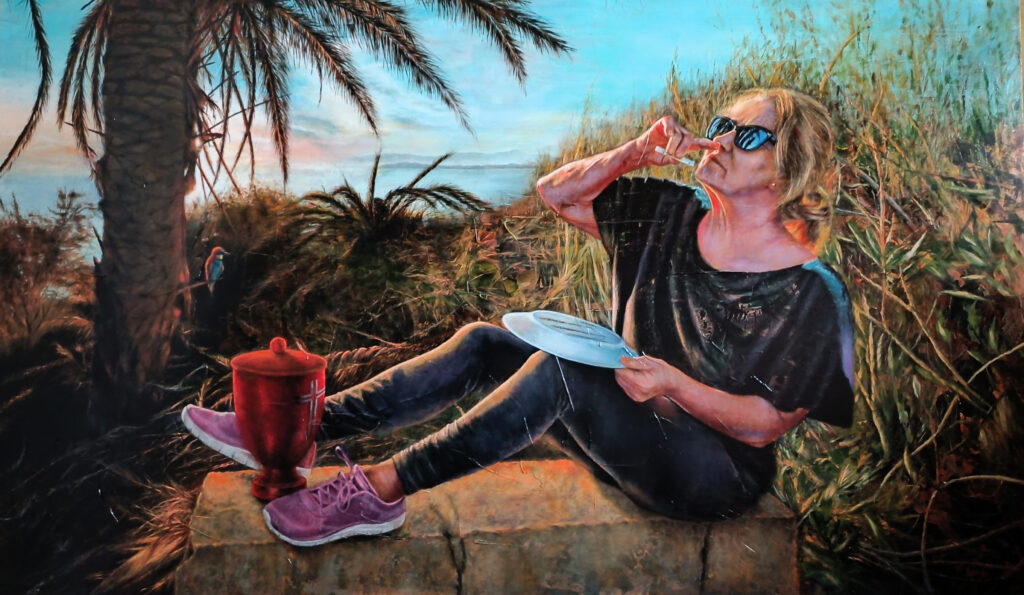
I’m finishing a series called “Witnesses”, about behaviors kept private: strange addictions and secrets that can be confessed… or not.
Addictions result from frustrations, fears, pain, and anger, and they can lead to mental health problems. All of this, in turn, translates into strange behaviors like eating paper or sniffing funeral ashes.
Secrets are secrets because there’s no interest in making them public. The reasons vary—for example, a lesbian relationship inside a convent.
At the same time, the common element and guiding thread through all the works is an animal that watches the scene but cannot, is not interested in, and does not care to tell what is happening.
That’s what I’m working on, and I hope it will see the light in the near future.
We wish Reme Amoròs all the best for her upcoming art.
To visit her website and learn more about her, go here >


