

The makers, conversations, and unexpected discoveries that made us look closer at EDIT Napoli 2026.
Design fairs are curious places. For a few days, ideas, objects, and people come together in a carefully orchestrated celebration of creativity.
Then, almost overnight, the stands disappear, the doors close, and everyone moves on to the next event.
But what happens when the fair is over? What remains beyond the photographs, the Instagram stories, and the inevitable lists of highlights?
At Hue&Eye, we believe that’s when the most interesting part begins.
Our visit to EDIT Napoli 2026, held from October 9 to 11 at La Santissima, was guided by a simple idea: Keep Looking Closer. Not simply looking at what designers make, but understanding why they make it, how they work, and what it takes to turn an independent creative vision into something tangible.
And Naples, with all its beautiful contradictions, proved the perfect setting.
Beyond the Product: Why Independent Makers Matter
There is something particularly thrilling about designers who operate somewhere between art and product design.
Their work often escapes conventional categories. A functional object may carry the expressive freedom of a sculpture, while an artwork might emerge from an intimate understanding of materials, techniques, and everyday rituals.
We are drawn to these makers.
Not necessarily the most established names or those supported by large manufacturing companies, but the independent creatives who often work without an industrial structure behind them. Designers who are researchers, craftspeople, entrepreneurs, and storytellers at once.
We’re most interested in the person behind the work.
What inspires their research? How do they approach materials? How do they balance creative independence with the practical demands of production?
At EDIT Napoli, we asked.
David Valner: When Glass Becomes a Personal Language
For David Valner, glass is much more than a material. It is family heritage, a field of experimentation, and a medium that lets everyday objects take on an almost sculptural presence.
Based in the Czech Republic, Valner grew up surrounded by the country’s glassmaking tradition. Today, his studio combines artisanal knowledge with contemporary artistic research to create works that challenge our expectations of a familiar material.
His collections reveal different aspects of this approach. Fungus and Parassitica, inspired by the organic structures of fungi and mycelium, transforms glass into unusual, almost living forms. The artistic touch, colored glass that pours onto the surface, gives the final pieces a unique, bold accent.
Meeting Valner at EDIT Napoli let us explore this fascinating balance between technical knowledge, artistic freedom, and personal memory. His work raises an interesting question: when does a functional object become a work of art?
DLA Design Lab and Vittorio Rossi: A Dialogue Between Illustration and Design
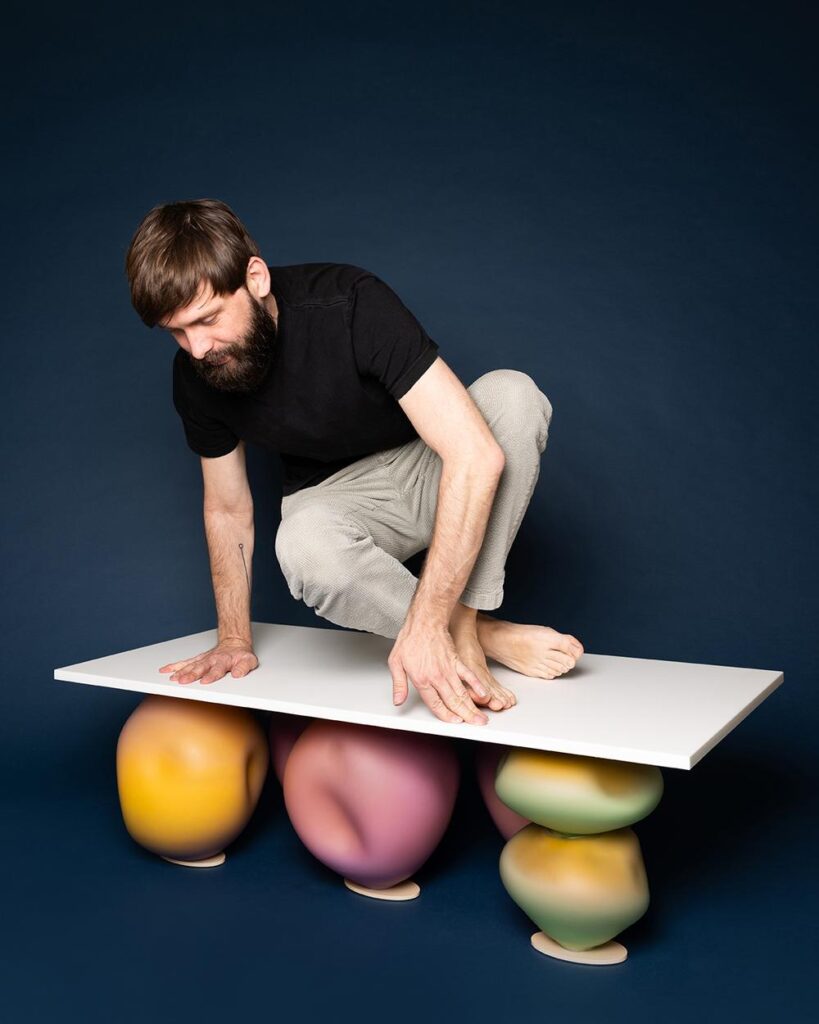
Our conversation with Max Delle Sasse of DLA Design Lab offered another perspective on contemporary design: the possibility of bringing diverse creative disciplines together in a single collection.
The studio’s work spans furniture, decorative objects, textiles, and wallpaper, often embracing expressive shapes, graphic compositions, and unconventional interpretations of familiar domestic elements.
One particularly interesting example is its collaboration with Vittorio Rossi, a young, talented graphic and street artist. The Arco rug, inspired by Genoa’s iconic urban arches, translates a graphic language into a textile object, letting illustration move beyond its margins and become part of a living space.
Our meeting with Max and Vittorio let us discuss the relationship between visual culture and product design. It reflects our interest in creative practices that resist rigid definitions and explore new possibilities by connecting independent creatives with established firms.
Visualizza questo post su Instagram
Katryna Sadauskaitė: The Poetry of Simple Forms
Sometimes, the most intriguing objects are those that appear deceptively simple.
Lithuanian designer Katryna Sadauskaitė, who exhibits as Katryna, has developed a visual language rooted in geometry, balance, and the expressive relationship between shapes.
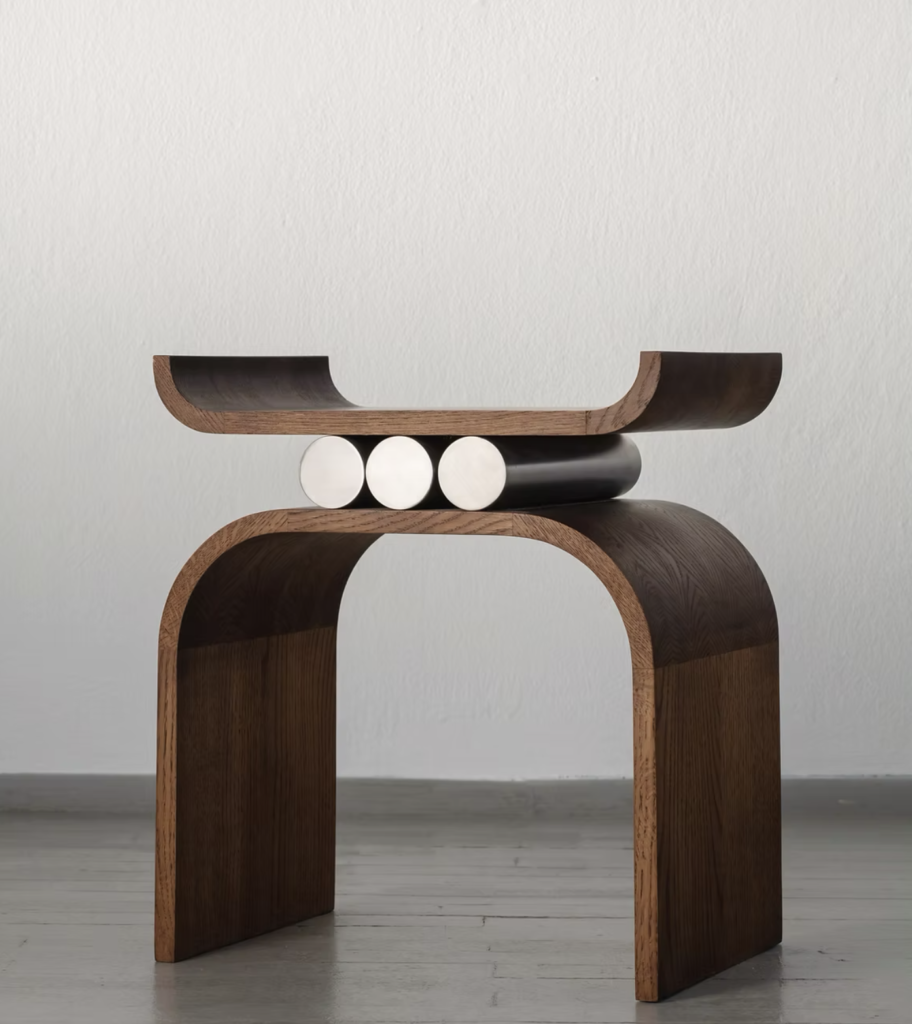
Her FUGA series offers a compelling example of this research. The collection includes benches and other domestic objects, combining wood and stainless steel to create distinctive furniture designs with conceptual shapes that reinterpret familiar functions through sculptural compositions.
The Moon Candle Holder earned her The Best Unreleased Product Award in EDIT Napoli’s Seminario section in 2025, recognizing a practice that moves naturally between design and artistic expression.
Our conversation let us look beyond the elegance of her forms and consider how she creates objects that feel both minimal and emotionally expressive, creating a captivating visual dialogue by skillfully balancing and contrasting harmony.
Inge Simonis: Between Art Deco and Brutalism
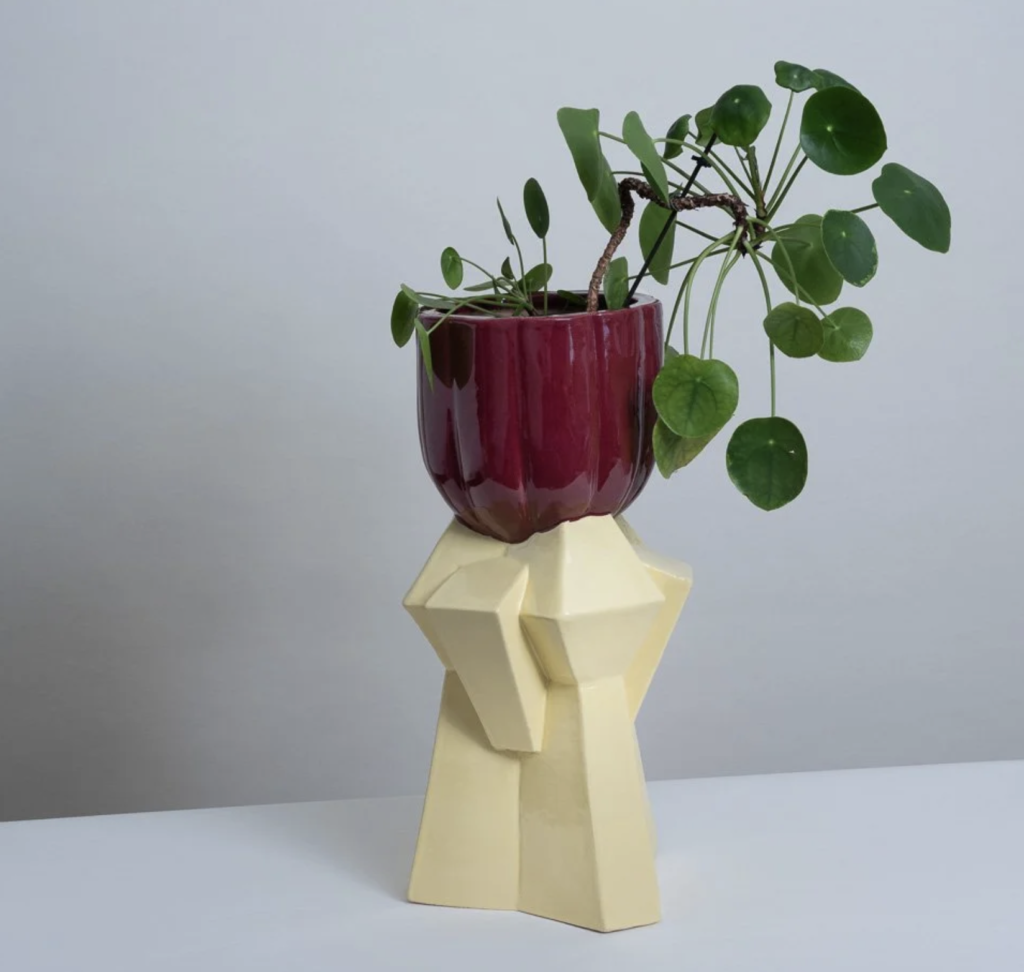
Dutch designer Inge Simonis brought another interesting material perspective to EDIT Napoli with the launch of Floral Brute, a collection inspired by the meeting of two seemingly contrasting visual languages: the decorative elegance of Art Deco and the structural strength of Brutalism.
The combination is intriguing. One celebrates ornament, rhythm, and stylized nature; the other evokes powerful volumes, material honesty, and architectural solidity.
Bringing these references together creates an opportunity to explore the space between softness and strength, decoration and structure. Inge also inspired us as a woman who researches her creative identity through traditional aesthetics and contemporary design.
Our conversation gave us a chance to explore how the most interesting ideas often emerge when apparently separate forces find a common ground.
Beyond the Interviews
Different countries, different materials, different creative visions. Yet what connected these encounters was our curiosity about the process, not just the finished product.
We didn’t want to collect quick quotes between one stand and another. We wanted to listen, exchange ideas, and establish relationships.
Because ultimately, an object becomes much more interesting when you understand the person who imagined it.
These conversations will continue through the pages of Hue&Eye Mag, where we will share the stories, discoveries, and individual perspectives we brought back from Naples.
Looking Ahead: Elena Sambucci and the Future of Design
One of the most meaningful moments of this year’s edition was also one of the closest to our editorial mission.
As sponsors of Work@Home, the design competition developed by AANT – Accademia delle Arti e Nuove Tecnologie in collaboration with Prezioso Casa, we had the opportunity to follow a young designer’s journey from an academic brief to the international stage of EDIT Napoli.
Elena Sambucci, a third-year Product Design student at AANT, created the winning project, ESTRO.
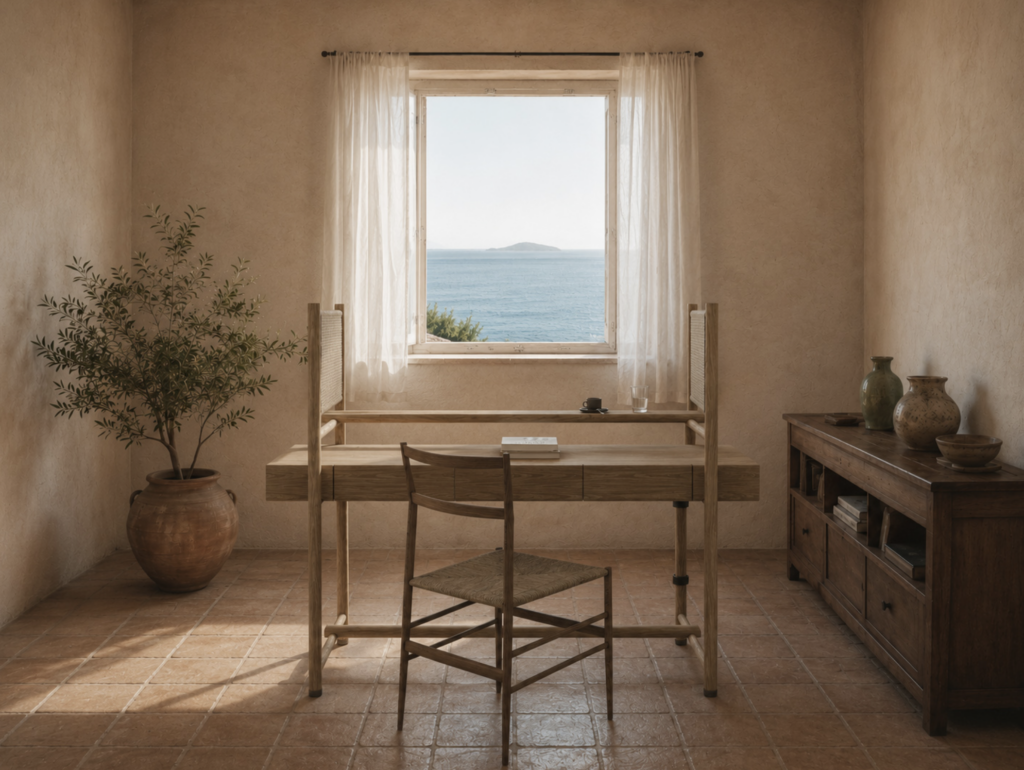
Her proposal reimagines the domestic workstation as something more than a practical piece of furniture. Designed to sit in front of a window, ESTRO encourages a relationship between work, observation, and the world beyond the screen.
Developing it, including collaborating with Neapolitan artisans, reminded us that design is never simply about having a good idea. It is also about finding the knowledge, people, and opportunities needed to bring that idea to life.
For Hue&Eye, supporting emerging talent means exactly that: helping promising creative voices move beyond the classroom and join a wider design conversation. Seeing Elena’s project presented at La Santissima, and later shown at Prezioso Casa, made that commitment especially rewarding.
After the Fair, the Stories Continue
Three days are never enough to understand everything a design fair has to offer. And perhaps that shouldn’t be the goal.
At EDIT Napoli 2026, we found what we were looking for: independent voices, generous conversations, unexpected connections, and projects that deserve more than a passing glance.
We returned with interviews to develop, stories to tell, and new relationships to nurture beyond Naples.
Because, for Hue&Eye, covering a design fair has never been about seeing everything or publishing first.
It’s about recognizing what deserves our attention, taking the time to understand it, and giving those stories the space they need.
The fair may have closed. Our curiosity hasn’t.
Keep Looking Closer.
Stay with Hue&Eye as we share the conversations, creative practices, and independent voices we discovered at EDIT Napoli 2026. >
Subscribe & receive The Hue&Eye Curated issues for free!
A new editorial feature from Hue&Eye Mag exclusively for our newsletter subscribers. No spam. Just thoughtful creativity in your inbox, once or twice a month.

