

A student design project that rethinks the home office desk
In April, Hue & Eye joined Work@Home as an editorial partner. The student design initiative, developed by AANT ahead of EDIT Napoli 2026, asked emerging product design students to rethink one of contemporary life’s most familiar objects: the home-working desk.
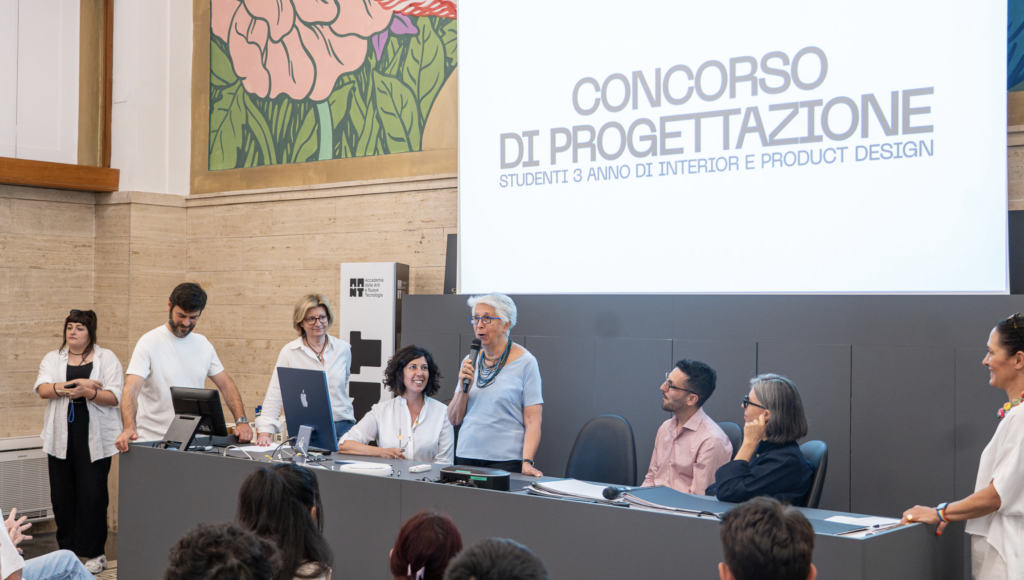
On Wednesday, June 10, 2026, the final jury gathered at AANT in Rome to choose the winning project. The jury included Domitilla Dardi for EDIT, Roberto Fusco for Prezioso Casa, Rossana Quarta and Giovanna Talocci for AANT and Maria Cristina Argento for Hue & Eye Magazine.
At first, the task seemed simple: assess a series of desk proposals. Yet the day revealed something deeper. It offered a clear view of how a new generation understands domestic space, emotional function, and the quiet rituals of work.
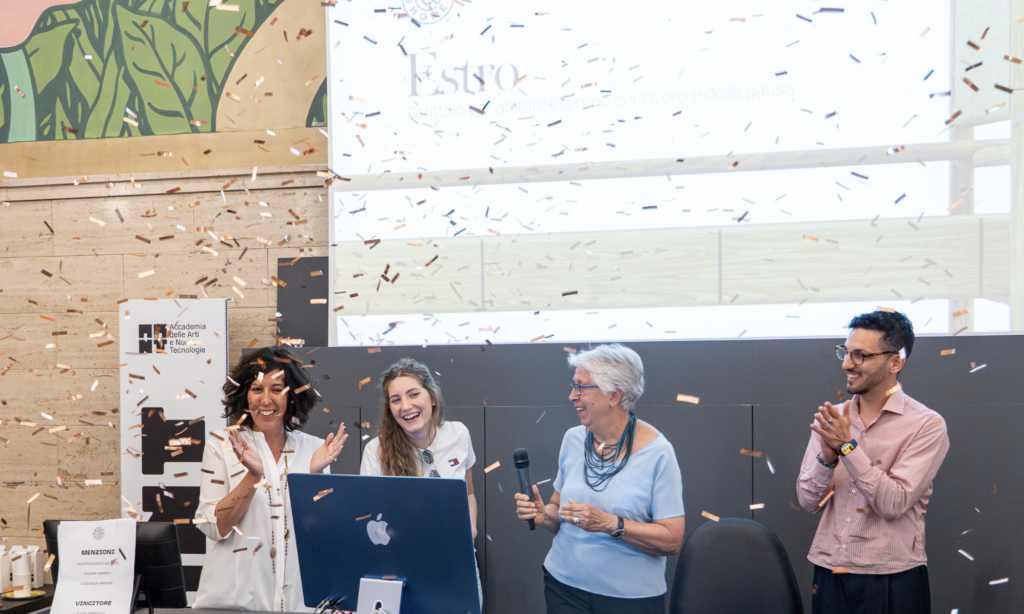
The jury reached a unanimous decision. Elena Sambucci, a third-year product design student, won the competition.
AANT and the Work@Home brief
Founded in Rome in 1992, the Academy of Arts and New Technologies (AANT) began as a professional school inaugurated by Nobel Prize laureate Rita Levi-Montalcini.
Today, AANT trains students across several creative disciplines, including graphic design, interior design, product design, scenography, and restoration.
With Work@Home, the academy invited students to respond to a precise cultural shift. The home office no longer sits at the edge of domestic life. It now shapes how people focus, pause, connect, and separate private time from professional time.
AANT developed the project with Hue & Eye and Prezioso Casa, as part of a wider path toward EDIT Napoli, the design fair dedicated to independent, authorial, and contemporary design.
Inside the final jury day in Rome
For Hue & Eye, joining the final jury meant more than selecting a polished object. The jury needed to identify a project that was clear, mature, and culturally relevant.
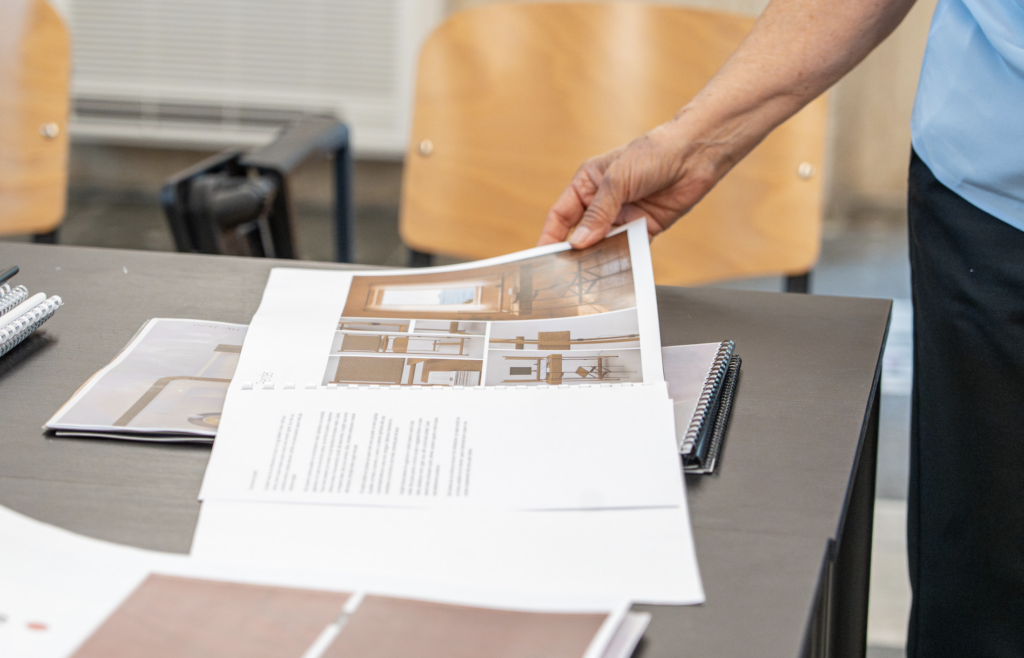
The day began in one of AANT’s largest classrooms. Students presented their proposals on screen with a short concept description and a 3D render. No names appeared beside the work.
This format allowed the jury to focus on the strength of each idea. Form, proportion, material choice, production logic, and spatial awareness guided the discussion.
The strongest projects did not chase novelty. Instead, they understood the desk as a contemporary condition.
Today, the home office no longer functions as a neutral corner of the house. It marks the point at which private and professional life overlap. It asks design to support efficiency, but also attention, comfort, and emotional balance.
Why Elena Sambucci’s project stood out
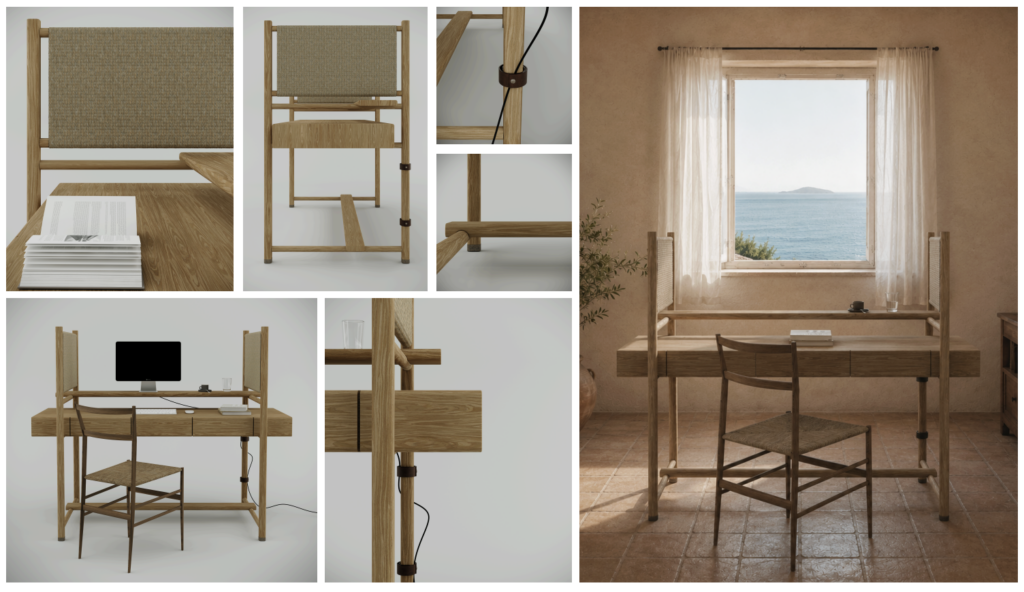
Elena Sambucci approached the brief with rare sensitivity with her desk ESTRO. She did not treat the desk as an isolated object. Instead, she placed it within a larger domestic landscape.
Her strongest gesture came through space. She imagined the desk by a window.
This choice may sound simple. However, it gave the project its intelligence. By placing the workstation near natural light, Sambucci addressed a crucial point in home-office design: productivity does not depend solely on efficiency. It also depends on the atmosphere, orientation, and the possibility of looking away.
Her design balances restraint with emotional precision. Minimal lines give the desk a sense of lightness. Meanwhile, the material choices remain deliberate and essential.
Wood forms the structural and tactile foundation of the piece. Fabric-covered side panels add privacy and soften the acoustic environment. Two slender wooden rods support the structure. The work surface includes only the compartments the user needs.
As a result, nothing feels decorative or excessive. Every element serves the same purpose: to create a place for concentration without cutting the user off from the world around them.
A desk for focus, privacy, and pause
The jury responded to the project because it holds together two needs that design often separates.
Sambucci’s desk offers protection, but not isolation. It creates focus, but still leaves room for pause. It supports work, but also gives the mind permission to drift, look outward, and reconnect with something beyond the screen.
That balance makes the project especially relevant now.
Contemporary homes must perform many roles throughout the day. They act as offices, refuges, studios, meeting rooms, and places of rest. Sambucci’s proposal understands this pressure. More importantly, it answers it with clarity rather than noise.
Her desk does not make the home office feel like home. It refines it.
Other Mentions
In addition to Elena Sambucci, three students received special recognition for their innovative desk designs:
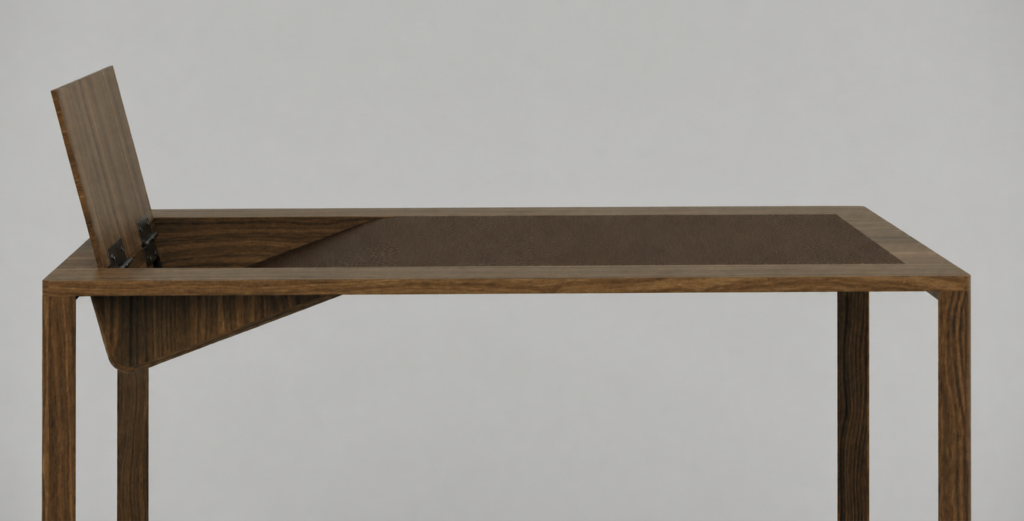
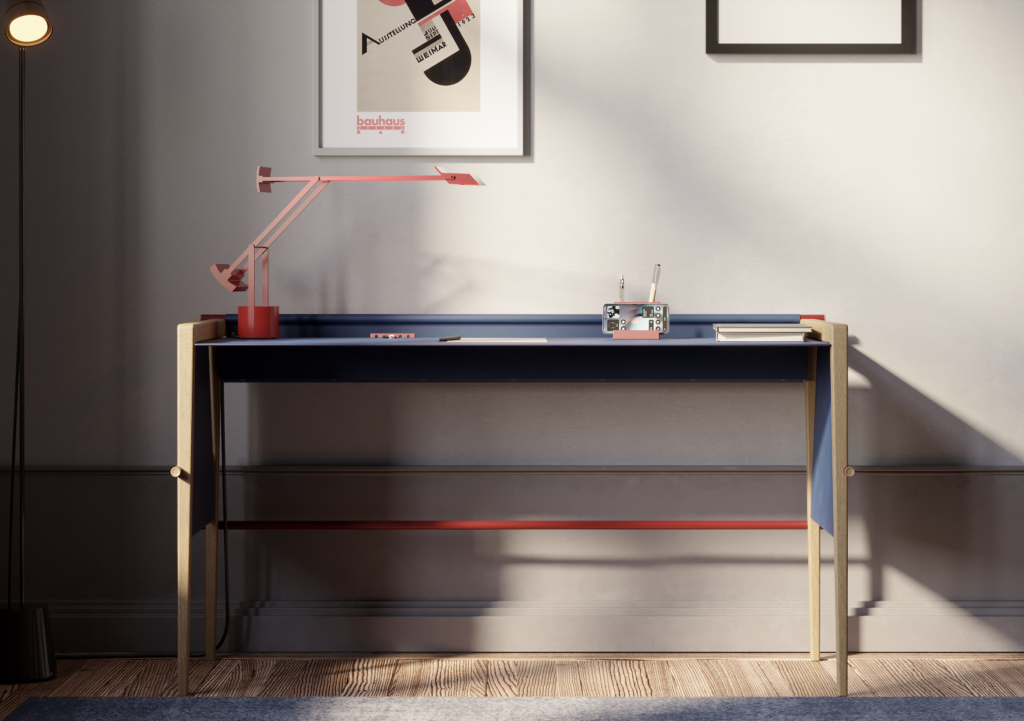
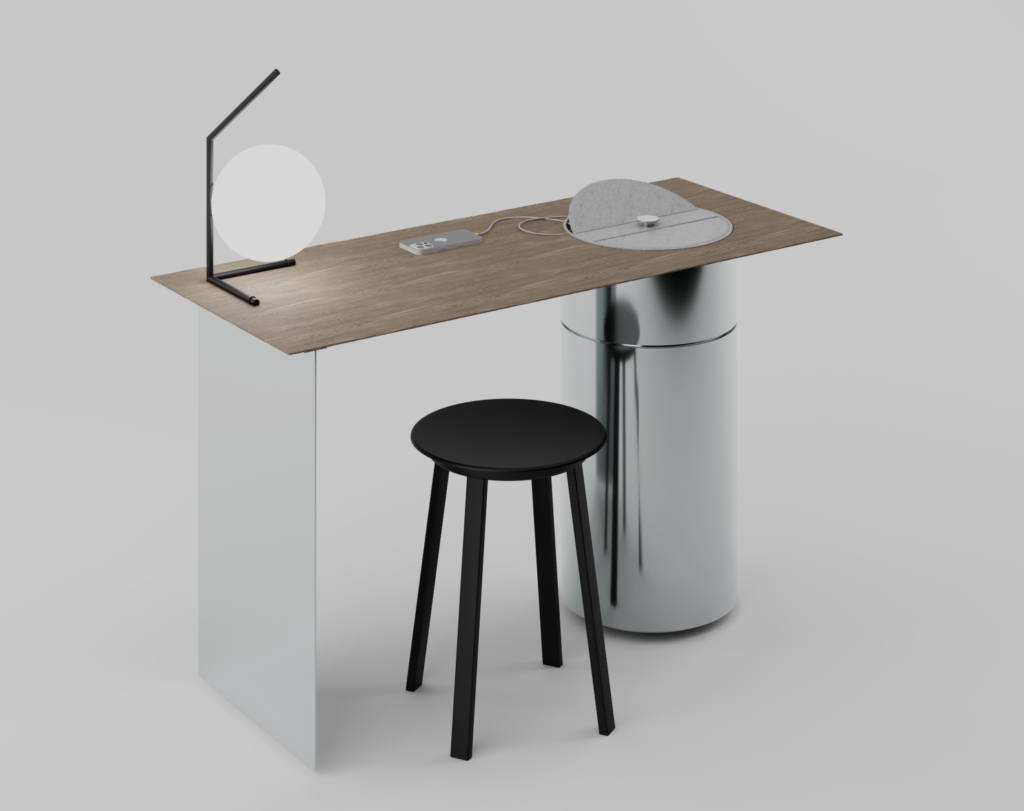
Costanza Armone, Interior and Public Design (Class IIIC), introduced STILLA—a desk that transforms the workstation into a mental gateway. More than a functional element, it serves as a device to help users achieve deep focus and immersion.
Pierfrancesco Sallemi, Third Year, Product Design, developed ZELO—a desk with a compact footprint, featuring a slender top and a minimalist wooden frame. The design is intentionally free of excess, prioritizing clarity and functionality.
Chiara Ferrero, Interior and Public Design (Class IIIA), created ONOOF—a desk designed to foster an essential habit: tidying away laptops, documents, and work tools quickly after finishing a task, even during a lunch break. This encourages a clear separation between work and rest.
Hue & Eye’s view on emerging design
For Hue & Eye, Work@Home confirmed why emerging design deserves serious editorial attention.
People often discuss student work as a promise of what may come later. This competition showed something else. Young designers already ask the questions that shape how we live now.
Elena Sambucci understood that design can solve a technical problem and carry emotional resonance at the same time. In her hands, a desk became more than a surface for work. It became a frame for attention, privacy, light, and imagination.
The most meaningful part came after the jury’s decision. Sambucci moved from student to emerging professional almost overnight. She began engaging with the production process alongside professionals, including Prezioso Casa.
Work@Home marks a strong beginning. It stands as a partnership and as a wider commitment: to give emerging designers the visibility, context, and critical attention they deserve.


