

About Inge Simonis
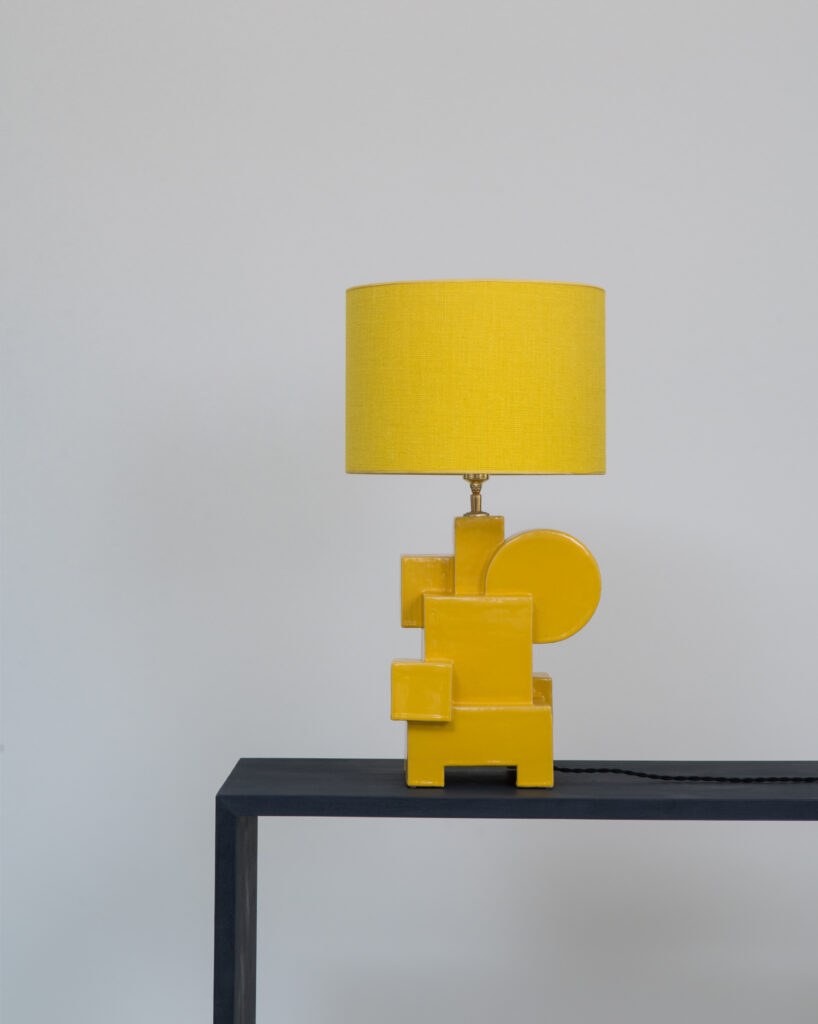
Dutch designer and ceramic artist Inge Simonis transforms her fascination with architecture into sculptural objects. They blur the boundaries between art, design, and everyday functionality. Originally trained in spatial design, Simonis discovered her passion for clay and developed a distinctive creative language. Today her style is rooted in bold geometries, tactile surfaces, and intuitive craftsmanship.
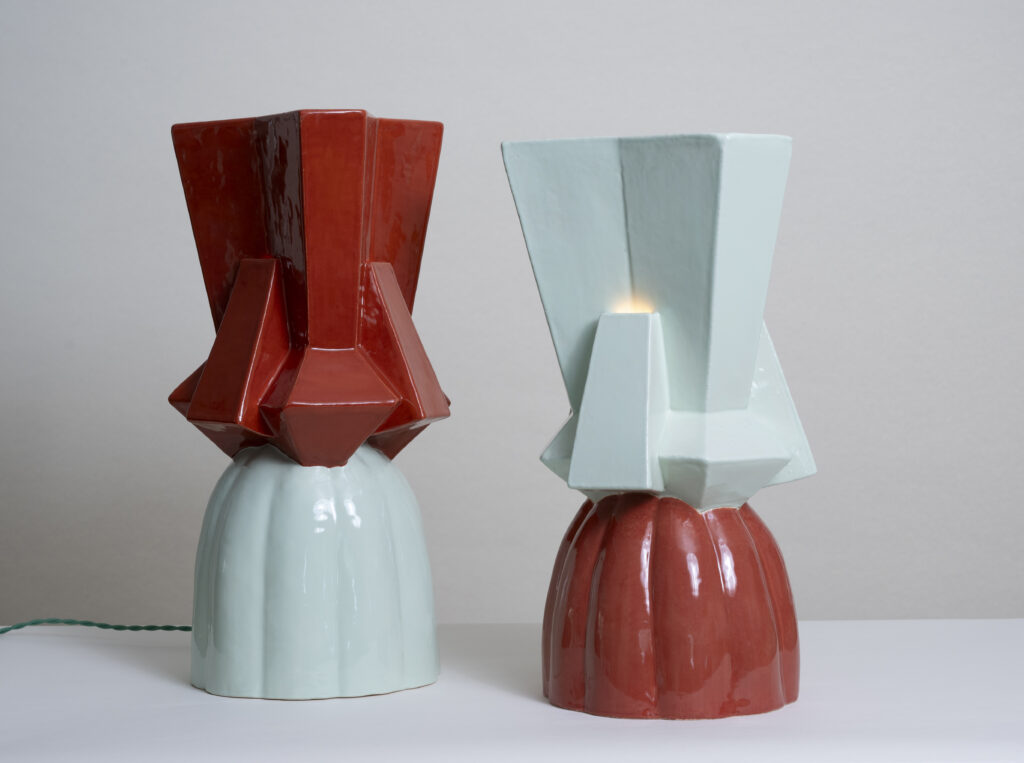
At EDIT Napoli 2026, she introduced Floral Brute. Her latest collection explores the unexpected dialogue between Art Deco’s decorative elegance and Brutalism’s architectural strength.
We met Inge during Edit Naples to discuss her creative journey, her relationship with materials, and the freedom of translating architectural inspiration into contemporary ceramics.
–
Hello Inge! You once dreamed of becoming an architect, yet clay eventually became how you shaped the world around you. Architecture creates spaces for people to inhabit, while your ceramic pieces bring a similar sense of structure and presence into everyday life. Do you see your work as a more intimate form of architecture? And how has your understanding of what makes a space beautiful evolved throughout your creative journey?
I no longer necessarily view my work as a more intimate form of architecture, but rather in terms of how it is experienced. The tactility of architecture—the way a form might invite you to touch or caress it—can be difficult to achieve when the scale is vast; in such cases, you can only engage with it visually. Ceramics, however, offer that tactile possibility.
Then there is the sense of wonder one can experience within a building—where the eye embarks on a voyage of discovery, revealing an entirely new world around every corner.
My concept of a beautiful space hasn’t necessarily shifted because of working with clay; rather, it has evolved through observing fashion—a form of “architecture” for the body—where material choices and compelling shapes manifest on a scale that is smaller than a building, yet larger than a ceramic piece. I think of designers like Balenciaga, Harris Reed, or Dries Van Noten. They possess—or possessed—the unique ability to harmonize the human scale with architectural forms.
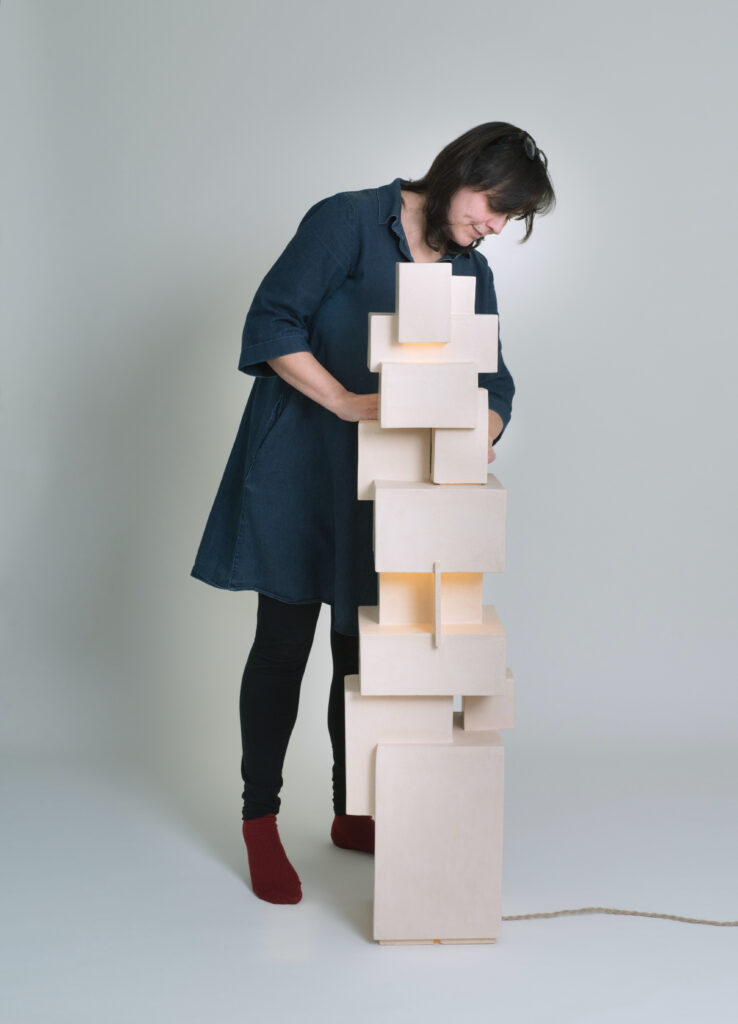
Creating something by hand is a personal process in which experience, imperfections, and intuition become part of the final object. Your practice has evolved from functional tableware to increasingly sculptural, one-of-a-kind pieces. How much of this evolution reflects your personal growth? Do you believe that, as we change as individuals, our creations inevitably become a reflection of who we are becoming?
This change reflects my growth as a designer and artist. As I get older, I find I have more courage—the courage to express myself more openly and be less affected by others’ reactions. On the other hand, I’ve also made a practical shift. Initially, what drew me to working with ceramics was the use of molds, which allowed me to produce multiple pieces that I could then reshape after removing them from the mold. Eventually, however, working with molds began to feel restrictive; I felt more like a manufacturer than a creator. It wasn’t until the COVID-19 pandemic—when all restaurants were forced to close—that I finally felt empowered to leave that repetitive, labor-intensive practice behind. I was then able to return to free-form sculpting, which gave rise to my homages to my heroes: architects from the past.
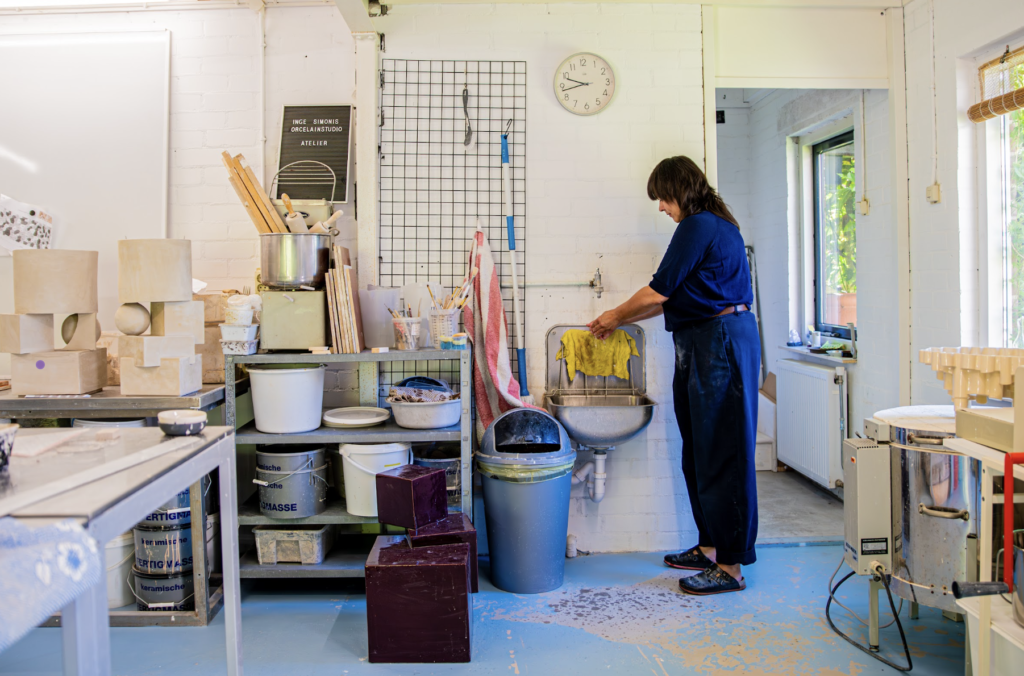
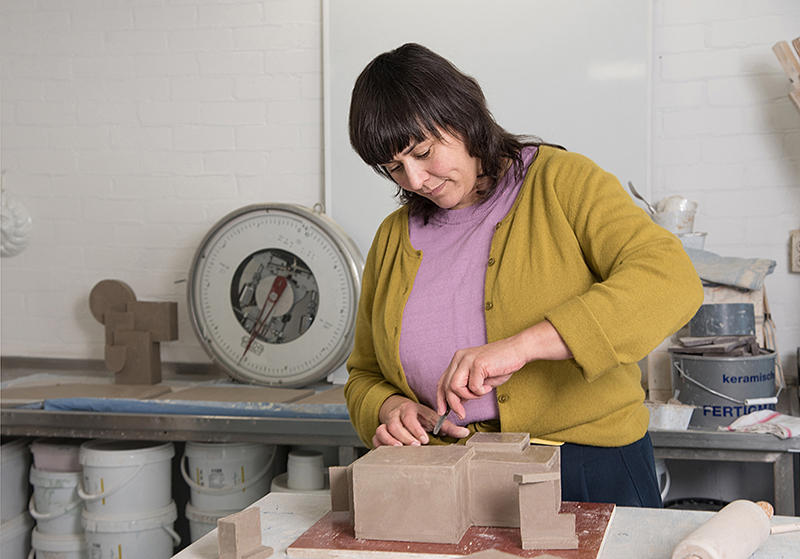
Dutch design is often associated with experimentation, functionality, and a certain freedom from convention. Yet your work also seems guided by a deeply personal belief in the energy and emotional presence of handmade objects. How much of your creative identity comes from the culture you grew up in? And how much from your own beliefs and experiences? Has encountering other craft traditions, such as those in China, changed the way you listen to your intuition and translate inspiration into form?
I was trained to think from the perspective of Dutch Design. Despite this, I don’t think I ever truly fit into that mold. At the academy, everything had to be intellectually justified. A specific way of thinking that doesn’t always apply when something emerges from intuition or feeling.
In recent years, the Netherlands has shifted toward working more from intuition, tactility, and craftsmanship, with the boundaries between design and art becoming increasingly blurred.
At the Design Academy Eindhoven, a program called “Studio Thinking Hands” prioritizes making and experimentation over purely cerebral processes. It’s based on the idea that our hands and the act of physical creation possess their own form of intelligence—one that exists independently of language or data (such as the intuitive understanding of materials, proportions, and craft).
This trend is also visible in exhibitions. For instance, at PAN, a Dutch art fair in Amsterdam, more and more design work has been presented that balances on the fine line between design and art.
I believe that I have always approached my work more through discovery—using my hands and focusing on craftsmanship—rather than through purely intellectual reasoning; the latter feels far.