

About David Valner
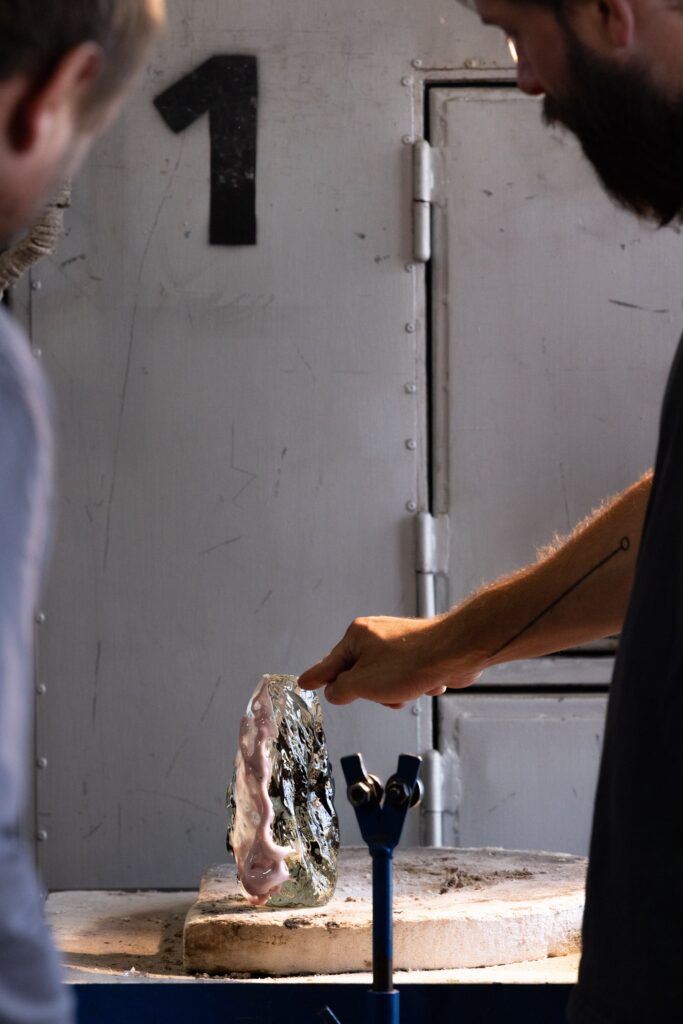
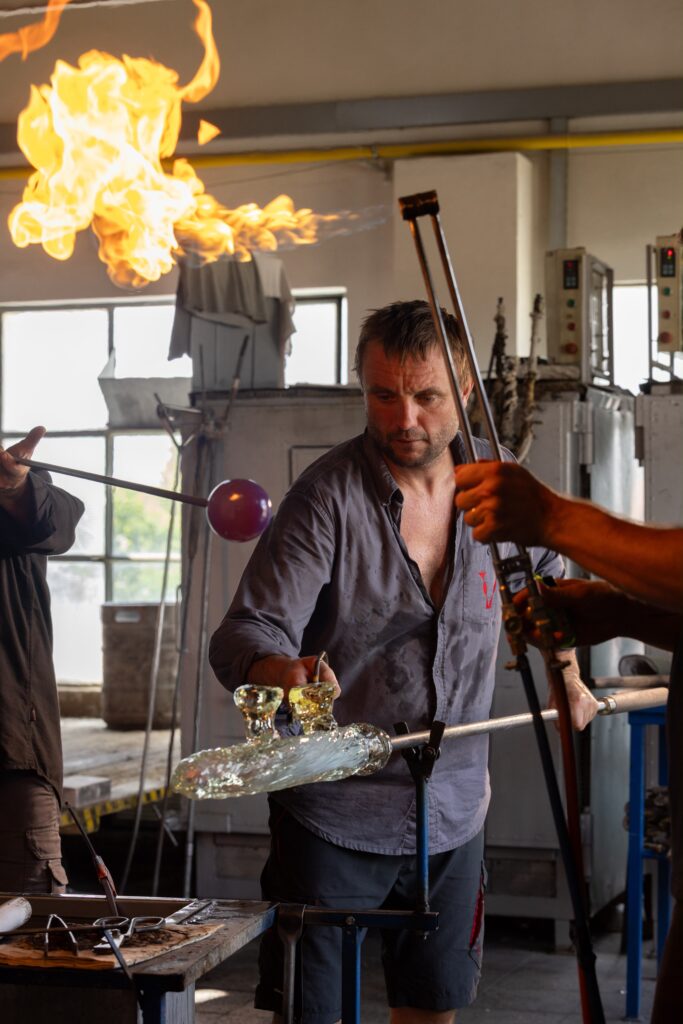
Raised amid the glow of his family’s glassmaking tradition, Valner absorbed the artistry and ritual of the craft from an early age. Today, he honors glass as a living, fluid material—embracing natural imperfections as hallmarks of authenticity and celebrating each piece as a singular testament to the artistry of handmade over the sterile uniformity of mass production.
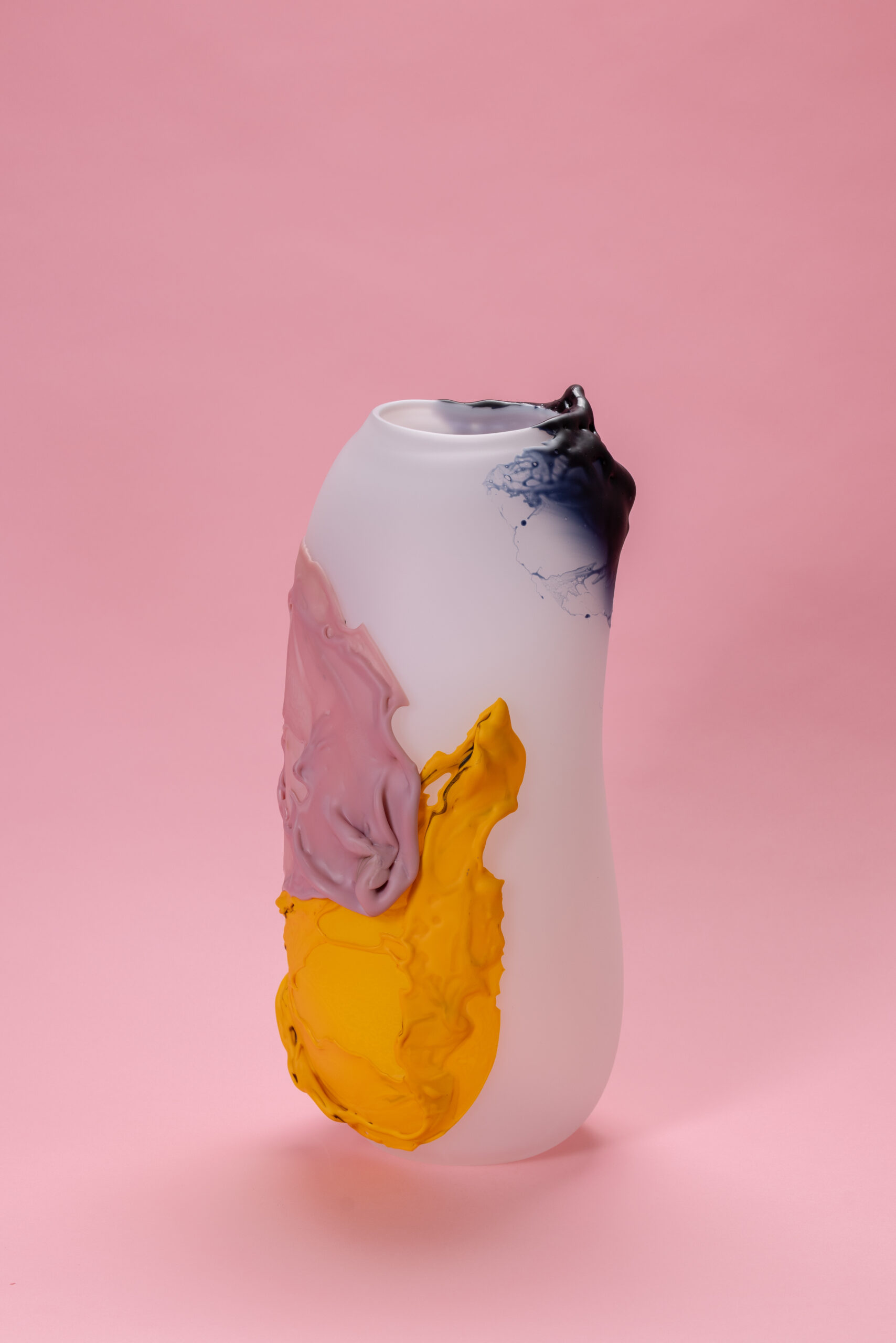
Parasitica by David Valner. Photography and video:Tereza Valnerová
Website: https://terezavalner.com/Instagram: @tereza.valner
© David Valner Studio
Website: www.valner.cz – Instagram: @valner.studio
Hello David! We know you come from a glassmaking heritage, and today David Valner is a collective working at the edge of art and design. We want to learn more about the shift from a family-oriented business to a more recognizable design firm. Was this a desire born of your own initiative?
My father, a craftsman and artist himself, founded what was then a relatively small family glassmaking studio. With his team, he focused on exceptional craftsmanship and high-quality glass production, a tradition I continue to build on today. The studio developed its own collections while later gradually establishing itself as a highly skilled production partner for other designers and creative studios. This remains an important part of what we do today, as we continue to collaborate with internationally recognized figures in design and art, helping them bring their ideas to life through glass. I inherited this foundation through my father’s work.
However, my own artistic background took a rather different direction. Instead of studying glass, I studied fine art, focusing on sculpture, objects, interactive installations, and video art. During my studies and the early years of my career, my work had very little to do with glass. Around 2017, I began bringing these two worlds together through David Valner Studio. Since then, I have gradually developed my own artistic language and built the studio into what it is today.
Tereza Valnerová
Website: https://terezavalner.com/
Instagram: @tereza.valner
© David Valner Studio
Website: www.valner.cz
Instagram: @valner.studio
Tereza Valnerová
Website: https://terezavalner.com/
Instagram: @tereza.valner
© David Valner Studio
Website: www.valner.cz
Instagram: @valner.studio
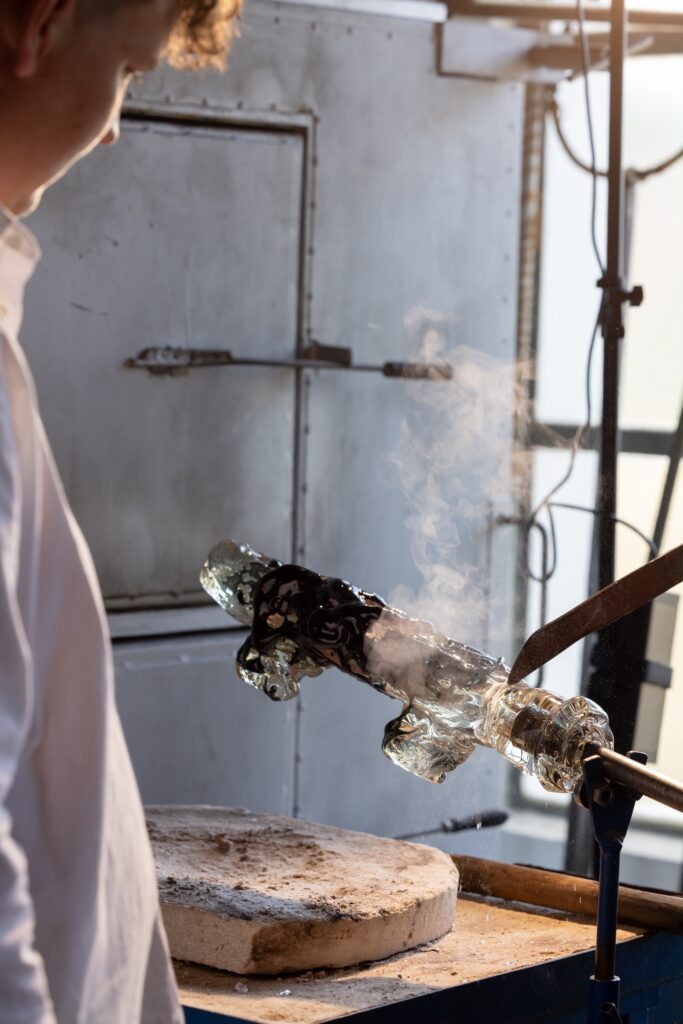
Photography and video:
Tereza Valnerová
Website: https://terezavalner.com/
Instagram: @tereza.valner
© David Valner Studio
Website: www.valner.cz
Instagram: @valner.studio
When you begin working on a piece, do you start with a specific function in mind, or do you allow the material to take shape autonomously—leaving it to the end user to determine its placement and function within their own space?
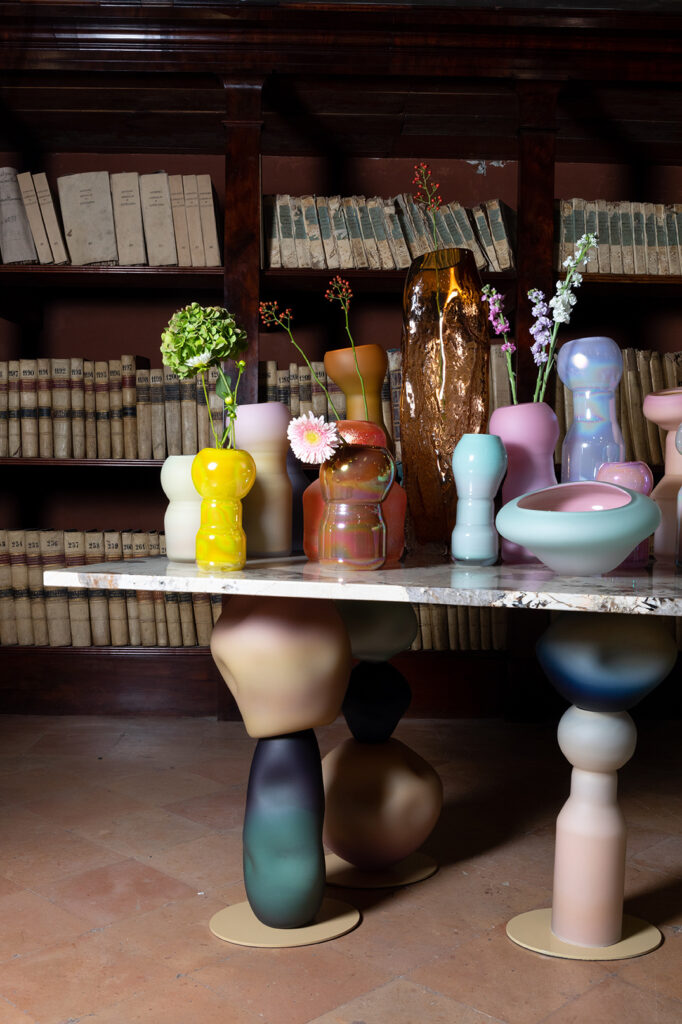
To push back against mass production, you embrace the defect as a form of respect for the material as a free, fluid entity. How does this show up in your work process, and how do you know when a piece is complete?
I genuinely celebrate every imperfection, every variation in shape. To me, this is the very essence of craftsmanship. It’s not that I couldn’t design and produce more precise or standardized objects, but in my approach, something essential would be lost, and I would probably lose interest in the process.
My creative process always begins with an idea, concept, or story I want to capture and interpret through a collection. This is how I am used to working. Only then do I begin searching for the right form, mainly through experimentation.
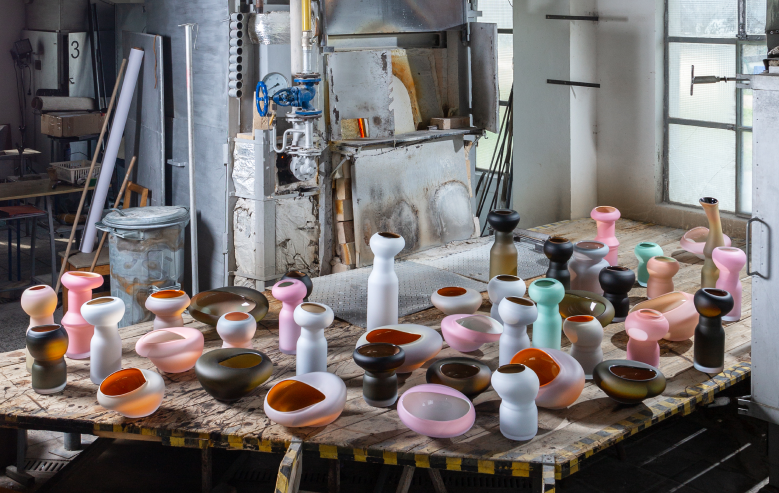
The way the colored glass blends on the vases in your Parassitica collection clearly reflects your sensitivity to color. Does this use of tints happen spontaneously, or do you plan your palette and application from the beginning?
My use of such bold colors and their combinations grows directly out of the concepts behind each collection. In recent years, I have been interpreting, among other things, the worlds of fungi and mould. It is an incredibly rich and colorful universe, especially when viewed under a microscope, and this principle forms an important foundation for collections such as Fungus and Parasitica. The color combinations themselves are intuitive. I never really had to stop myself from using strong colors; they came naturally. Looking back now, I can see a recurring pattern. I often create a vivid yet harmonious palette, and then disrupt it with something sharper, louder, more contrasting, and seemingly out of place. The process is spontaneous, but in hindsight, this is probably a principle that runs through my work.

