

The Italian designer talks about scale, public art, Maison&Objet, and the evolving language of his ceramic practice.
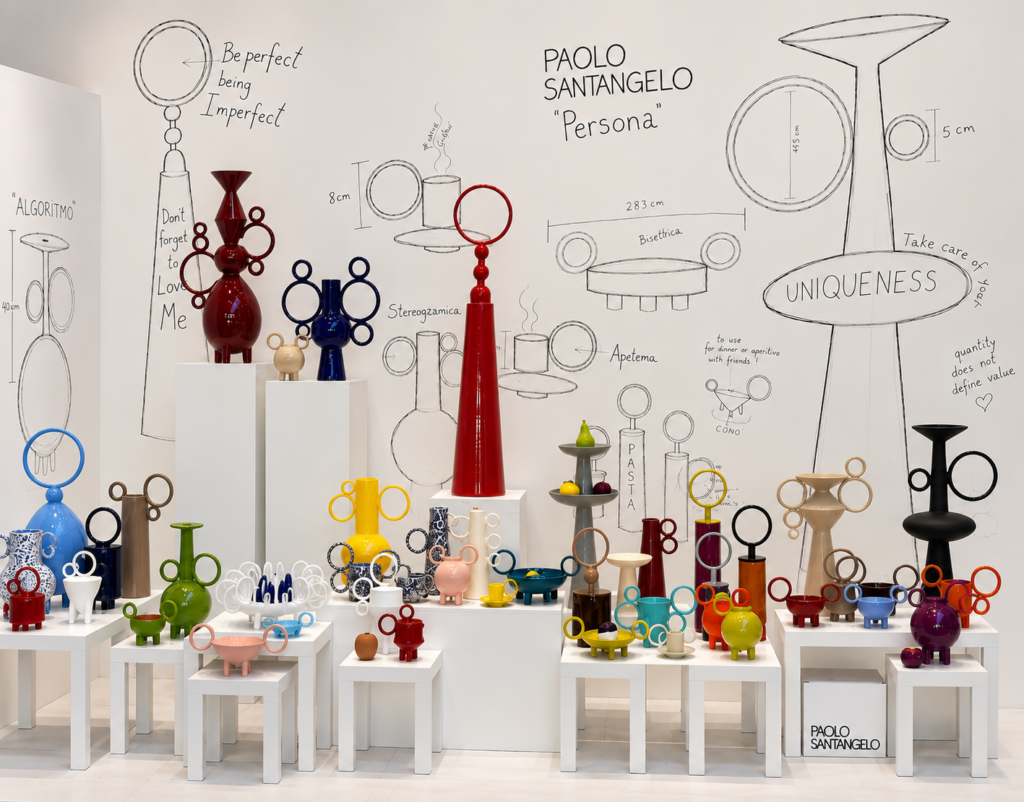
There is something immediately architectural about Paolo Santangelo’s ceramics. Circles become handles, geometry becomes volume, and saturated color seems to give each object its own physical rhythm. But behind the apparent precision of his forms lies a practice that is increasingly difficult to contain within the conventional boundaries of an object.
Santangelo belongs to a new chapter of Italian ceramics in which craftsmanship, collectible design and visual research move naturally alongside one another. His work begins with clay, but the conversation quickly expands towards proportion, space, landscape and the emotional relationship we build with the things around us.
That shift in scale is especially visible in AI MARINESI, his permanent public installation in Marina di Ginosa. Here, the ceramic object leaves the domestic interior and enters the landscape, asking a different question: what happens when a designer’s language becomes part of a place’s collective experience?
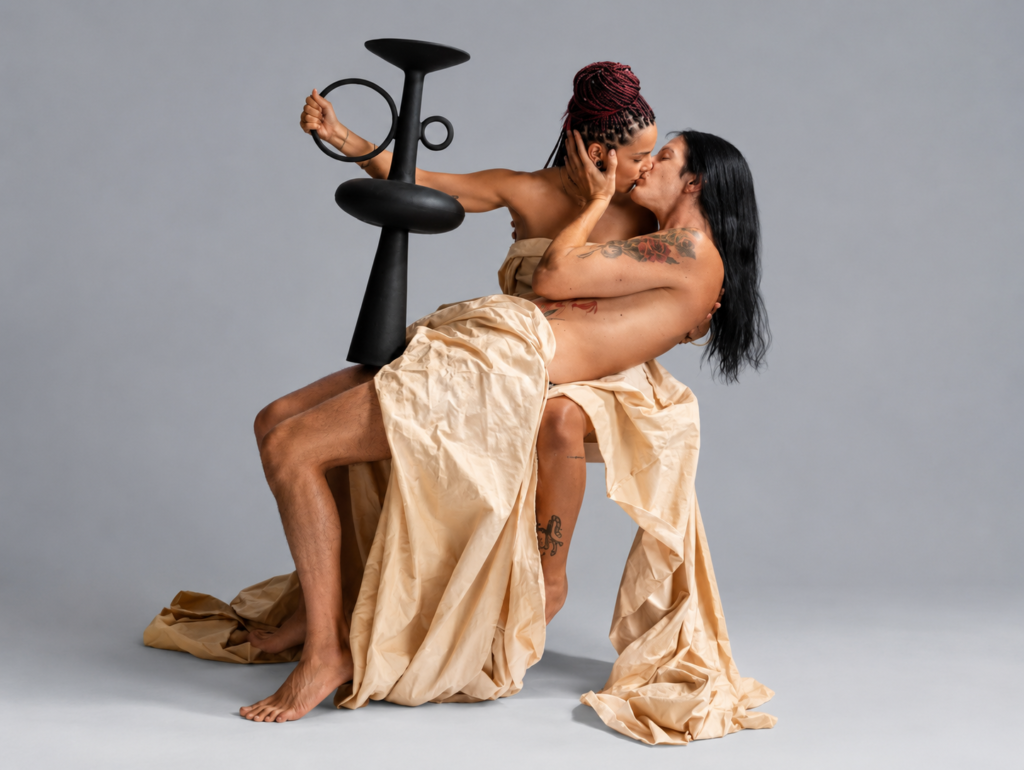
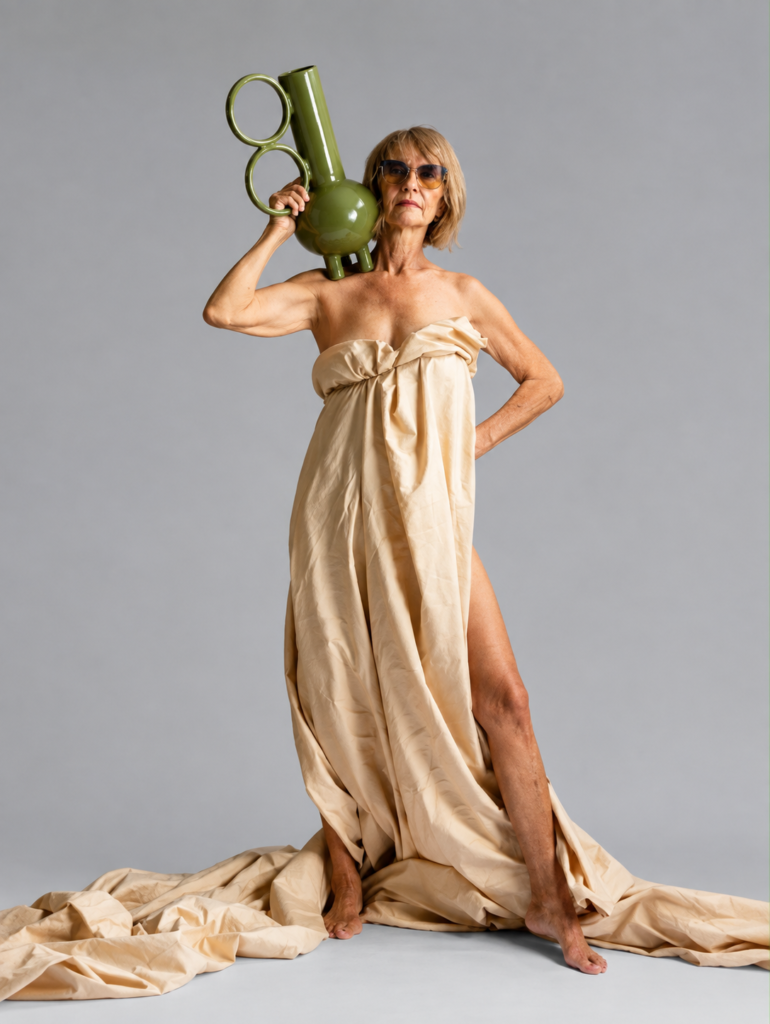
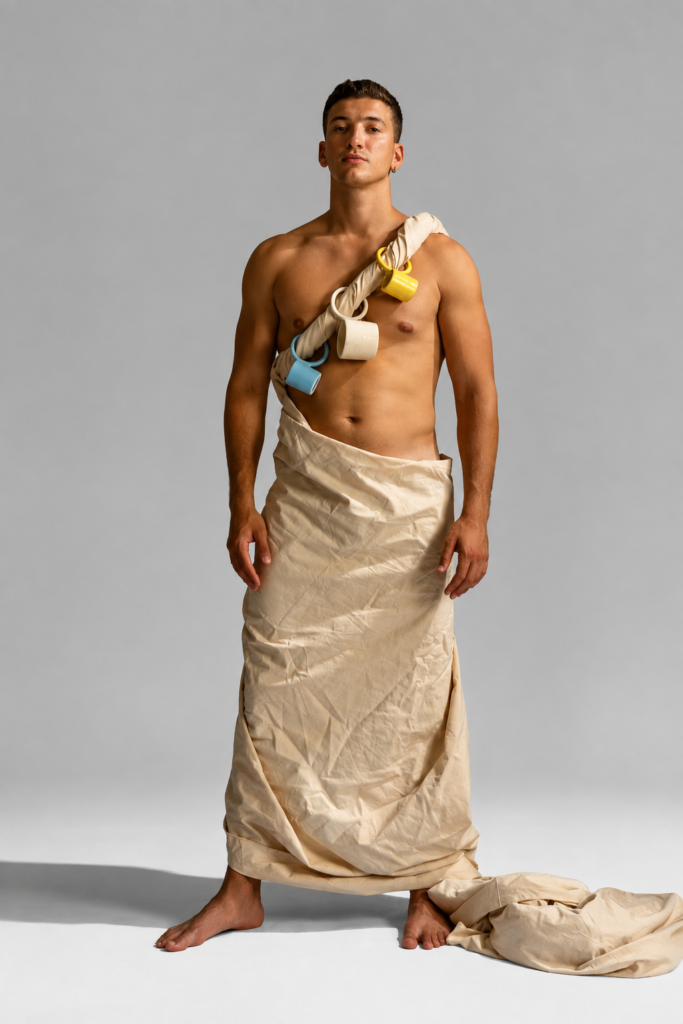
The same sense of evolution accompanied Santangelo to Maison&Objet Paris 2026, where he presented his work within the Fine Craft sector. At the center of the presentation was PERSONA, a new, more intimate development of his research that brings together form, color, and material through reflection on the human body and the idea of uniqueness.
–
We spoke with Paolo about moving between intimate objects and large-scale works, life after Maison&Objet, and why his next chapter might take ceramics in an unexpected direction.
From Small Objects to Monumental Scale.
Your work can take the form of small-scale objects designed for the home, but it can also become part of the urban landscape, as with AI MARINESI in Marina di Ginosa. Emotionally, what changes when you work across such radically different dimensions?
Scale profoundly changes the way I experience a project.
When I work on an object that will enter someone’s home, I think about the everyday relationship it might develop with the person who chooses it and with the space that receives it.
A monumental scale, on the other hand, introduces a more collective relationship. The work enters the landscape, changes how people move through a place, and eventually becomes part of a community’s life.
With AI MARINESI, I felt this difference particularly strongly. Moving from the scale of an object to that of public space means confronting a different kind of responsibility, but also experiencing a great sense of freedom.
The material and geometry remain the same, while perception, distance, and the relationship with people completely change.
In both cases, however, I am interested in the same thing: creating a presence capable of generating a relationship.
When Ceramics Became a Language.
Paolo Santangelo is now an established name in contemporary ceramics. Was there a particular moment in your career when you began to see yourself as a professional ceramic designer?
I don’t think there was one single moment.
My relationship with ceramics began very early, when I was sixteen and spending time in the workshops of Grottaglie – in southern Italy. For a long time, however, it remained a personal form of research.
The decisive transition came when I began to structure that research and turn it into a project.
From 2021 onward, I began developing my visual language with growing awareness. Then, from 2024, the project became more structured, with an atelier, production, and a dedicated team.
It was a gradual process. Along the way, I realized that ceramics was not simply the material I wanted to work with. It was the language through which I wanted to express my research.
Today I no longer think about ceramics only as a technique or a profession. It is a medium through which I can build forms, communicate ideas, and create a relationship with the people who see and live with my work.
What Comes After Maison&Objet?
Maison&Objet represents an important European milestone for an independent design brand. After presenting your work in Paris, where do you imagine the studio going next?
Maison&Objet allowed me to bring my work into an international context and engage with a much broader audience.
What interests me most is building new relationships and finding contexts that understand the value of the research behind each collection.
I want to start conversations with galleries, design stores, interior designers, architects, and hospitality companies.
At the same time, I want to continue developing the studio’s language—working on new collections, new scales, and new possibilities for ceramics.
For me, the next step isn’t simply about growing. It is about understanding how far this research can go and who it can enter into dialogue with.
The Possibility of a Four-Handed Collaboration.
Looking at the artists and designers you admire, both in Italy and internationally, is there a particular person or brand with whom you would like to develop a four-handed collection?
I don’t have one specific name in mind.
I am open to any challenge, exchange, or possibility that could offer a stimulus and an opportunity for growth.
I want to keep looking for new influences, and that research can easily extend into fields beyond ceramics. I believe some of the most interesting collaborations emerge precisely from encounters between different languages, disciplines, and sensibilities.
So rather than starting from the name of an artist or designer, I am more interested in finding someone with whom I can share curiosity, a vision and a desire to experiment.
Then we can discover together what might emerge from that encounter.
A Practice That Keeps Changing Scale.
Perhaps this is the most interesting point from which to read Paolo Santangelo’s work today. His ceramics are recognizable, but not static. Geometry gives the practice a visual identity, yet it does not impose a boundary.
A cup can become a sculpture. A sculptural form can enter architecture. Ceramic modules can move into public space. And a material traditionally associated with the domestic sphere can begin to speak to galleries, hospitality, landscape and collectible design.
With PERSONA, the investigation seems to move inward, towards the body and individuality. With AI MARINESI, it moves outward, towards territory and community.
Between these two dimensions lies the direction Santangelo appears most interested in pursuing: not simply producing more objects, but discovering how many different kinds of relationships an object—and ceramics itself—can create.
Follow Paolo Santangelo on Instagram >