

After visiting her studio in Rome, we were fortunate to learn more about Arianna De Luca work through an exclusive interview.
Discover the story of one of Italy’s leading contemporary ceramic artists.
As a child, did you ever imagine that you would one day become an independent artist?
No, never. I have always felt a strong urge to make things. Drawing, creating, and building with my hands came naturally to me from an early age. However, I never imagined that any of this would become my profession, let alone that I would forge my own path. Perhaps I am only now truly realizing it, as I look back at how far I have come.
How did you manage to bring your work beyond the walls of your studio? Was there a particular person or moment that truly transformed your visibility?
I think it happened through a series of small steps, almost like a domino effect. One magazine led to another, one client brought another client, and one retailer opened the door to new contacts. There was no single defining moment. Instead, it was a gradual process of growth, shaped by relationships and opportunities that unfolded over time. Fairs and events also played an important role. They offer a chance to meet people, speak about your work in person, and build connections that often develop into lasting collaborations.
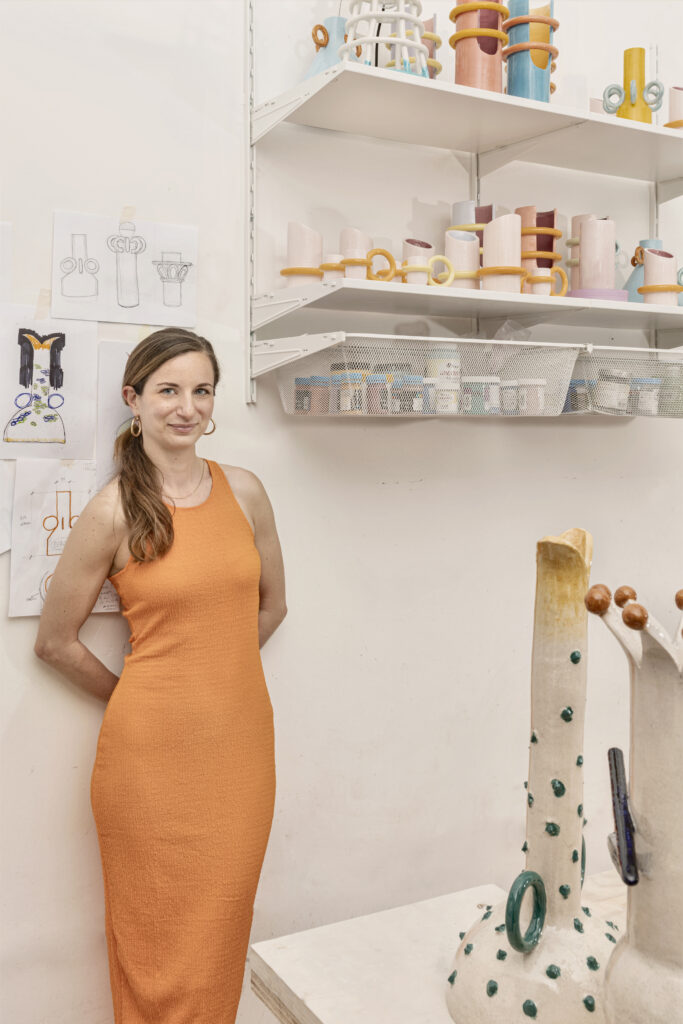
Over the years, you have developed a truly distinctive and recognizable style. Do you think your training as an industrial designer helped you define your goals?
Absolutely. My education profoundly influenced the way I approach objects and design. It taught me to think about form, proportion, function, and process, even when I create pieces with a strong expressive quality. I believe design gave me a method, while ceramics allowed me to find a more personal voice.
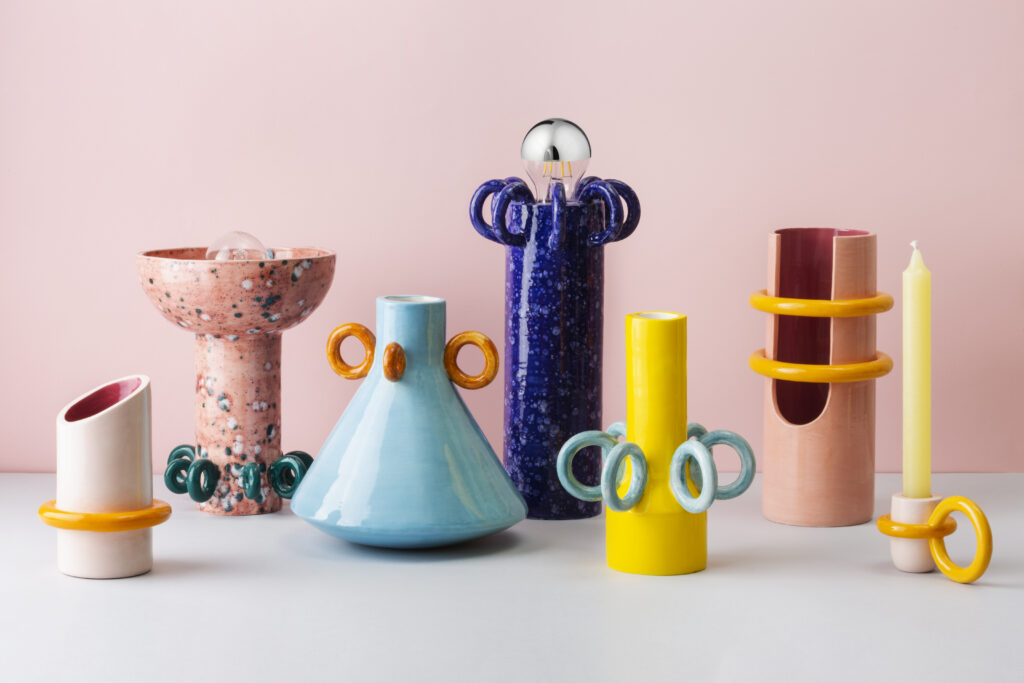
Arianna and her homeland: pure love, or also a nostalgic desire to explore your roots and traditions?
I think it is both. Certainly, I feel a deep love for the place I come from, but I am also endlessly curious about it. I am interested in exploring its traditions and gathering its symbols and memories, in an attempt to understand and reinterpret them. Perhaps there is also an element of personal nostalgia that occasionally resurfaces and finds its way into my work.
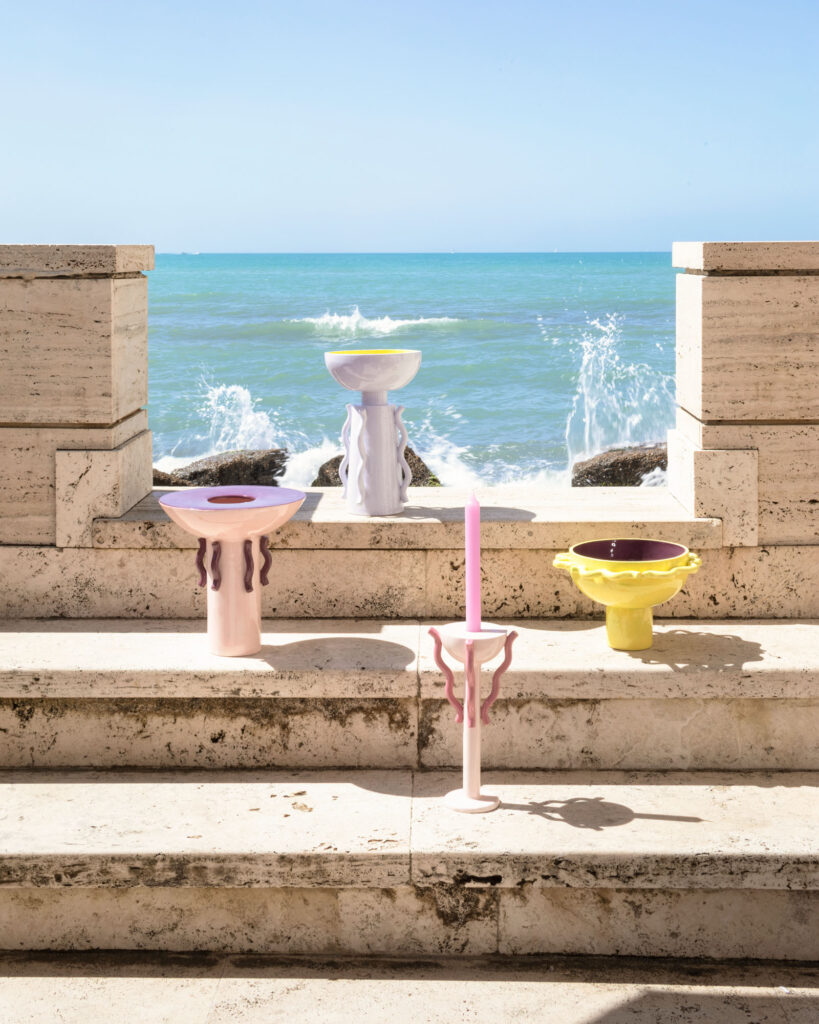
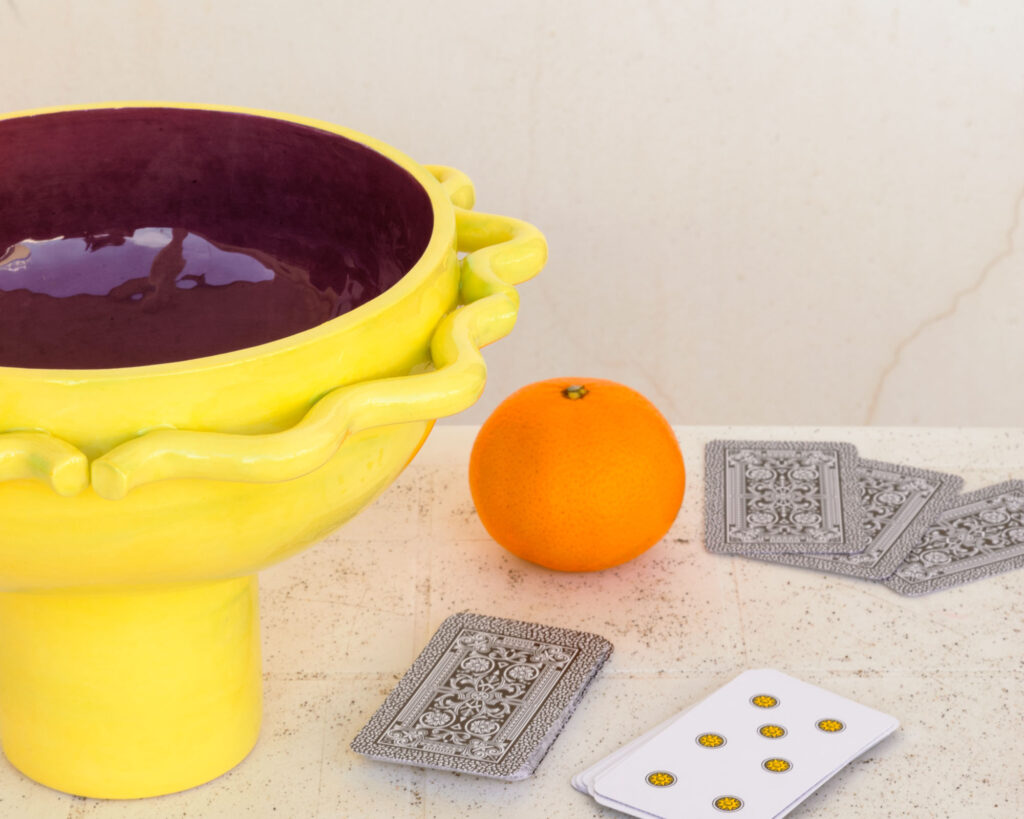
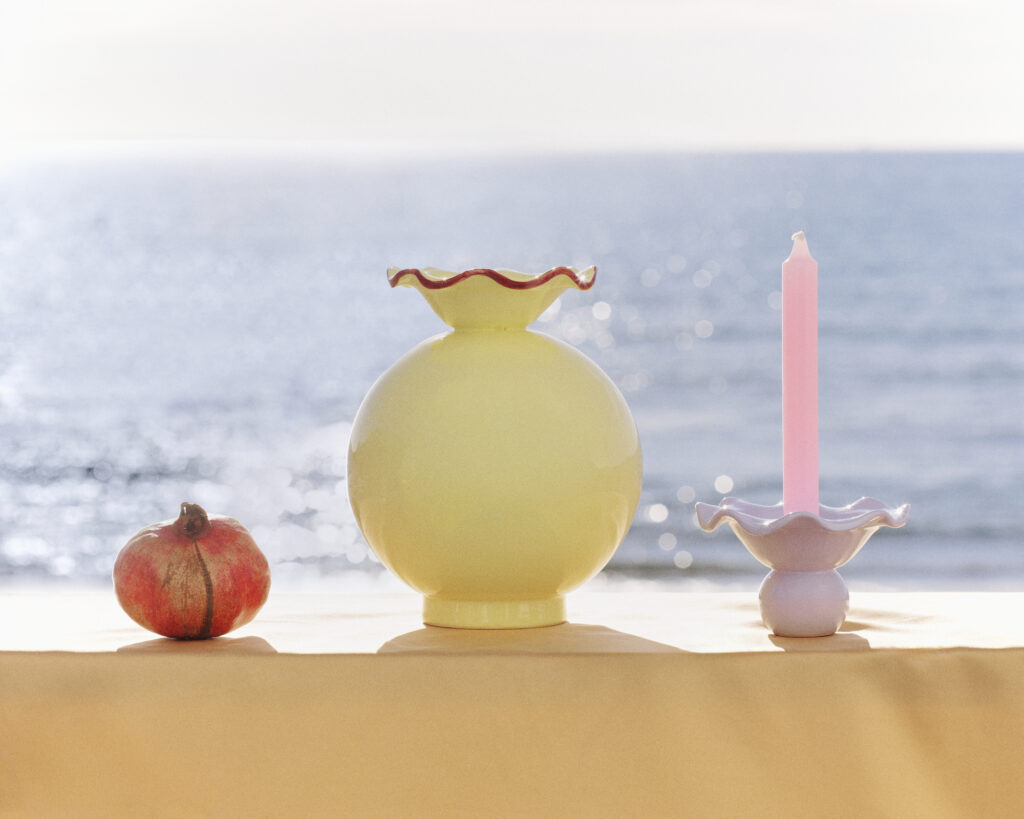
Is there one collection that feels entirely your own—one that speaks about you without the influence of commissions, collaborations or outside expectations?
It is difficult to choose just one, but I would probably say Uccellacci. It was the first collection to emerge entirely spontaneously, without commissions or expectations. At the time, I did not even know it would become a complete collection and, above all, I never imagined that this would become my profession. That is why it feels especially authentic to me. It grew from a personal need, with no purpose other than to create.
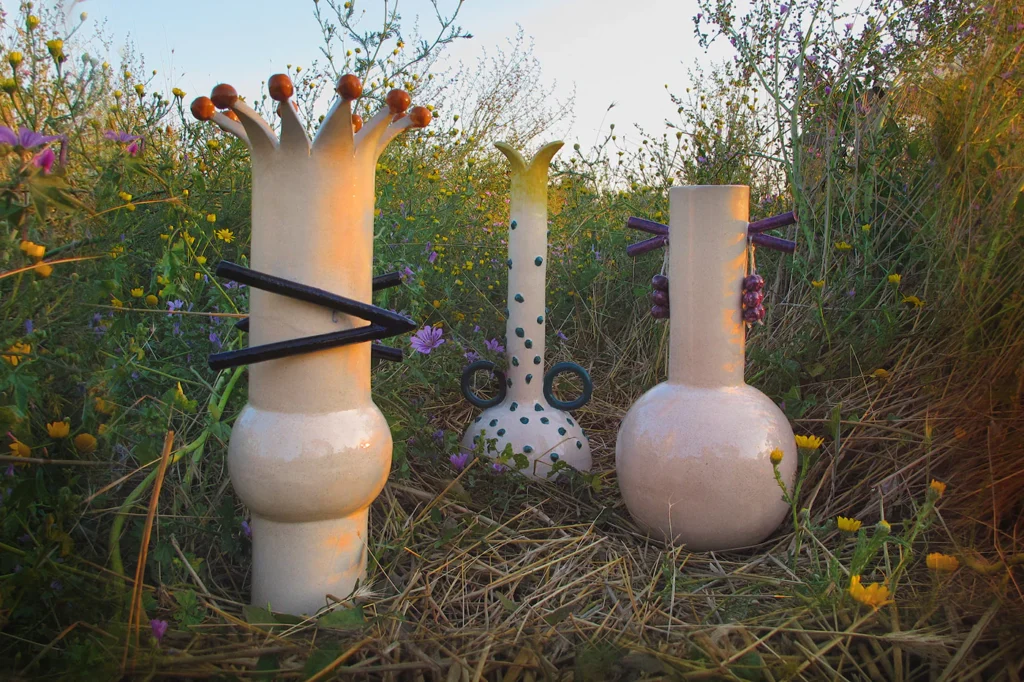
Does your inner world always carry the bright, vivid colors we see in your collections, or does it also hold darker shades? If so, have you ever chosen to reveal them in your work?
The shadows are there, of course. I believe they belong to everyone, and they are part of me too. The vivid colors do not necessarily express a state of mind; rather, they are a language that belongs to me. So far, I do not think I have created any work that openly reveals that darker side. Perhaps I have not yet felt the need to, or perhaps I have not found the right way to express it.
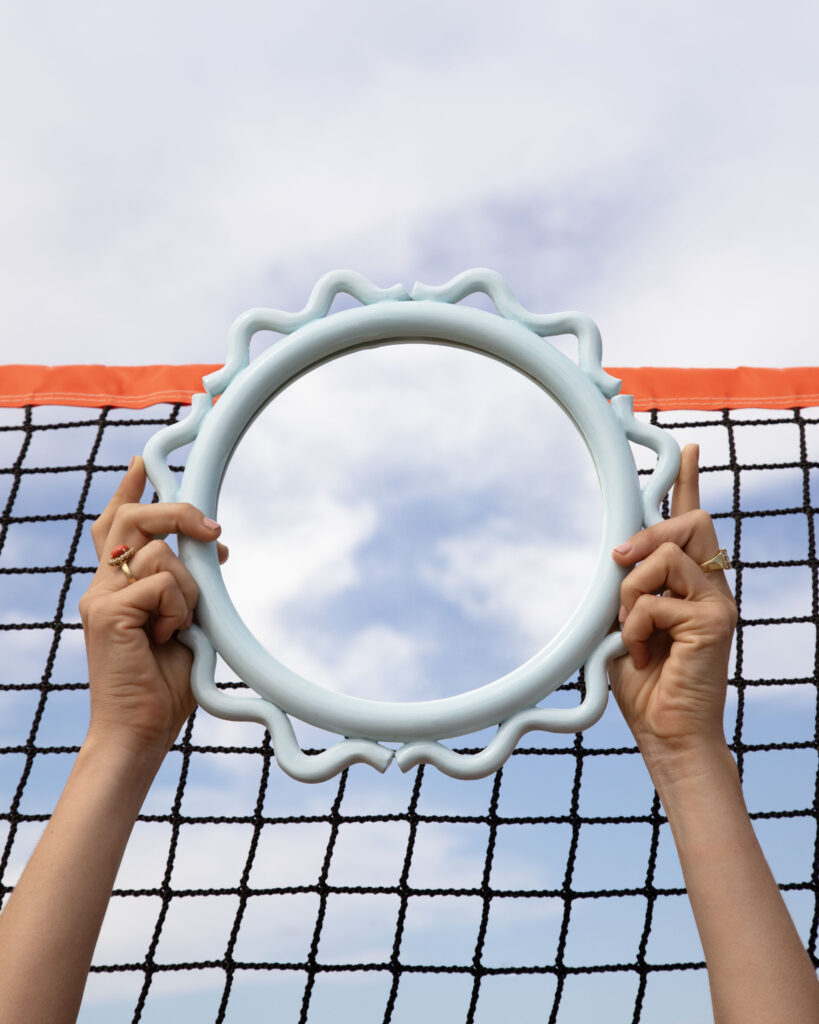
Your collections seem to be inhabited by characters and memories, almost as though they were telling a story. Could we say that each series represents a chapter in your life?
I would not describe them as chapters, because they do not follow a chronological or narrative order. Rather, each collection explores a different aspect of my imagination, my interests, or whatever is moving through me at a particular moment. They are worlds that coexist, intertwine and speak to one another, rather than telling a linear story.
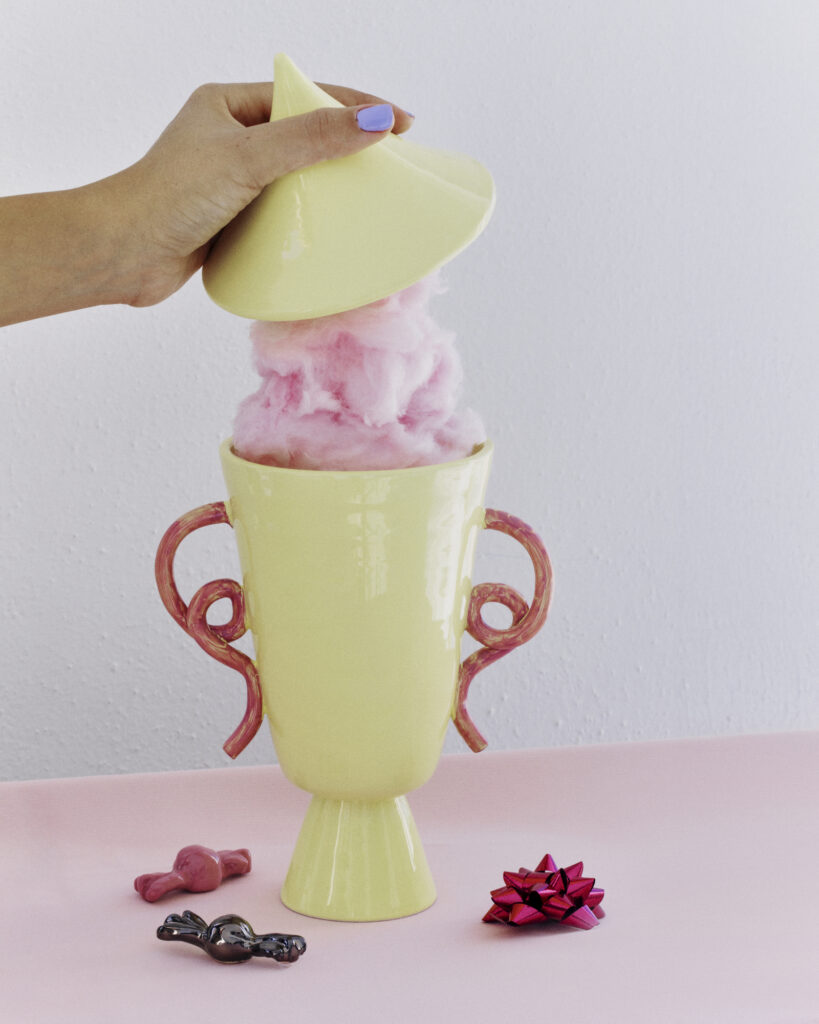
Among the emerging names in Italian ceramics or European independent design, is there anyone you would like to collaborate with?
I actually find it difficult to name someone. For me, a collaboration begins first and foremost with meeting a person—with the way you understand one another and share an approach to work. Collaborations are complex and require a strong sense of connection, so it is difficult to wish for one in advance without truly knowing the person on the other side.
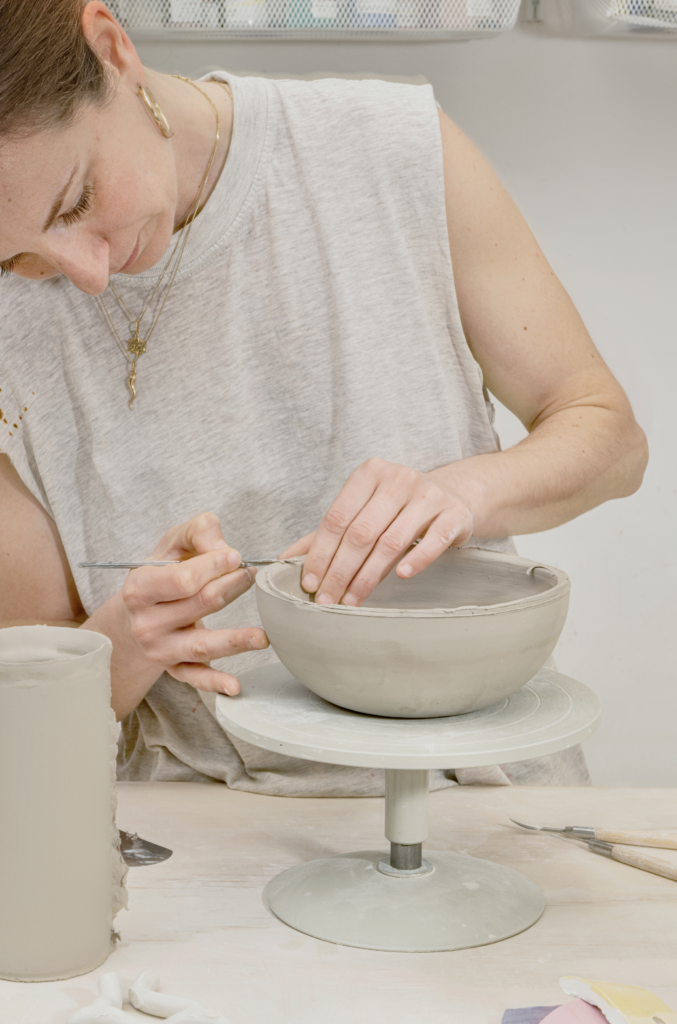
What advice would you give to young people who want to pursue a creative path like yours?
My ironic answer would be: ‘Don’t do it!’ But if I were to offer serious advice, I would say: equip yourself with patience and determination. It is an immensely rewarding path, but also a long one, filled with obstacles. There will be moments of doubt, people who advise you to give up, and opportunities that seem as though they will never arrive. It is important to keep working consistently, remain curious, and never lose faith in your own language, even when results take time.
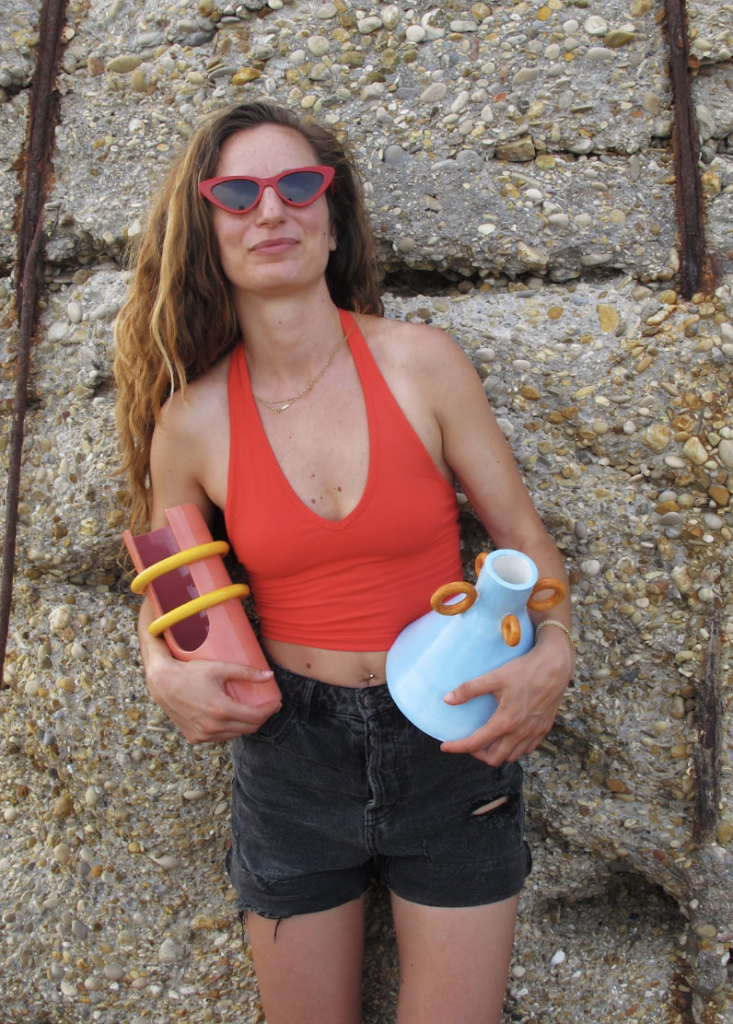
To visit Arianna De Luca’s website go here >
Follow Arianna De Luca on Instagram >
Continue reading: ‘Paolo Santangelo, Arianna De Luca and Contemporary Italian Ceramics’


