

A closer look at the French artist, designer, and ceramicist whose work turned restraint into expressive power during Lisbon Design Week 2026.
Alan Louis does not make ceramics that sit quietly in a room. They may appear calm at first: pale surfaces, rounded silhouettes, a palette close to sand, stone, and shadow. But the longer one looks, the more a quiet tension begins to press through.
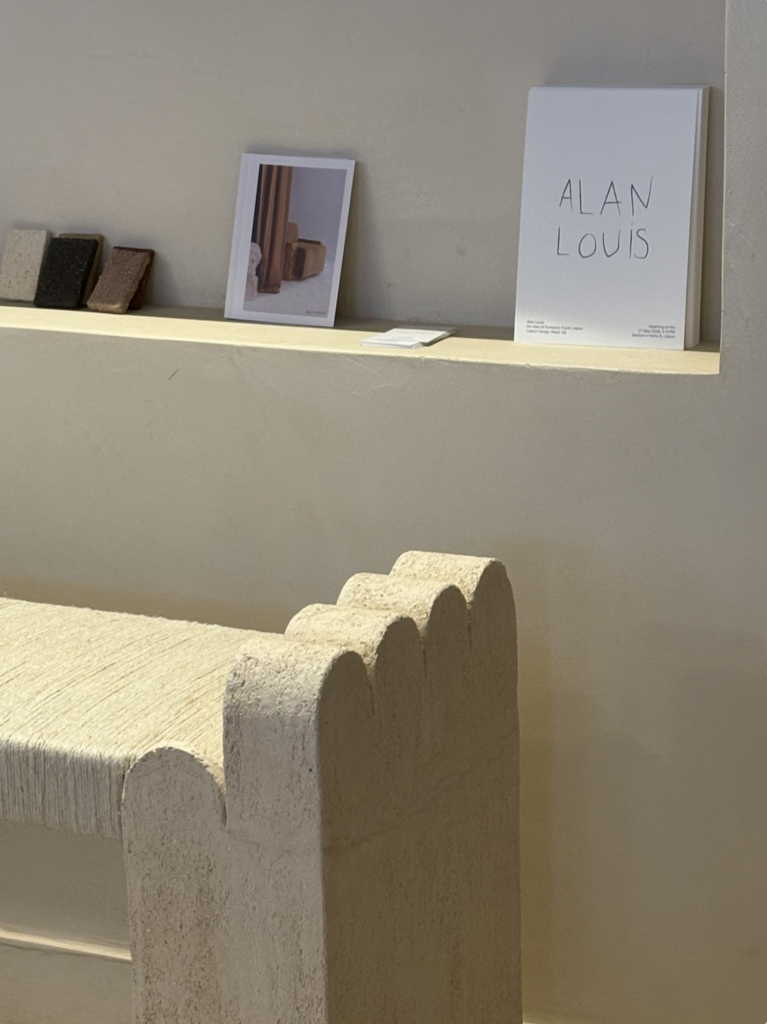
During Lisbon Design Week 2026, we met the French artist, designer, and ceramicist at Fantastic Frank Lisbon, where his work was presented as part of the city’s design program. Fantastic Frank’s Lisbon showcase framed Louis’ practice through sculptural furniture and objects, emphasizing material presence and quiet tension inside a lived interior.
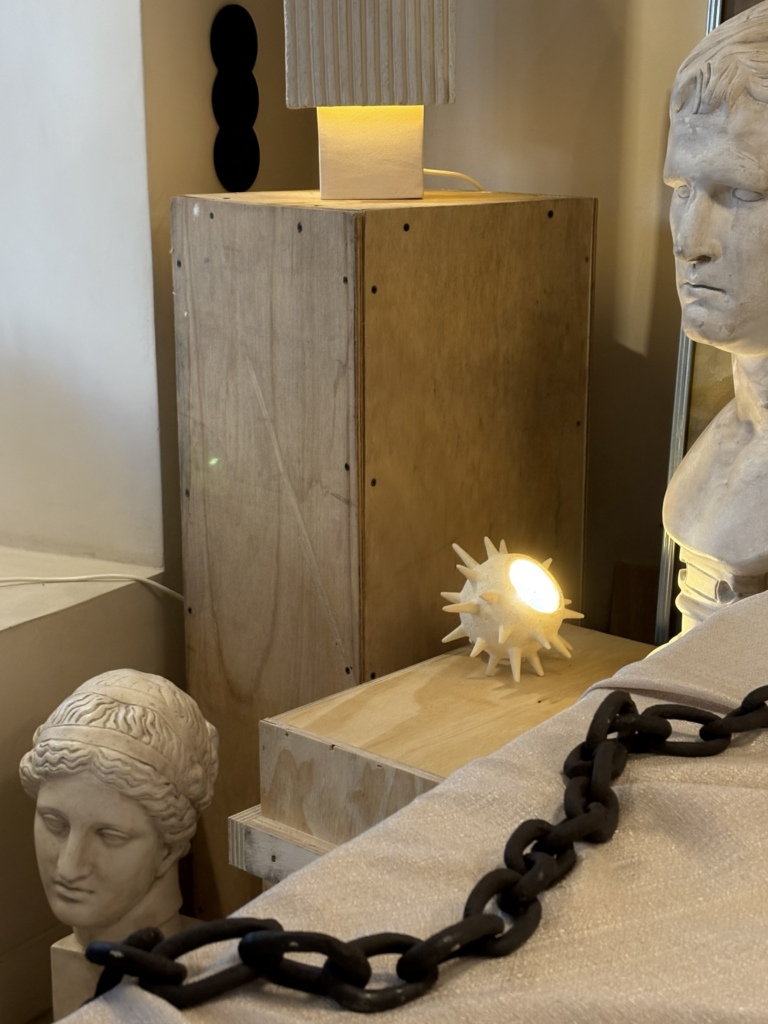
The setting suited him. Fantastic Frank is not a neutral white cube. It carries the atmosphere of a domestic space, which allowed Louis’ objects to feel less like isolated pieces and more like presences: things you could live with, but never fully tame.
Who Is Alan Louis?
Alan Louis is a French self-taught artist, designer, and ceramicist based in Portugal. Born in Brittany in 1992, he works across furniture, collectible objects, and ceramics, bringing art and design into close contact.
His creative career began in 2021, after a shift that was both personal and geographic. Before ceramics, Louis had a background in the Navy. He described that earlier life as one marked by a persistent sense of absence, as if something remained unresolved. He moved to Portugal eight years ago, but when the pandemic arrived, he began feeling drawn to ceramics.
He initially started as an amateur, but it quickly became a serious language. What first appeared as a technique became a way to give form to inner conflict, softness, resistance, fragility, and force.
From the Navy to Ceramics in Portugal
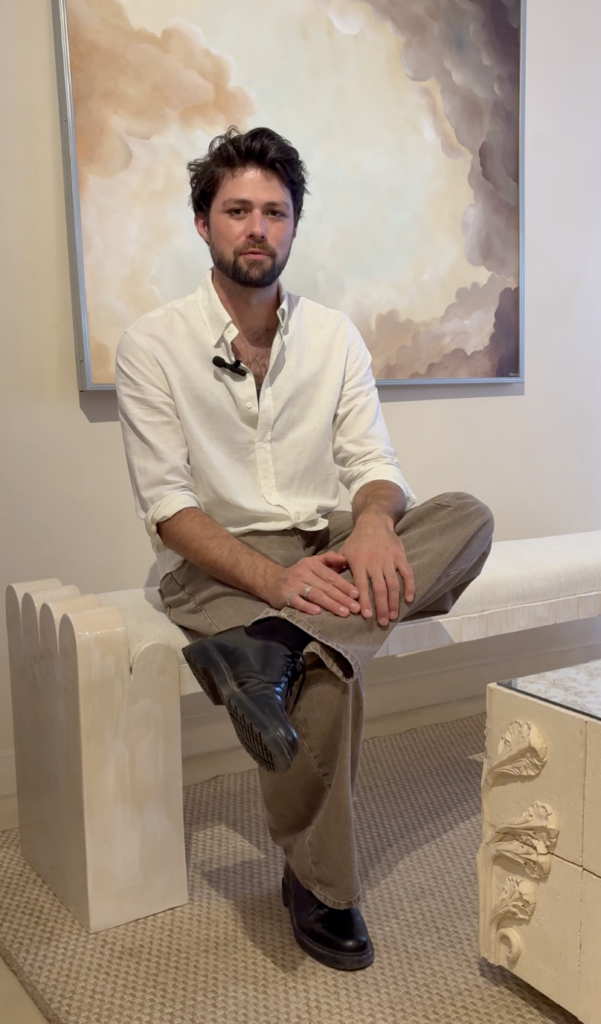
When we arrived at Fantastic Frank, Louis was surrounded by visitors. The atmosphere felt close to a proper vernissage: greetings, questions, introductions, people moving between objects, and conversation. Still, he made time to sit with us.
There was nothing rehearsed about the exchange. He spoke with warmth, but also with the concentration of someone who has had to build his own vocabulary from the ground up. Ceramics, for him, was not simply a material discovery. It became a way to understand the opposing energies within himself.
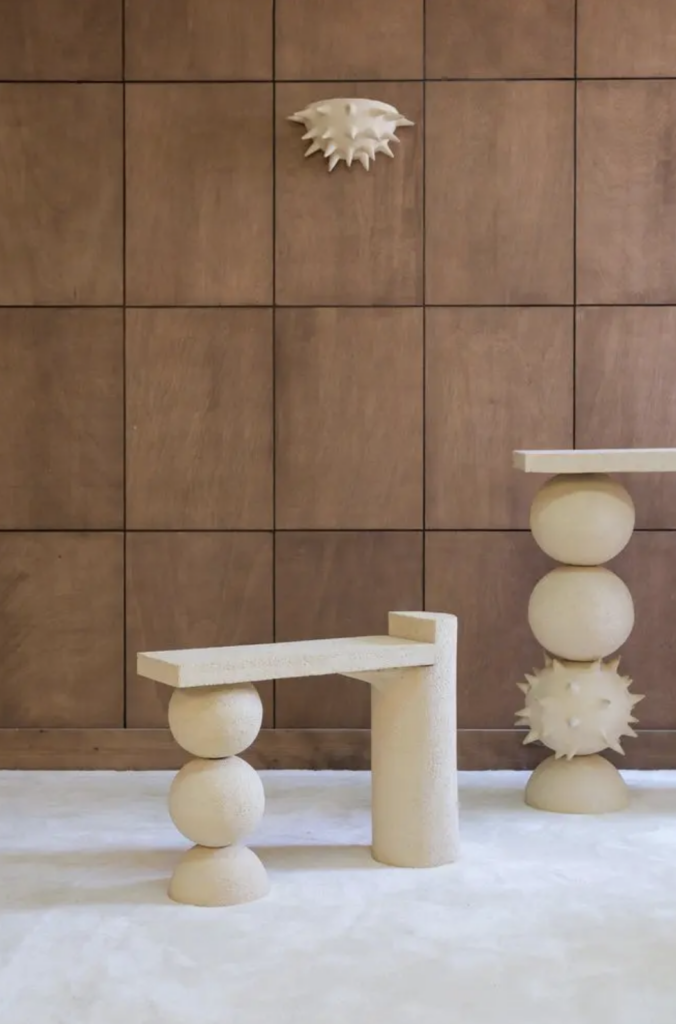
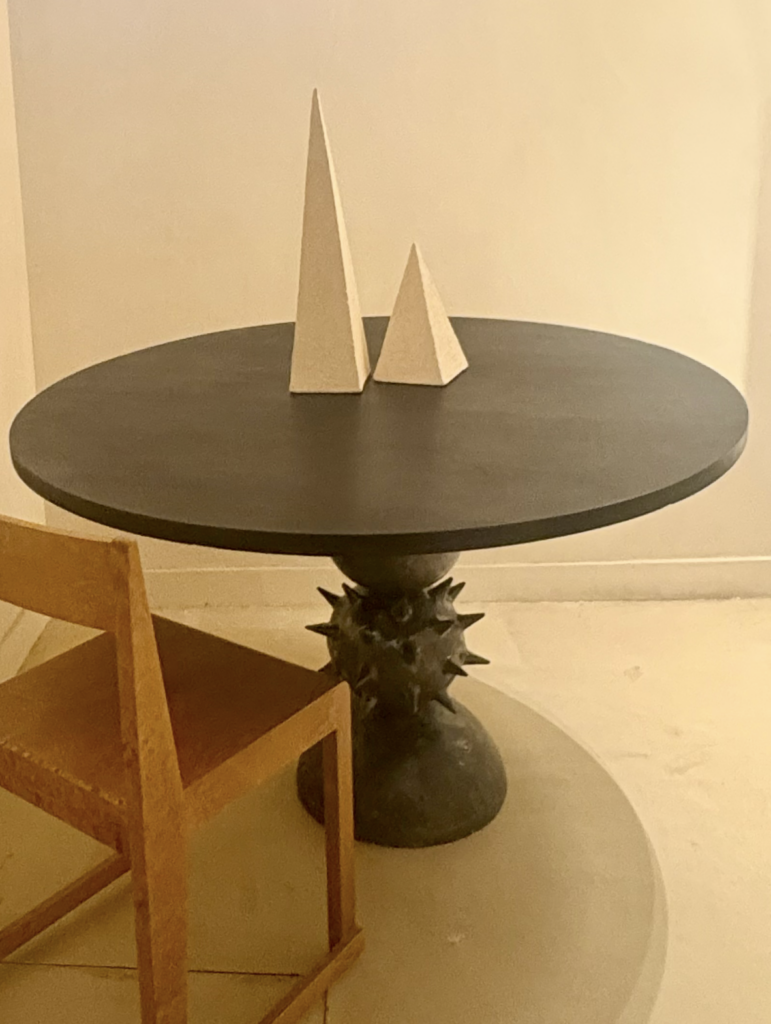
That duality now runs always through his work. The pieces often hold two impulses at once: the pure and the sharp, the quiet and the defensive, the fragile and the strong. Smooth volumes meet spikes. Soft palettes carry darker undertones. The result is not decorative contrast, but emotional structure.
Duality, Spikes, and a Restrained Palette
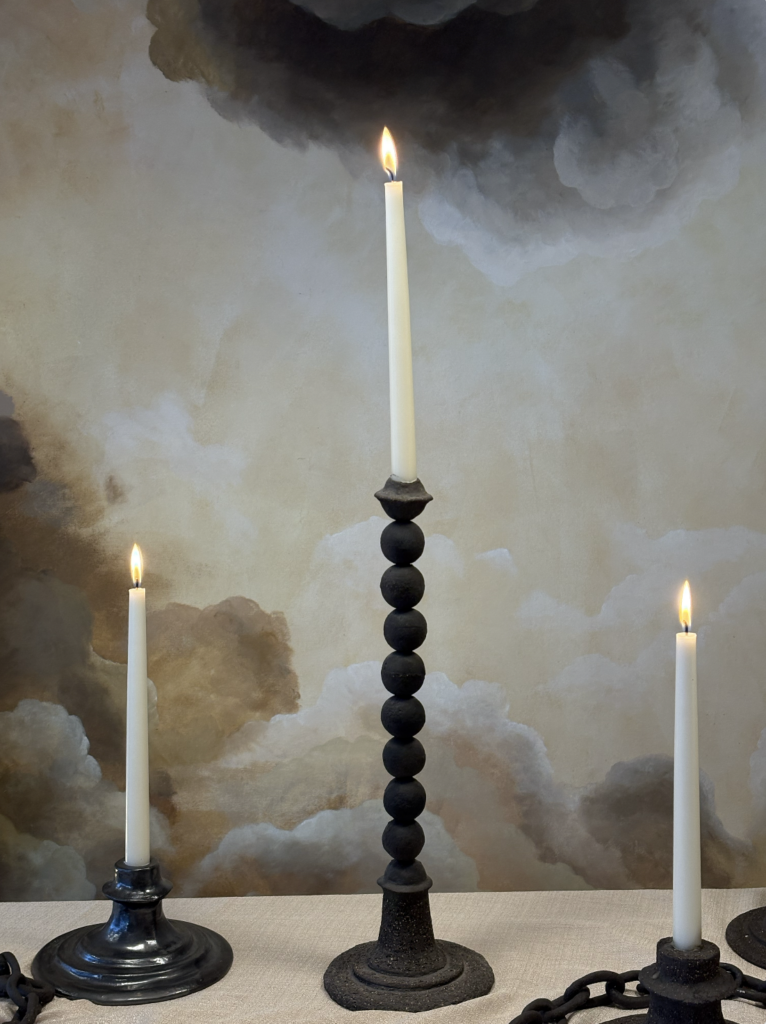
Louis’ palette is deliberately restrained: sand, natural hues, warm whites, and occasional dark accents. This restraint matters. It keeps the work from becoming dramatic. Instead, the drama comes from shapes.
The spikes are especially important. In previous descriptions of his practice, Louis’ work has been linked to internal conflict, with spikes acting as a metaphor for the harder parts of ourselves that are impossible to ignore.
This is where his ceramics become more than objects. They suggest that every person carries more than one self: a light side and a darker one, a gentle side and a more guarded one. Louis does not seem interested in smoothing over that contradiction. He wants to give it form.
As he said while speaking about clay: “It’s a material in motion until the object is fired and cooled. One day, everything will line up perfectly, and the next day nothing will work. With ceramics, we love each other, and we hate each other. It’s that elusiveness that I like.”
It is a revealing sentence. Clay resists certainty. So does Louis’ work.
Inside Fantastic Frank During Lisbon Design Week 2026
At Fantastic Frank, the pieces did not feel staged in the conventional sense. They seemed to inhabit the space. The furniture and sculptural objects sat between domestic function and emotional signal, a balance that suited Lisbon Design Week 2026.
LDW26 introduced a Spotlight section dedicated to individual presentations, with Alan Louis among the featured names. The format gave his work room to breathe, away from the noise of a conventional fair stand.
This mattered because Louis’ objects require time. From a distance, they can read as elegant, even serene. Up close, the edges shift. The spikes appear. The surfaces begin to hold tension. The work does not shout, but it does not disappear either.
At Lisbon by Design: A Room That Builds in Intensity
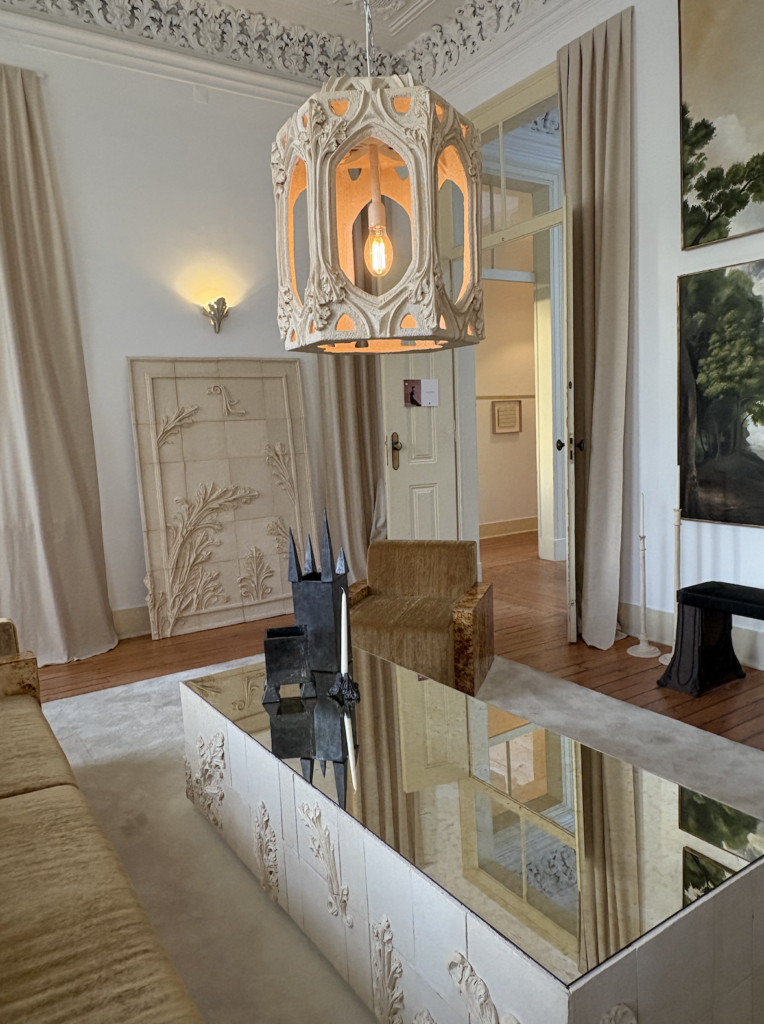
Louis’ presence during the week extended beyond Fantastic Frank. His work was also shown at Lisbon by Design, held at Palacete Gomes Freire, where he occupied an entire room. For the 2026 edition, Lisbon by Design presented Louis’ Era and Narciso collections in one of the fair’s main rooms, giving the presentation added weight.
Entering the room, the first impression was softness: the gentle palette, the sculptural curves, the almost silent quality of the surfaces. But the longer one stayed, the more intense the room became. The forms began to reveal their emotional charge slowly, almost privately.
That is one of the strengths of Louis’ work. It invites recognition gradually, but deeply and clearly.
His objects are calm at first glance. Then they look back.
Why Alan Louis’ Work Stays With You
Alan Louis’ ceramics distill emotion without becoming sentimental. They are personal, but not closed. They carry his story, yet they also leave space for the viewer’s own.
This is why the work lingers. It is not only about the artist’s inner duality but about the viewer’s. The desire to appear composed while carrying something sharper. The need to protect softness without denying force. The uncomfortable fact is that beauty often comes from contradiction, not resolution.
At Fantastic Frank, and later at Lisbon by Design, Louis showed that ceramics can still surprise us when handled as a psychological material rather than a purely formal one. That is where the work ends strongest: in the quiet tension between what it reveals and what it holds back.


