

Ceramic Objects Between Ancestry and the Future
Lia Raquel Marques is an Angolan-Portuguese designer and maker based in Lisbon, working across product design, ceramics, textile memory, and cultural storytelling. She studied Textile and Surface Design before completing a master’s degree in Design Products at the Royal College of Art, a background that gives her objects a rare balance between material intelligence and conceptual precision.
We met her during Lisbon Design Week 2026 at Moldo Studios, where she presented work as part of Sotaque. The exhibition brought together Portugal-based designers with origins in Brazil, Angola, Cape Verde, Mozambique, São Tomé and Príncipe, Guinea-Bissau, and Macau, using design to think through language, diaspora, memory, and identity.
The Portuguese word sotaque means “accent.” It refers to the distinctive way a language is pronounced according to geography, origin, class, or nationality. In this exhibition, the word became more than a linguistic idea. It became a curatorial lens: a way of asking how objects can carry the accents of history, migration, ritual, and lived experience.
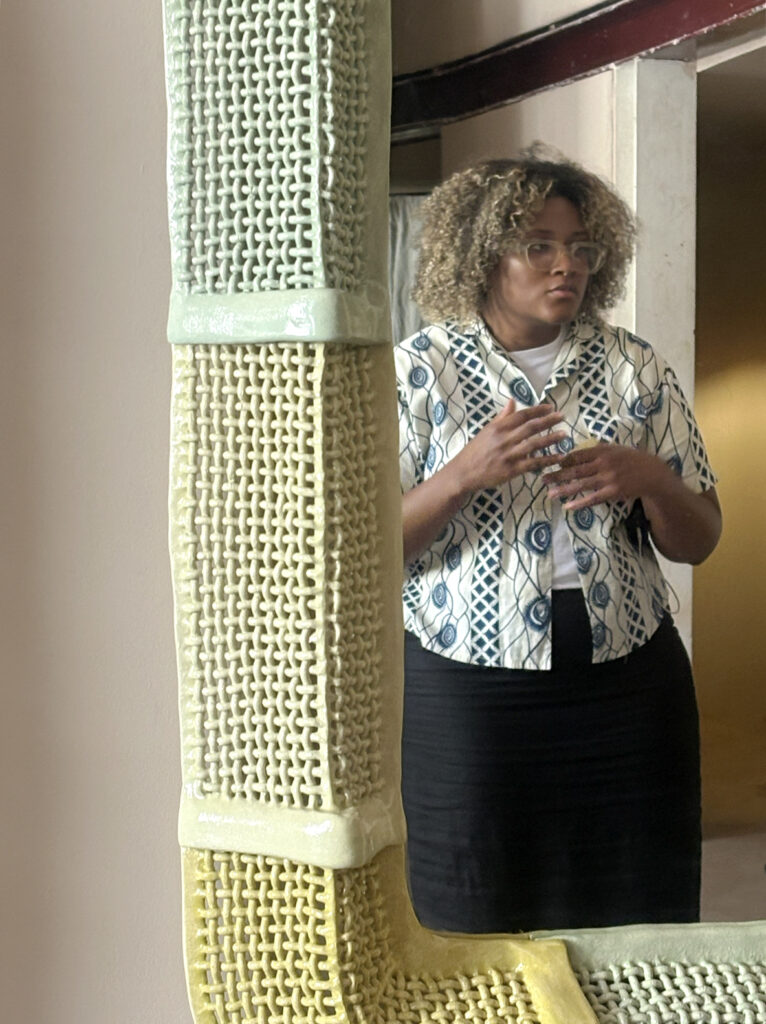
Meeting Lia Raquel Marques at Moldo Studios
Lia greeted us with genuine warmth. There was no distance between the designer and the person speaking to us. Her presence reflected the generosity and openness that often sit at the center of her work: a practice built not around spectacle, but around listening, remembering, and carefully transforming.
Her design language explores prosperity, ritual, and the relationship between the precious and the everyday. Rather than separating functional objects from symbolic ones, Lia allows both dimensions to coexist. A vessel, mirror, or ceramic form can be useful, decorative, historical, and speculative at once.
Throughout our conversation, she returned often to two words: past and future. These are not abstract themes in her practice. They are working materials.
For Lia, the past is not something to preserve untouched. The future is not something to imagine without roots. Her objects exist in the space between the two, where ancestral narratives, contemporary materials, and global visual languages meet.
An Object Archive and Wovenware: Clay, Basketry, and Cultural Memory
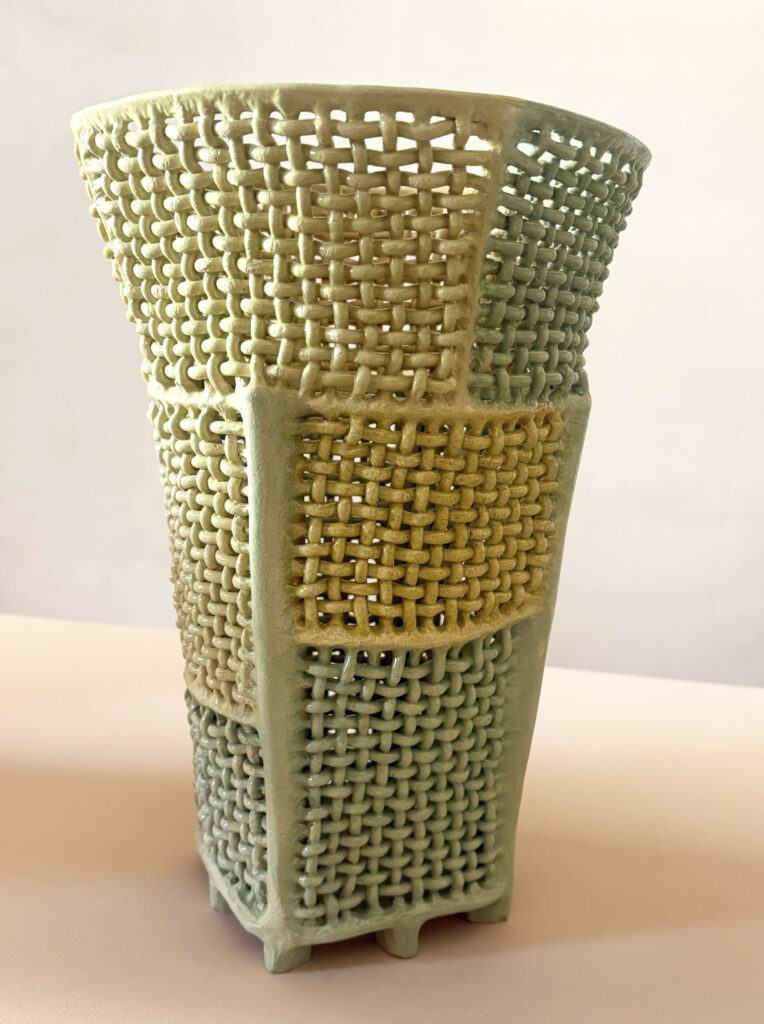
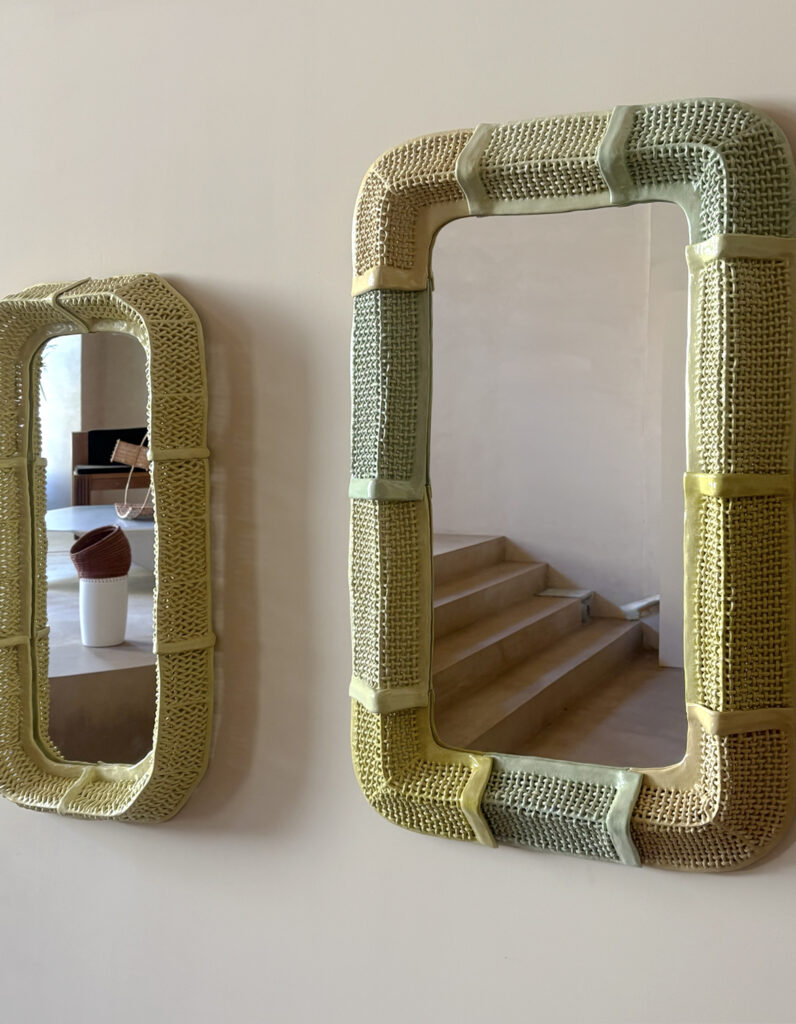
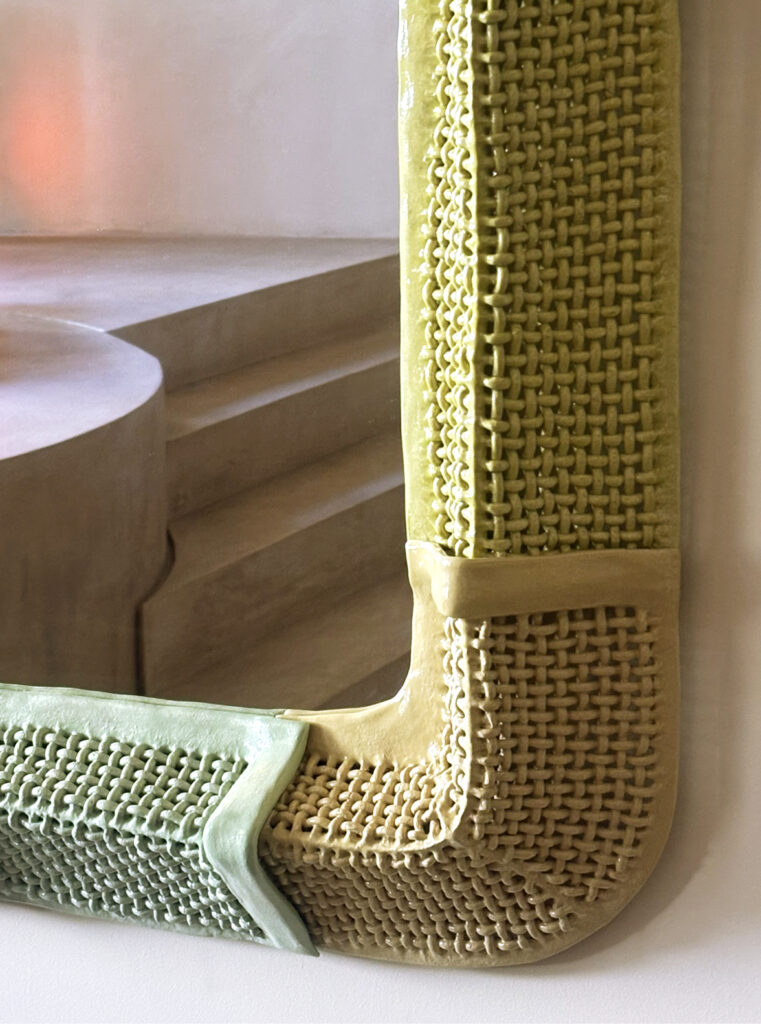
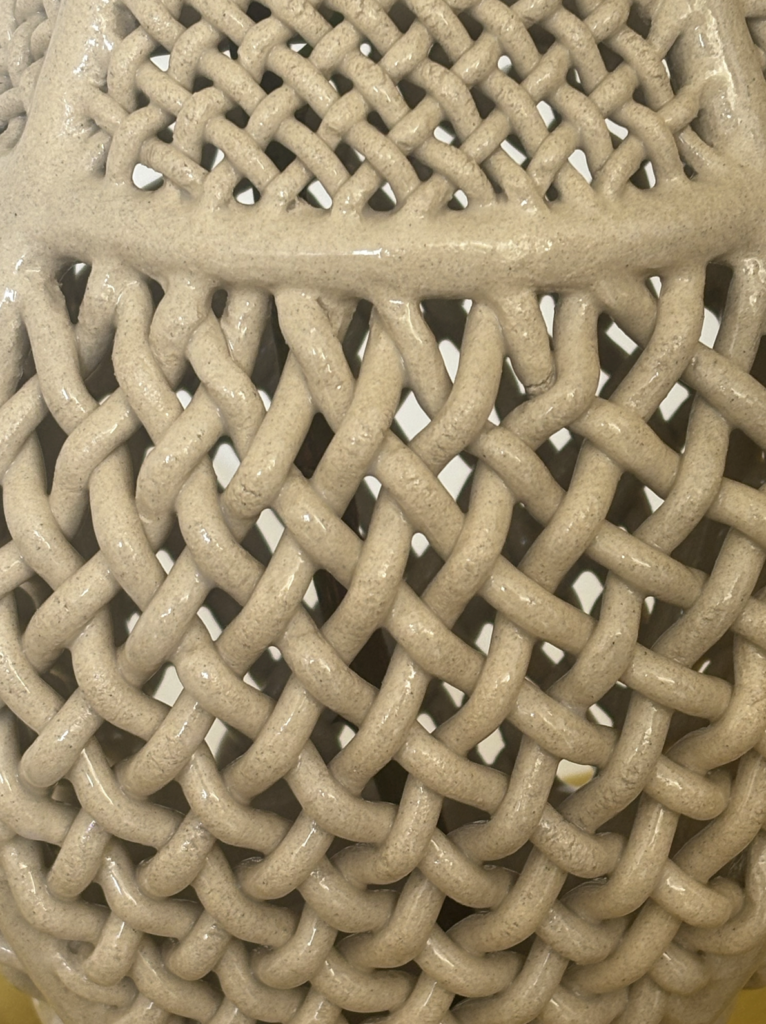
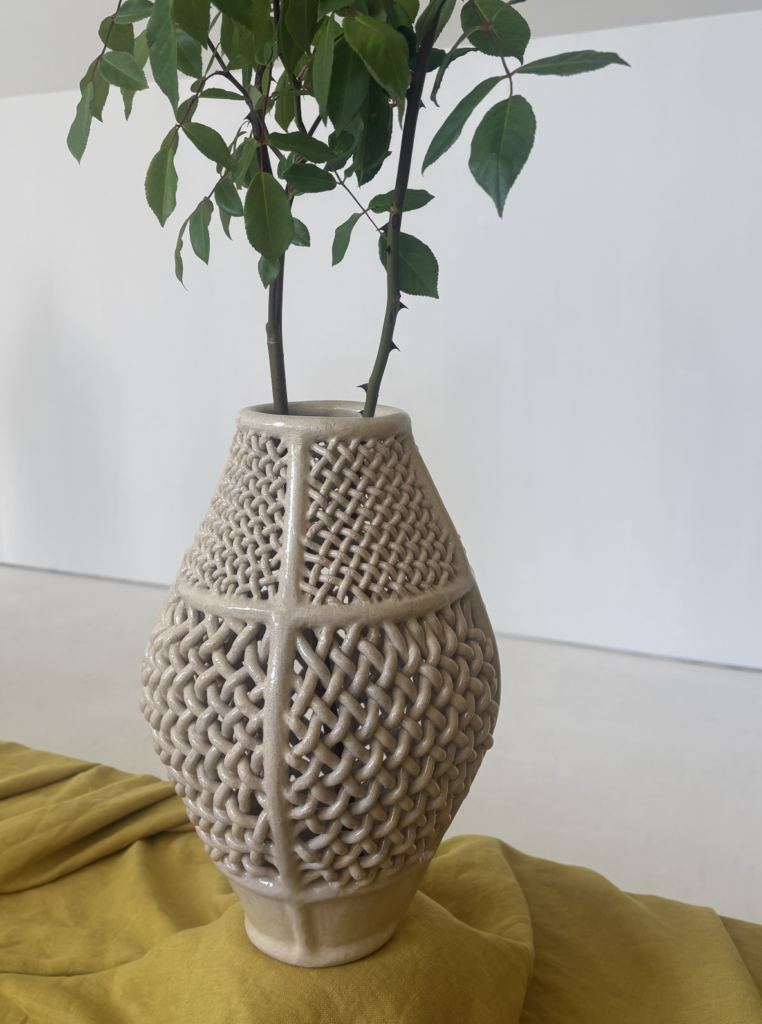
At Moldo Studios, Lia presented mirrors and vases from AOA and Wovenware, ceramic collections that imagines a plastic basin merging with traditional basketry. The project explores the meeting point between traditional and contemporary objects in an Angolan context, using form to question how everyday materials shape cultural memory.
The collection references woven basket patterns and uses verguinha, a traditional Portuguese clay basketry technique, to establish a dialogue between ceramic craft and textile structure. In Lia’s hands, clay does not simply imitate weaving. It remembers it.
This is where her background in textile design becomes essential. Her surfaces feel precise, almost architectural, yet they retain a human softness. The hand is visible, but never careless. Her gestures suggest control, repetition, and patience, while still allowing imperfection to remain alive.
The result is a body of work that feels both new and old. Contemporary, but never rootless. Elegant, but never empty.
Design as a Cultural Message
What makes Lia Raquel Marques one of the most compelling emerging voices at Lisbon Design Week 2026 is the clarity of her position. She does not approach heritage as decoration, nor does she treat identity as a fixed biography. Instead, she asks how Angolan artisanal knowledge might evolve within an unstable global landscape.
Her work is realistic rather than nostalgic. She understands that the world is constantly changing, and that design must respond to this movement without losing depth. For Lia, the designer’s task is not only to create beautiful objects but to shape a material language capable of carrying cultural messages forward.
That idea feels urgent now. In a design scene often dominated by polished surfaces and fast visual consumption, Lia’s ceramics ask for slower attention. They invite us to look at what survives inside objects: a basket, a basin, a ritual, a technique, a memory, a future.
Why Lia Raquel Marques Matters
Meeting Lia Raquel Marques at LDW26 was a reminder that contemporary design need not to choose between function and meaning. Her work shows that an object can be practical and symbolic, intimate and political, ancient and future-facing.
At Sotaque, her mirrors and vessels did more than occupy space. They reflected a broader question at the heart of contemporary design: how can objects help us remember where we come from while imagining where we are going?
For Hue & Eye, Lia Raquel Marques is not only a designer to watch.
She is a designer helping to redefine what cultural heritage can become when it is shaped by clay, memory, and the intelligence of the hand.


