

In Rome, ceramics become characters.
Arianna De Luca’s ceramics arrive like characters: vivid, sculptural, slightly theatrical, and impossible to ignore.
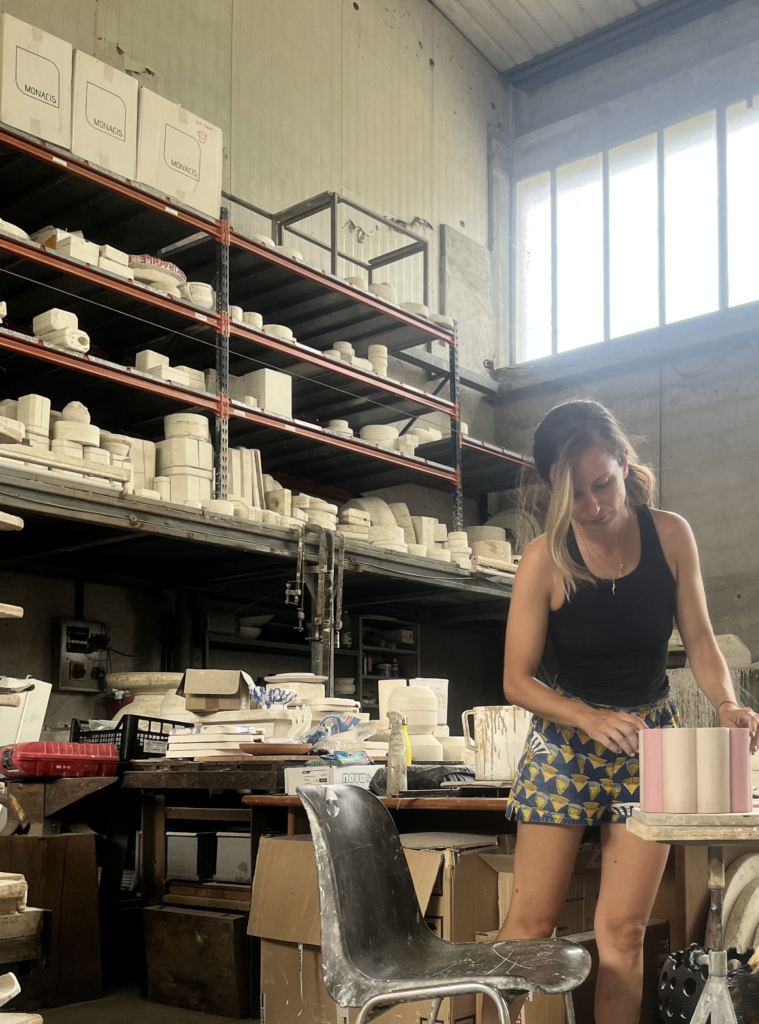
When we visited her studio in Pigneto, Rome’s restless creative district, the encounter felt less like entering a conventional workshop than stepping into a visual language already in motion. Color, memory, craft, and humor all coexist in her pieces, but nothing feels accidental. Behind the joyful surfaces is a precise form of research: into place, into material, into the emotional charge of objects.
De Luca’s work belongs to a generation of contemporary makers who are not interested in nostalgia as decoration. Instead, she treats heritage as a living vocabulary. Her ceramics carry the memory of Abruzzo, the discipline of design, and the expressive freedom of clay.
From Abruzzo to London, and back to craft
Arianna De Luca was born in Abruzzo, a region shaped by hills, sea, rural rituals and a deep ceramic tradition. That landscape still appears in her work, not as literal scenery, but as atmosphere: the brightness of a morning, the silhouette of a domestic animal, the warmth of a kitchen, the theatricality of village life.
Before ceramics became her main language, De Luca trained as a designer. She studied Industrial Design at Central Saint Martins in London and later worked in UK interior design studios. That experience sharpened her understanding of how objects behave in space. She was designing pieces not as isolated products, but as presences within interiors.
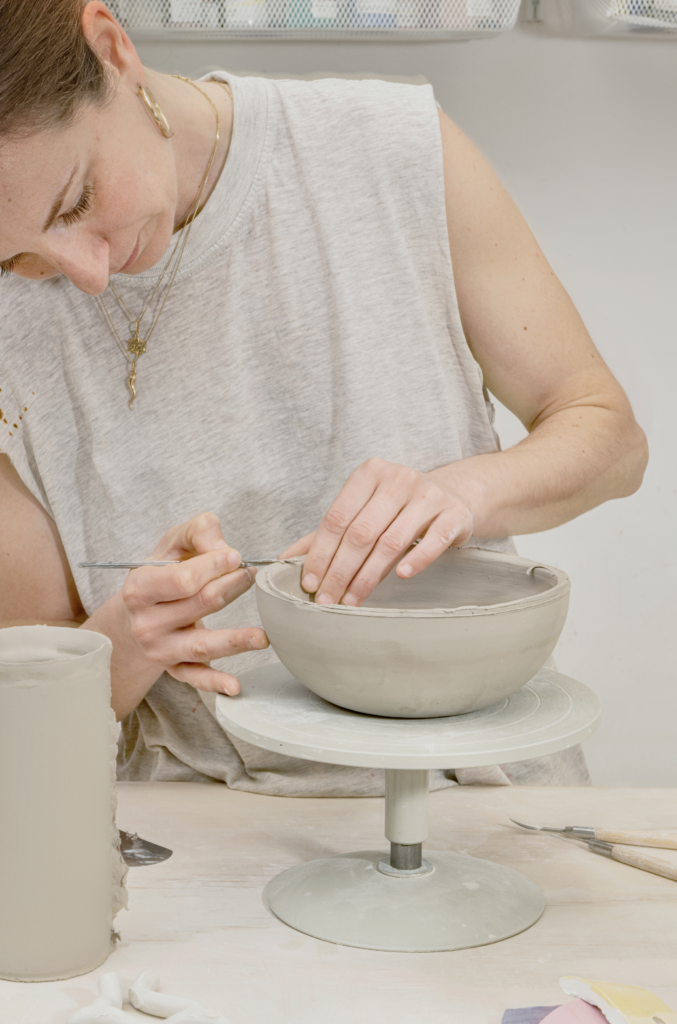
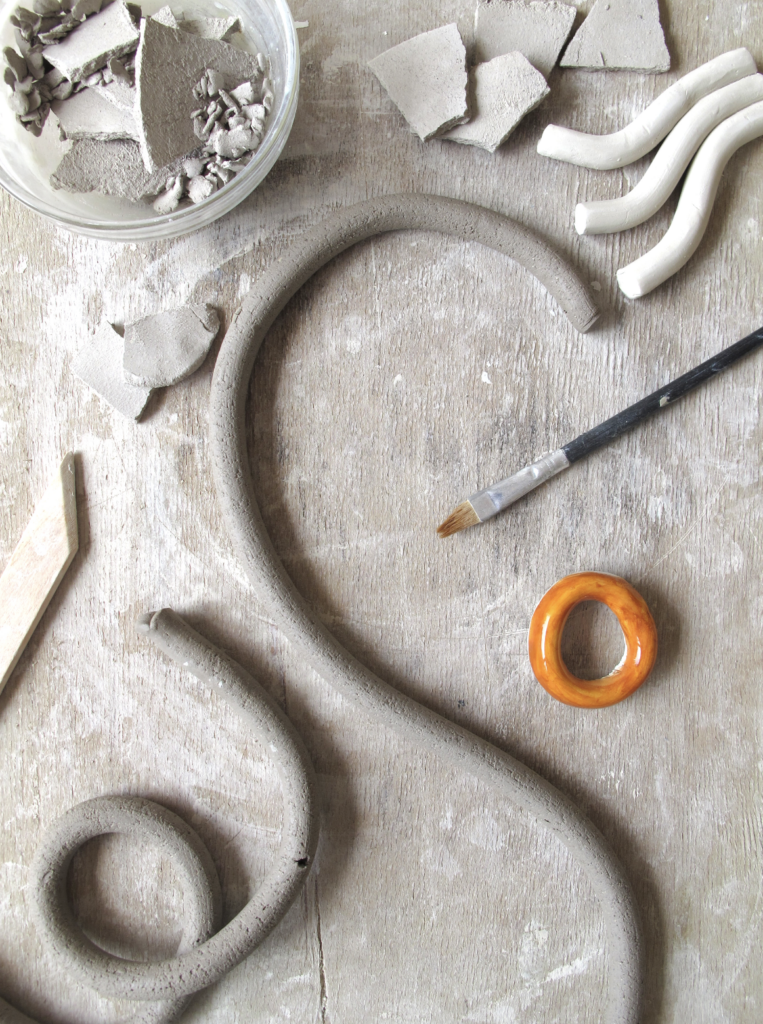
The shift toward ceramics began when she returned to Italy and reconnected with the artisanal legacy of Castelli, the Abruzzo town known for centuries of ceramic production. What might have remained a biographical detail became the foundation of her practice. Through traditional techniques, the ceramic lathe, and direct contact with inherited processes, De Luca found a material capable of holding both structure and instinct.
Arianna De Luca’s first language: Uccellacci
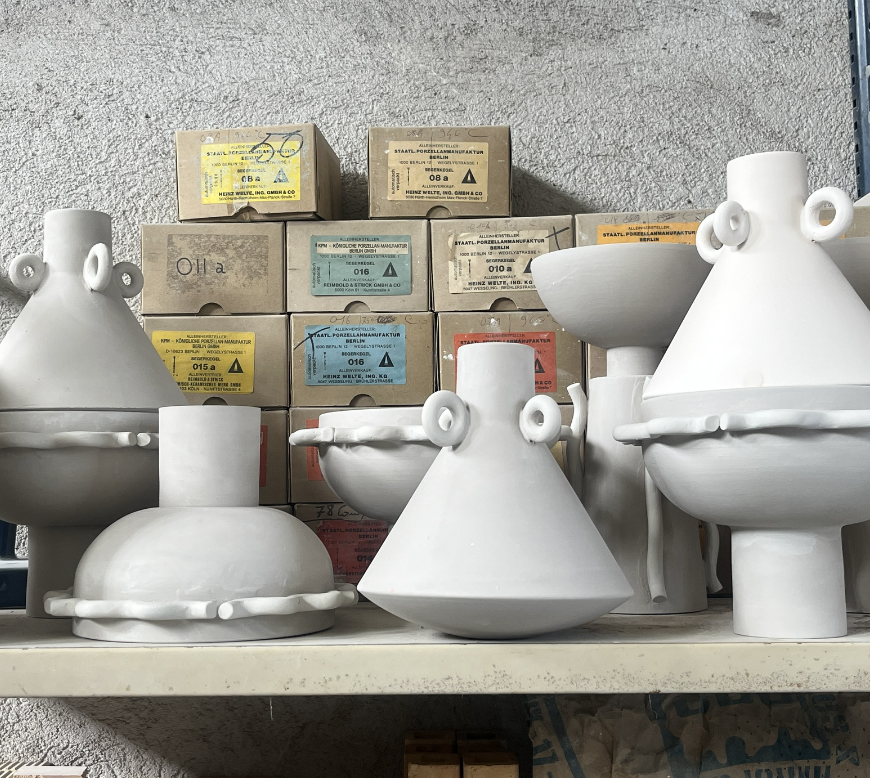
Her early project Uccellacci introduced many of the elements that would become central to her work. Inspired by the Abruzzo countryside at sunrise, the collection reimagined roosters and hens as simplified geometric forms. The animals were not rendered realistically; they were transformed into signs, almost archetypes.
This is where De Luca’s work becomes most interesting. She does not imitate folk imagery. She distills it. A rooster becomes a volume, a gesture, a rhythm of color. A domestic memory becomes a sculptural object. The result is playful, but never naïve. Her pieces understand the visual power of reduction.
That balance between simplicity and emotional charge remains one of her signatures.
Mediterranean memory, contemporary form
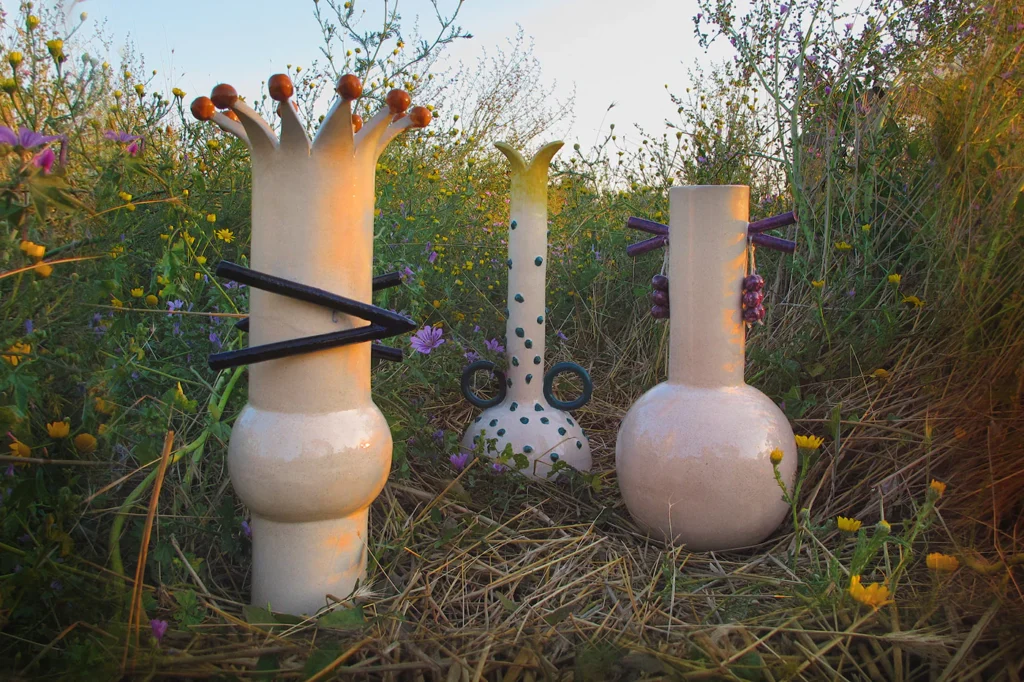
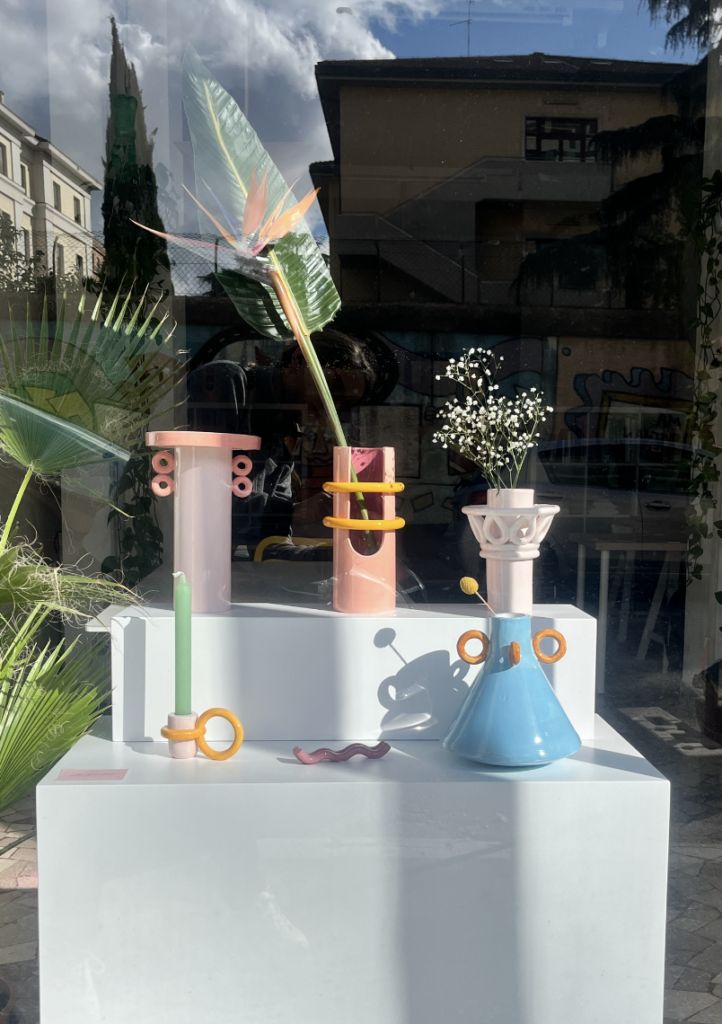
Over the past six years, De Luca’s practice has expanded from geometric animals into a richer world of feminine forms, softer volumes and bolder silhouettes. Her objects have become more sensual, more confident.
Collections such as Bonanza, Folcloristica, Carosello, Riviera, Balera and La Graziosa draw from a shared emotional geography: Mediterranean leisure, popular rituals, domestic memory, summer abundance, folk ornament, and the visual amenity of Italian everyday life.
Yet these are not souvenirs of the past. They are contemporary objects with a strong decorative intelligence. De Luca translates memory into form without flattening it into cliché. Her ceramics speak of rural Italy, coastal summers, festive tables and inherited craft, but they belong unmistakably to the present.
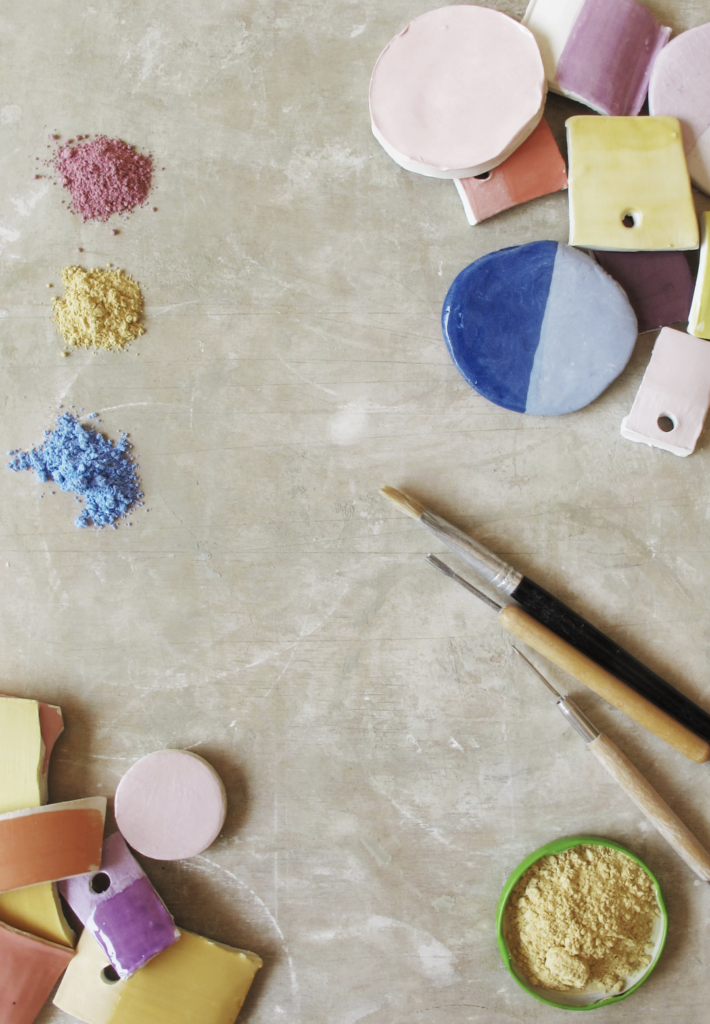
Color plays a crucial role. It gives the pieces their immediacy and their confidence. Her palette does not whisper heritage; it reactivates it.
The object as presence
What distinguishes De Luca’s work is the way each piece seems to hold a personality. Vases, lamps and sculptural objects become companions within a room. They are functional, but their function is never the whole story.
This may come from her background in interiors. She understands that objects shape a space’s emotional temperature. A ceramic piece can interrupt neutrality, create rhythm, or introduce a form of visual wit. In her hands, domestic objects become less passive. They look back.
That quality has helped her work travel beyond the studio and into design-led environments. Her ceramics have appeared through collaborations and placements in interiors, hospitality, and collectible design, including The Conran Shop, The Hoxton, The Social Hub, Four Seasons Hotels, Bulgari, 10 Corso Como, Goodmoods, Eleit, Elisa Ossino Studio, V-Zug, Zanotta, Gaggenau, and Ninefifty.
Heritage without heaviness
There is a particular difficulty in working with craft traditions today. Treat them too reverently, and they become museum language. Treat them too casually, and they become surface style.
De Luca avoids both traps. Her practice is rooted in inherited techniques, but it is not burdened by them. She uses tradition as a structure from which to improvise. The result is a body of work that feels culturally specific without becoming provincial, joyful without becoming decorative noise, and contemporary without severing its roots.
In this sense, her ceramics participate in a wider shift in contemporary design: a renewed interest in regional craft, expressive interiors, and objects that carry narrative rather than anonymity. But De Luca’s work stands apart because it does not perform authenticity. It feels lived, remembered and reassembled.
Clay as a way of remembering
Arianna De Luca’s ceramics are often described as colorful, playful and bold. All of that is true, but incomplete. Their deeper force lies in their ability to transform memory into presence.
Abruzzo, Castelli, London, Rome, interiors, animals, women, seaside rituals, popular culture: these elements do not appear as separate chapters. They merge into a visual language that is immediately recognizable. Her objects seem to carry the past lightly, with humor, confidence and formal clarity.
In a cultural moment where many interiors risk of becoming interchangeable, De Luca’s ceramics insist on character. They remind us that objects can still be specific. They can belong to a place, a hand, a memory, a tradition — and still feel entirely alive now.
Go here to check out the full video on YouTube.
Or follow us on Instagram >
Visualizza questo post su Instagram


