

The home office desk has become one of the most overworked objects in contemporary life. It holds laptops, cables, coffee cups, unfinished ideas—and the increasingly unstable border between working and living.
Work@Home Design Competition asked a new generation of designers to reconsider what this familiar object should do for us now.
Developed by AANT- Accademia delle Arti e Nuove Tecnologie ahead of EDIT Napoli 2026, the student project challenged participants to move beyond the standard concept of surface, legs, and storage. Instead, students had to treat the desk as part of a wider domestic ecosystem: a place shaped by concentration, emotion, movement, distraction, and the occasional need to look elsewhere.
A Brief Rooted in Changing Domestic Life
Hue & Eye joined Work@Home Competition as an editorial partner in April 2026, following the project as students developed their responses to a deceptively simple brief: reimagine the home office desk.
The final jury session took place at AANT in Rome on Wednesday, June 10, bringing together representatives from EDIT Napoli (Domitilla Dardi), Prezioso Casa (Roberto Fusco), AANT (Rossana Quarta and Giovanna Talocci), and Hue & Eye Magazine (Maria Cristina Argento).
Evaluating the projects quickly became about more than deciding which desk looked or functioned best. Each proposal revealed a different attitude towards domestic work. Some treated the desk as an object that should grow with its owner. Others imagined it as a threshold between private life and the world outside. Several questioned whether a workstation should remain fixed at all.
Together, the projects offered a revealing portrait of how younger designers understand the home: not as a sequence of rooms with permanent functions, but as a flexible environment that must respond to changing bodies, routines, and states of mind.
A Jury Looking Beyond Function
The strongest proposals did not add features for their own sake. They began with behavior.
What allows us to concentrate? Where should work disappear at the end of the day? Can a desk support childhood and adulthood? Can it reconnect someone with the street or the landscape?
These questions shaped the jury’s discussion. The desk emerged not as an isolated product but as a piece of emotional infrastructure: an object capable of influencing gestures, attention, and the atmosphere of everyday work.
ESTRO: Elena Sambucci’s Winning View Beyond the Screen
After an animated discussion, the jury reached a clear decision. Elena Sambucci received the top honor for ESTRO.
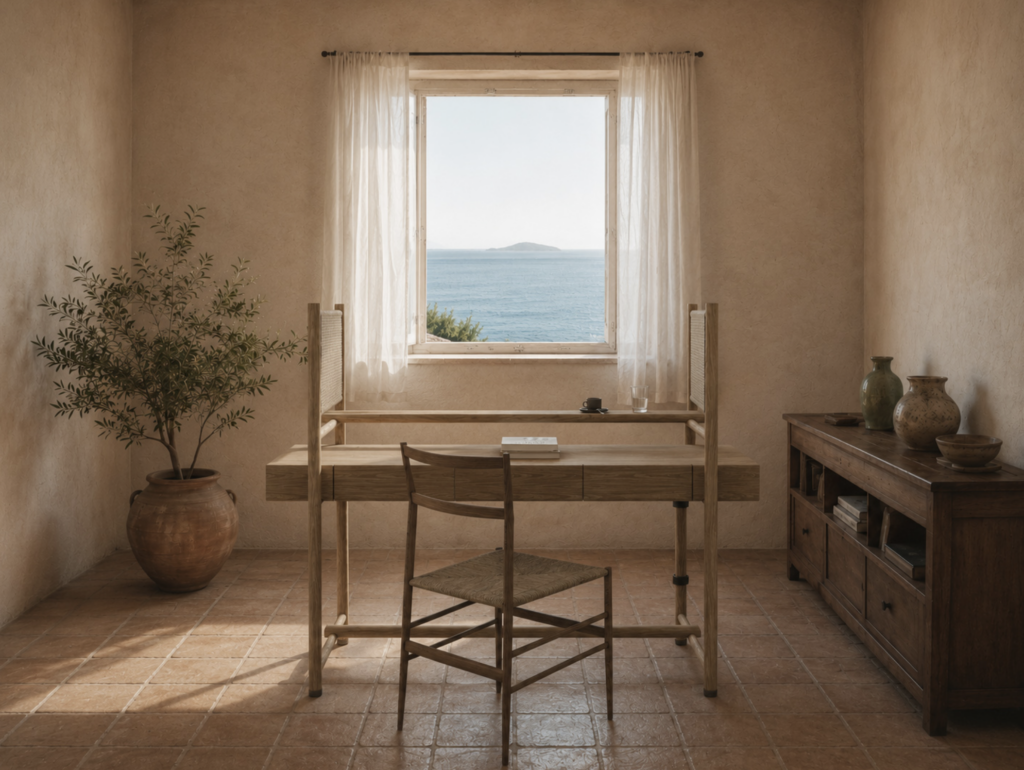
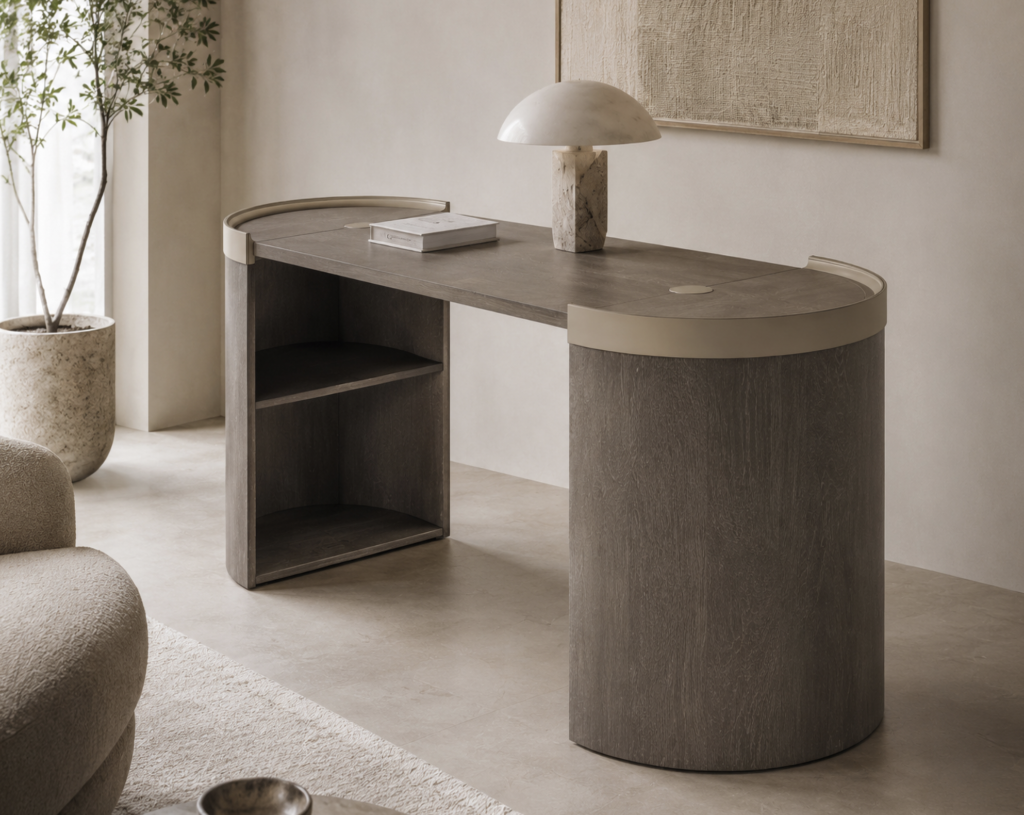
Minimal in form but complete in function, ESTRO is designed to stand in front of a window. That placement is not incidental. It is the foundation of the project.
Rather than directing the user’s attention entirely towards a screen, the desk leaves room for the eye to travel—to weather, architecture or whatever lies outside. The window becomes part of the workstation, offering a visual pause within the working day.
Sambucci’s project proposes that productivity is not simply a matter of output or time spent at a computer. It is also influenced by orientation, atmosphere, and the possibility of briefly disengaging. Looking away is not presented as a failure of concentration, but as one of the conditions that can restore it.
Hue & Eye’s view: ESTRO succeeds because it does not dramatize this idea of performance. Its intelligence is quiet, embedded in the relationship between the object, the body, and the view ahead.
Three additional visions for the home desk not to be overlooked
Beyond the winning project, Work@Home produced several distinct responses to the brief. EVO, AFFACCIO, and TOTEM each approach the desk through a different form of continuity: across age, between interior and exterior, or from different parts of the home.
EVO: A Desk Designed to Grow Up by Sofia Osan
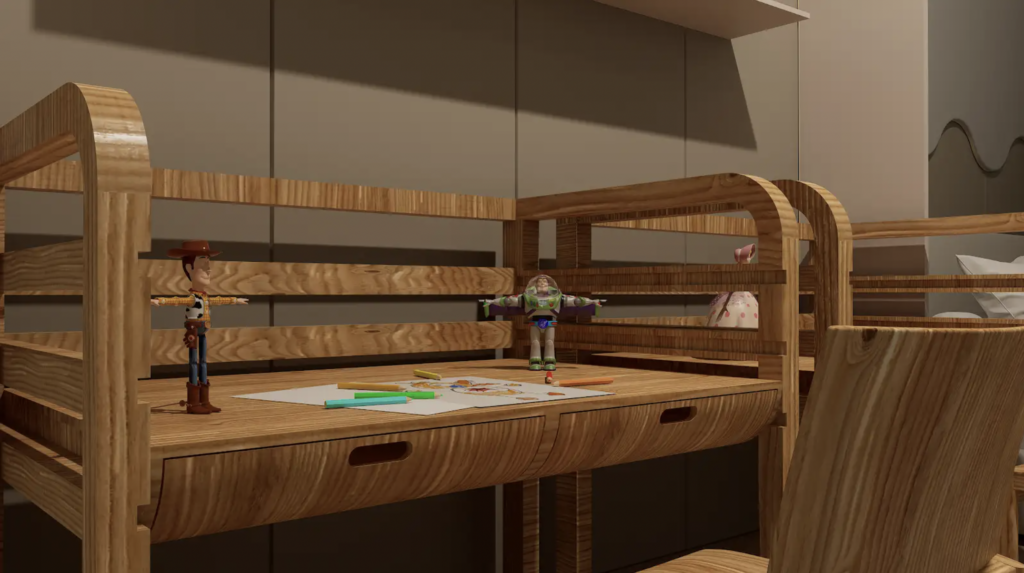
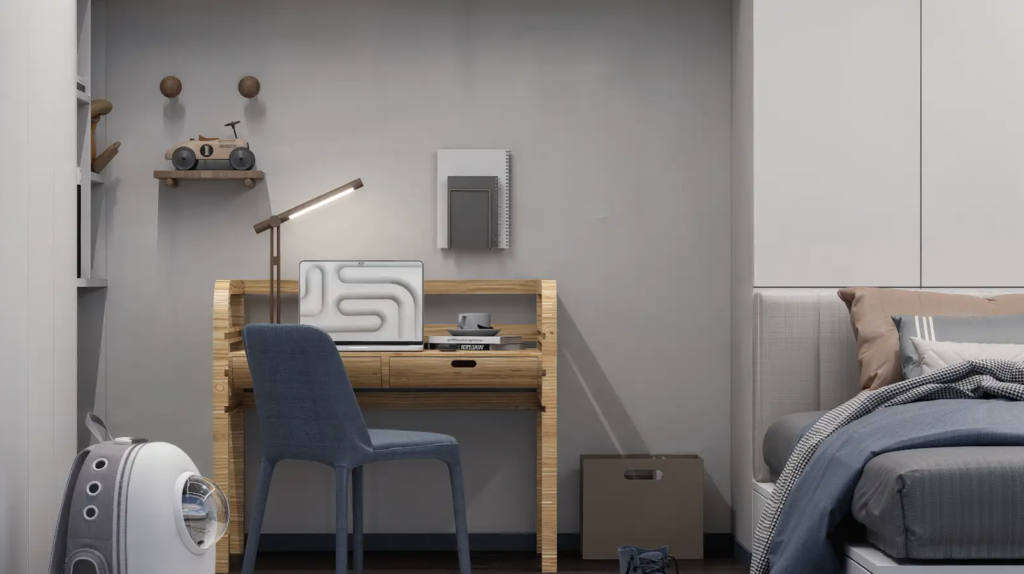
EVO takes its archetypal cue from the enduring logic of Stokke’s Tripp Trapp chair: a domestic object designed to adapt as its user grows.
Sofia Osan challenges the assumption that children’s furniture must inevitably become obsolete. Instead of serving a short developmental phase, EVO is intended to remain in the home from childhood into adult life, changing alongside the person who uses it.
Its relevance lies in this long view. In a culture of rapid replacement, EVO treats adaptability as both a practical and emotional quality. The desk becomes a witness to changing interests, abilities, and ambitions rather than an object abandoned once the user reaches a certain age.
Hue & Eye’s view: EVO starts from the origins. Its democratic form allows it to belong to different stages of life, while its emphasis on continuity gives the object a sense of personal history.
AFFACCIO: Claudia Di Antonio and the Culture of the Balcony
With AFFACCIO, Claudia Di Antonio draws on one of Naples’ most recognizable architectural and social spaces: the balcony.
In Neapolitan life, the balcony is rarely just an exterior space. It is a place of observation, conversation, and exchange—a threshold where domestic intimacy meets the tempo of the street.
D’Antonio translates this cultural condition into a desk. The project becomes a shifting boundary between inside and outside, private concentration and public life. Rather than sealing the worker into an isolated interior, AFFACCIO suggests that attention can remain connected to the surrounding city.
The desk is therefore less a closed workstation than a domestic stage: a place from which to work, observe, and remain receptive to what is happening beyond the room.
Hue & Eye’s view: The strength of AFFACCIO lies not simply in its reference to the balcony, but in the social and poetic idea behind it. The project captures an Italian instinct for opening the home towards the world outside—and for treating that encounter as part of daily life rather than an interruption to it.
TOTEM: Ludovica Petrella’s Mobile Workstation
Ludovica Petrella’s TOTEM responds to homes in which a permanent office is neither possible nor desirable.
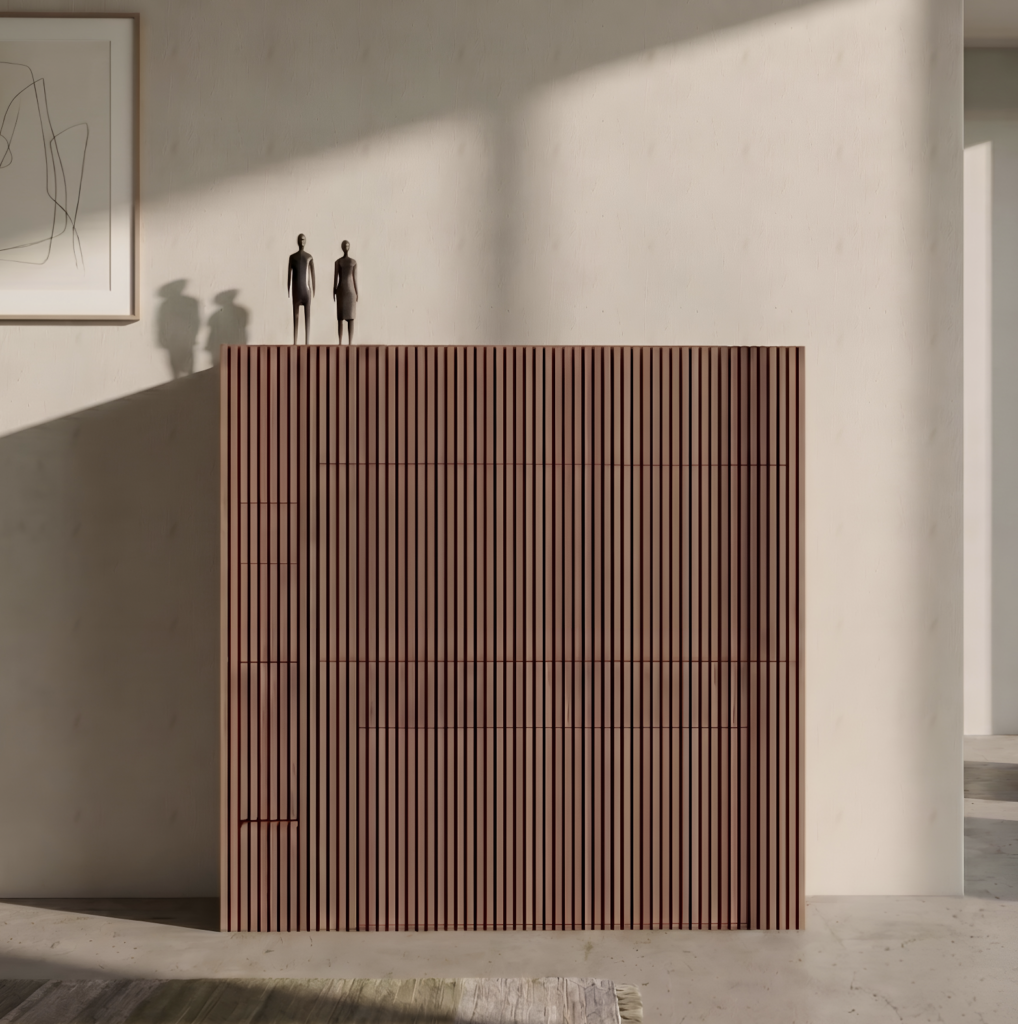
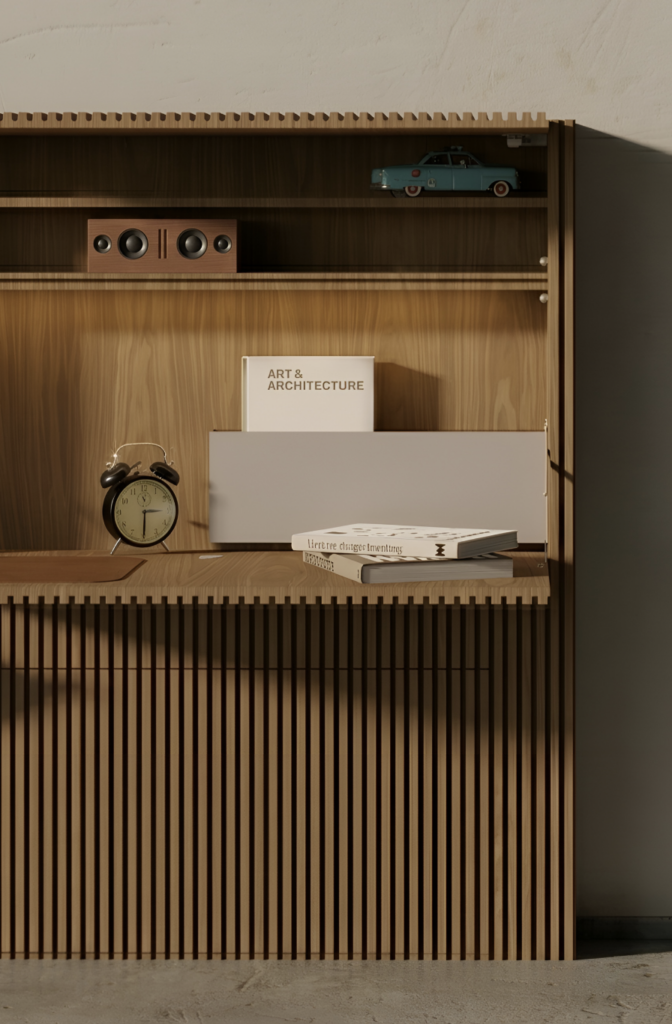
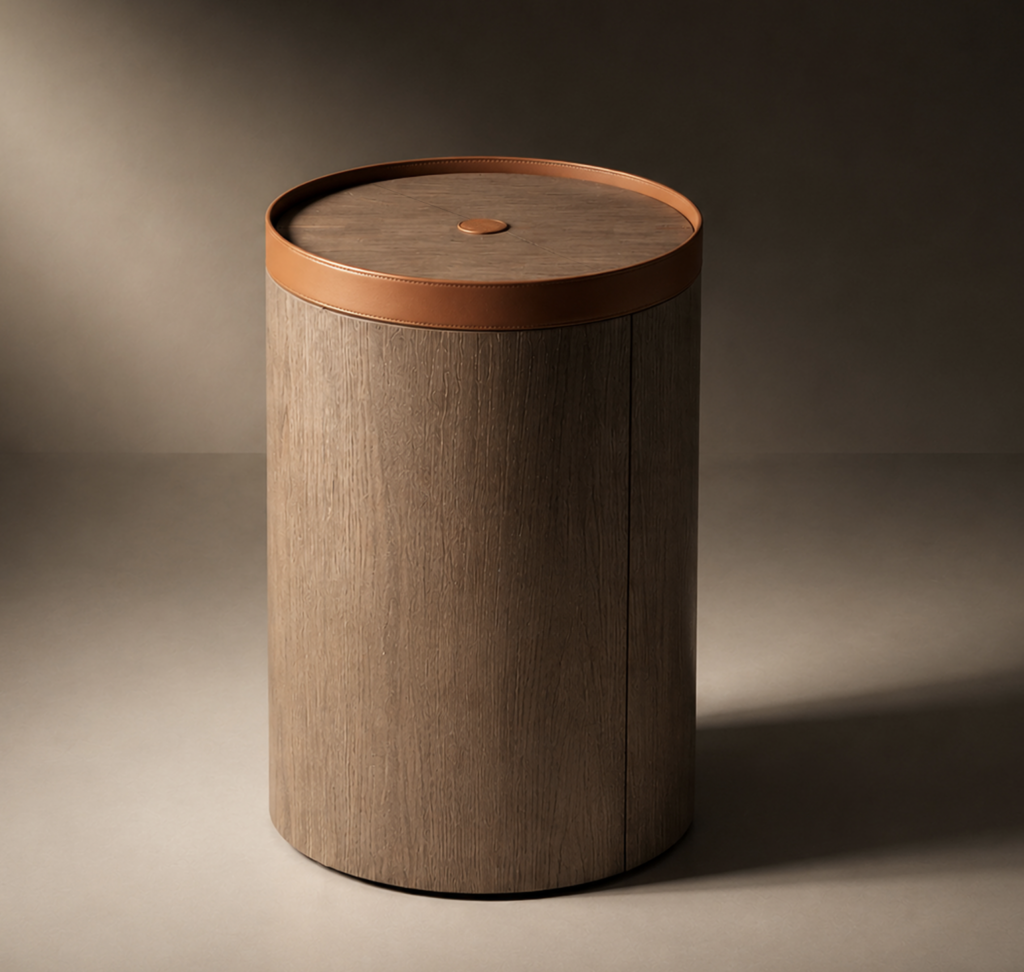
When closed, the compact structure reads as a self-contained piece of furniture. Its two half-moon doors swing open to reveal a complete workstation, with shelves and compartments for documents, devices, and working tools.
Mounted on wheels, TOTEM can move between rooms as routines change. Work is no longer tied to a single corner of the home; the desk can follow available light, privacy, company, or necessity.
The material treatment balances practicality with a more tactile domestic presence. A matte natural-wood frame provides warmth and solidity, while leather details soften the structure and introduce a note of refinement.
Hue & Eye’s view: Transformable furniture often prioritizes utility at the expense of presence. TOTEM avoids that compromise. Its restrained geometry, concealed workspace, and considered materials allow it to function as equipment without looking temporary or purely technical.
What This Generation Is Really Designing
The most revealing aspect of Work@Home was not the variety of forms, but the variety of lives those forms anticipated.
These students did not imagine the desk as a neutral platform. They treated it as something that could accompany a person through different ages, open the home towards the city, travel between rooms, or redirect the gaze beyond the screen.
That shift matters. As domestic spaces continue to absorb activities once assigned to offices, studios, schools, and public life, furniture can no longer be designed around a single, stable use. It must negotiate overlap.
The projects presented suggest that the next generation of designers is already thinking in those terms. Their desks do not attempt to discipline contemporary life into perfect order. Instead, they acknowledge its movement, interruptions, memories, and changing needs.
The future of the home office may not depend on adding more technology. It may begin with a more human question: what kind of working life should the objects around us make possible?